
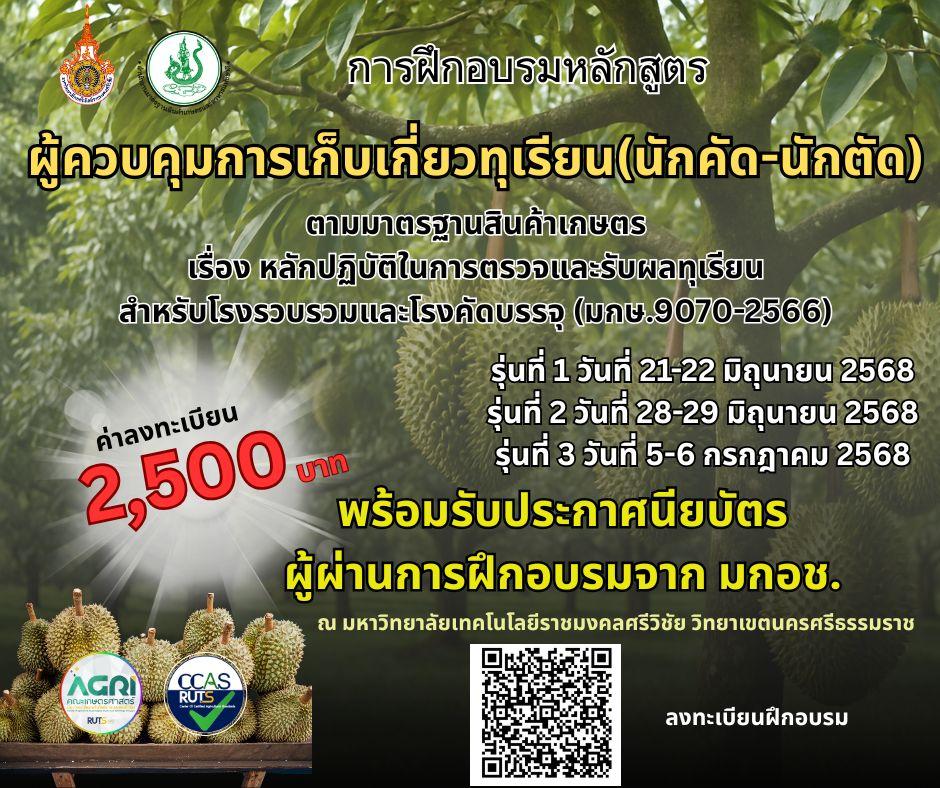
The Faculty of Agriculture arranges workshops on durian inspection and harvesting standards (TAS 9070-2023) between 21June and 6 July 2025 (several cohorts) for durian maturity inspectors, harvest supervisors, including packing-house QC staff, durian cutters, farmers and entrepreneurs. Participants receive certificates from ACFS and RUTS. The registration Fee costs THB 2,500 per person per course.
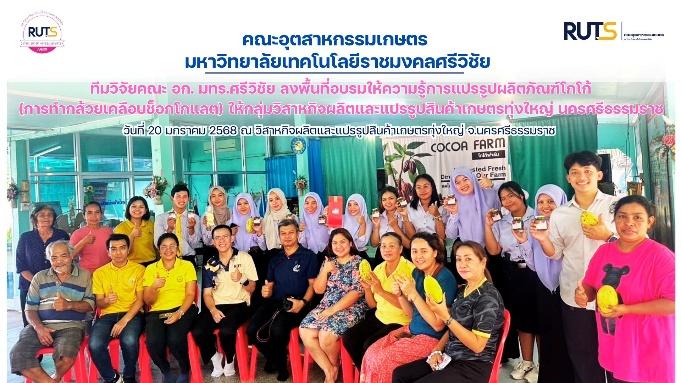
Training on Cocoa Product Processing to Enhance the Value of Local Agricultural Products
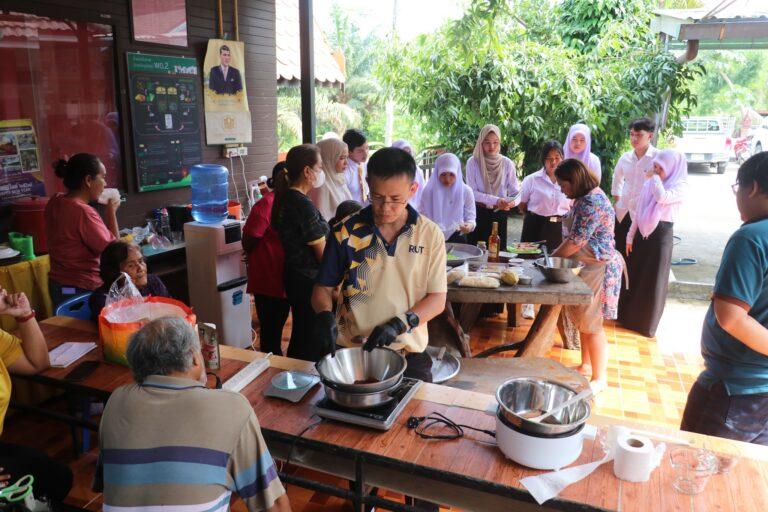
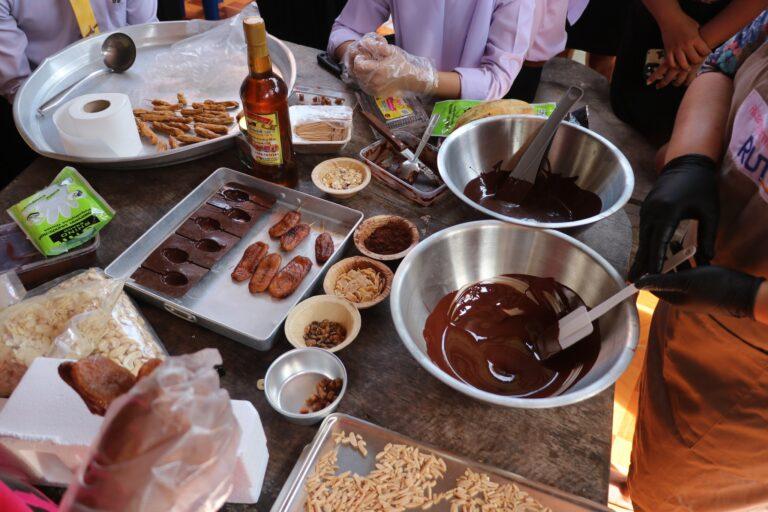
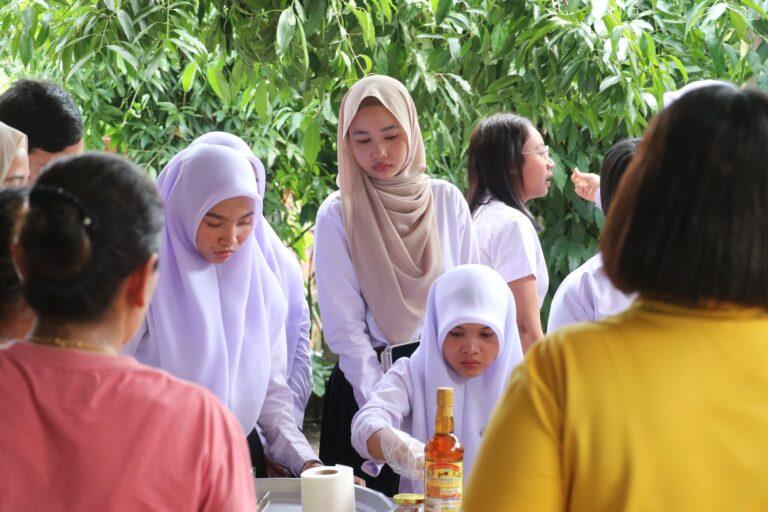
On 20 January 2025, a research team from the Faculty of Agro-Industry, Rajamangala University of Technology Srivijaya (RUTS), led by Ms. Sriubon Thongpradit, Principal Investigator of a research project funded by the Program Management Unit on Area-Based Development (PMU-A) in fiscal year 2023, together with Associate Professor Dr. Kittiphum Suphalakpanya and Assistant Professor Jiranat Rungchuang, served as trainers in a workshop entitled “Cocoa Product Processing: Making Chocolate-Covered Bananas.”
The training was provided to the Thung Yai Agricultural Production and Processing Community Enterprise Group in Prik Subdistrict, Thung Yai District, Nakhon Si Thammarat Province. The activity was conducted as part of the Community Enterprise Promotion and Development Project, implemented by the Thung Yai District Agricultural Office.
The training aimed to promote the utilization of locally available agricultural produce through processing and value addition, improve the quality and standards of agricultural products, and generate additional household income. By developing practical skills in cocoa-based product processing, the activity sought to support the community enterprise in expanding its product offerings and creating opportunities for local economic development.
Students enrolled in the Food Technology and Innovation program also participated in the activity as part of their relevant coursework. This provided them with an opportunity to gain hands-on experience, apply their academic knowledge in a real-world setting, and engage in knowledge exchange with community entrepreneurs.
The activity demonstrated collaboration between university researchers, local government agencies, community enterprises, and students in applying food processing knowledge and technology to enhance the value of local agricultural products and support community-based entrepreneurship.
https://agro-industry.RUTS.ac.th/ruts/2025/01/21/12017/
RUTS Applies Appropriate Technology to Enhance Production of Koh Sukorn GI Watermelon: A Geographical Indication (GI) Product of Trang Province
Koh Sukorn watermelon is the fourth product from Trang Province to be registered as a Geographical Indication (GI) by the Department of Intellectual Property, following Trang roasted pork, Trang pepper, and Trang Bao Yot rice.
Koh Sukorn watermelon is available in two categories: seeded and seedless varieties. The seeded varieties include Boeing, Maya, Diana, Queen Lady, and Golden Sweet, while Happy Family is the seedless variety.
Compared with the same varieties grown in other areas, Koh Sukorn watermelon has a lighter-colored rind, making its characteristic rind patterns more distinct. The flesh may be red, orange, or yellow, with a naturally sweet and fragrant flavor and a fine, crisp texture. The watermelon is cultivated on Koh Sukorn, located in Koh Sukorn Subdistrict, Palian District, Trang Province, Thailand.
Research and Technology Transfer to Enhance Watermelon Production
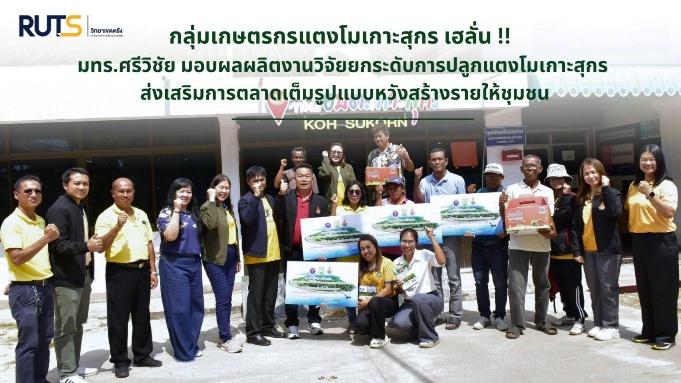
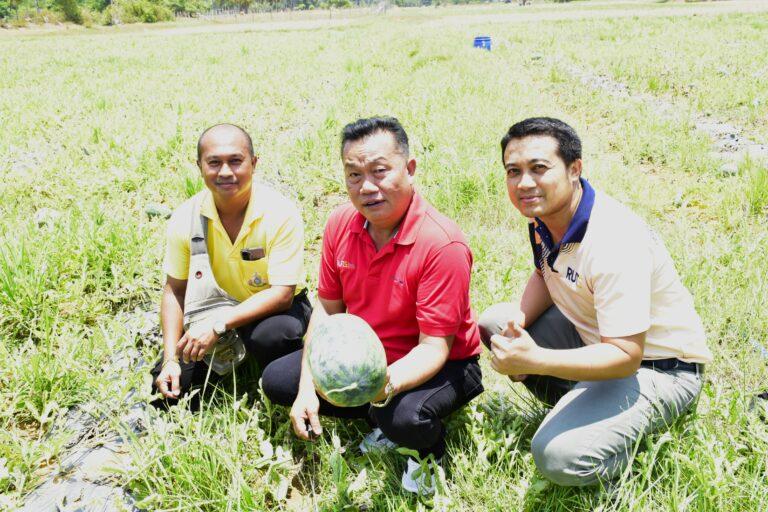
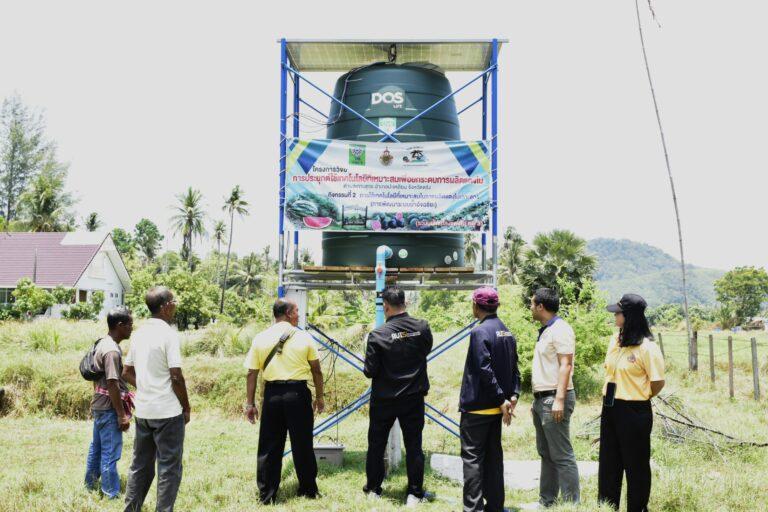
On 31 March 2025, an executive delegation from Rajamangala University of Technology Srivijaya (RUTS), Trang Campus, visited the research site and handed over research outputs under the project entitled “Application of Appropriate Technology to Enhance Koh Sukorn Watermelon Production.”
The delegation was led by Assistant Professor Sitthichok Chanyong, Vice President for Trang Campus, and included Assistant Professor Manoch Khamcharoen, Dean of the Faculty of Science and Fisheries Technology; Assistant Professor Fapilai Thaweesinsopa, Director of the College of Hospitality and Tourism; Assistant Professor Praphasri Srichai, Director of the Research and Development Institute; and researchers participating in the project.
Assistant Professor Sitthichok Chanyong stated that the university had responded to Trang Province's development plans in alignment with national strategies by promoting agricultural development and the application of technology to improve production efficiency and product quality. Particular emphasis was placed on supporting Koh Sukorn watermelon growers in adopting Good Agricultural Practices (GAP) to ensure safe, high-quality produce while creating market opportunities and increasing income for local farmers.
The research team, led by Assistant Professor Dr. Khwanta Tantikamthon, principal investigator, explained that RUTS Trang Campus had received research funding from the National Research Council of Thailand (NRCT) for fiscal year 2024 to enhance the quality and efficiency of Koh Sukorn watermelon production.
The project comprised three main activities:
1. Capacity development for watermelon growers to achieve GAP certification: Supporting farmers in improving cultivation practices and meeting the requirements for Good Agricultural Practices certification.
2. Water management and irrigation efficiency improvement: Addressing water availability and irrigation challenges through the development of a prototype water management system and the application of Internet of Things (IoT) technology to improve water-use efficiency in watermelon cultivation areas.
3. Market access and distribution development: Expanding marketing channels, increasing the number of business partners in Southern Thailand, and raising consumer awareness of Koh Sukorn watermelon.
Research Outcomes and Benefits to the Community
Since the project began in June 2024, RUTS has worked closely with the Koh Sukorn Watermelon Growers Community Enterprise, whose members have actively participated in knowledge exchange and project implementation. Initial harvesting results have been encouraging in terms of both production volume and product quality.
Mr. Thawatchai Khaimusik, head of the Koh Sukorn Watermelon Growers Community Enterprise, reported that the group had 110 members and achieved an average yield of approximately 2 tons per rai. The harvested watermelons reached sugar content levels of up to 15 degrees Brix, indicating their potential for producing high-quality, sweet fruit.
According to the community enterprise, the research project has helped improve production processes and reduce labor requirements. It has also supported market development and the improvement of packaging that reflects Koh Sukorn's distinctive local identity.
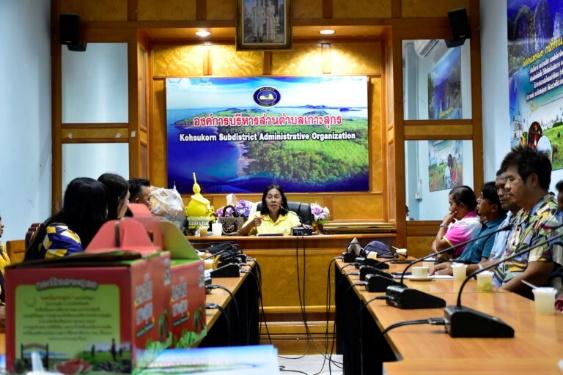
On 31 March 2025, the research team formally handed over the project outputs to the community. The handover ceremony was attended by Ms. Ratree Chitlang, President of the Koh Sukorn Subdistrict Administrative Organization, together with representatives of the Koh Sukorn Watermelon Growers Community Enterprise.
The project demonstrates how appropriate technology, research collaboration, and community participation can be integrated to improve agricultural productivity, strengthen product quality, expand market opportunities, and increase the economic value of local agricultural products. The knowledge and research outputs transferred to the community are intended to support continued improvements in watermelon production and contribute to sustainable livelihoods for farmers on Koh Sukorn.
https://trang.RUTS.ac.th/ruts/2025/04/02/20211/sokon-watermelon/