
Environmental and Energy Management Policy of Rajamangala University of Technology Srivijaya (RUTS) about Environmental and Energy Management
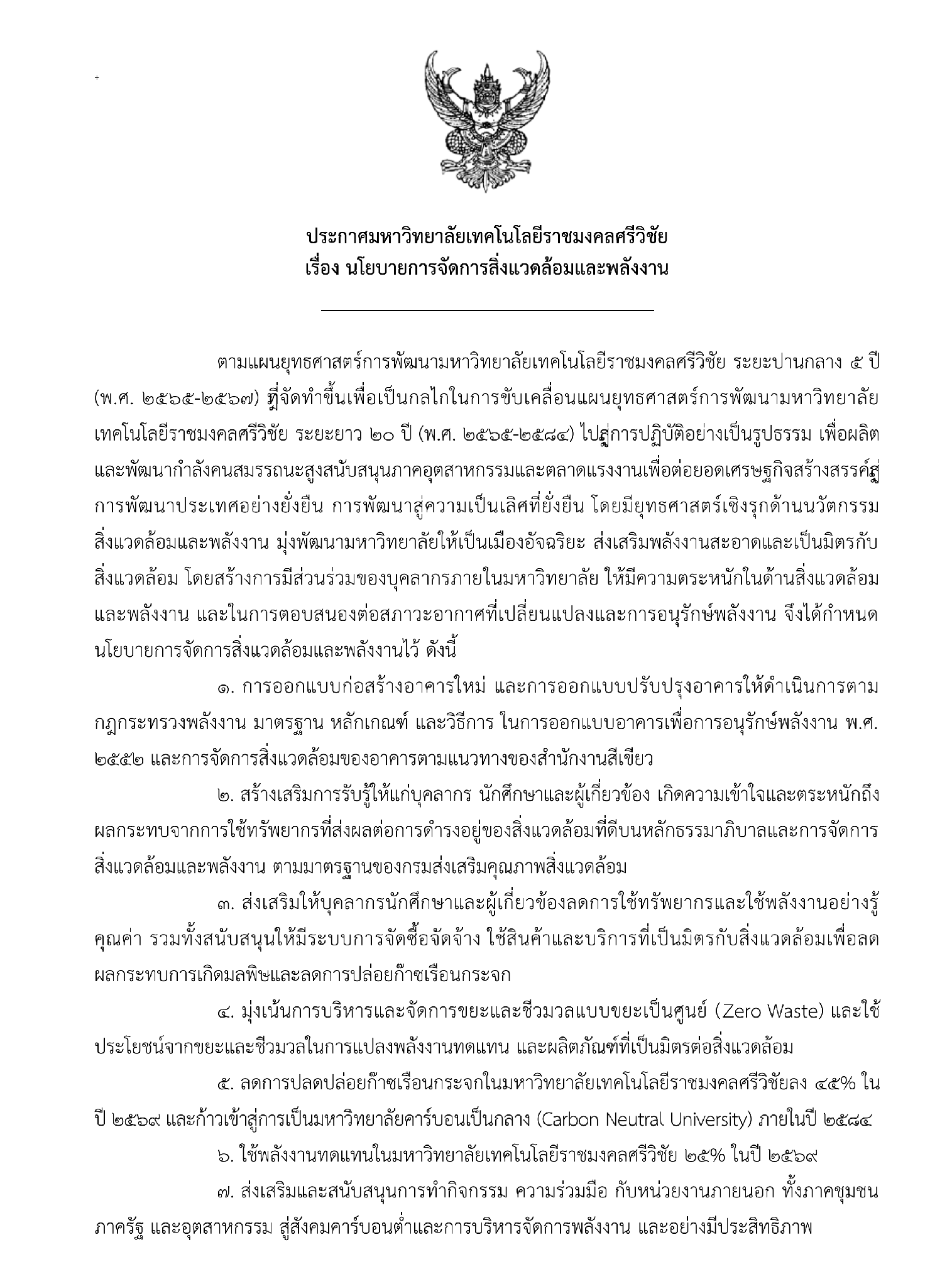
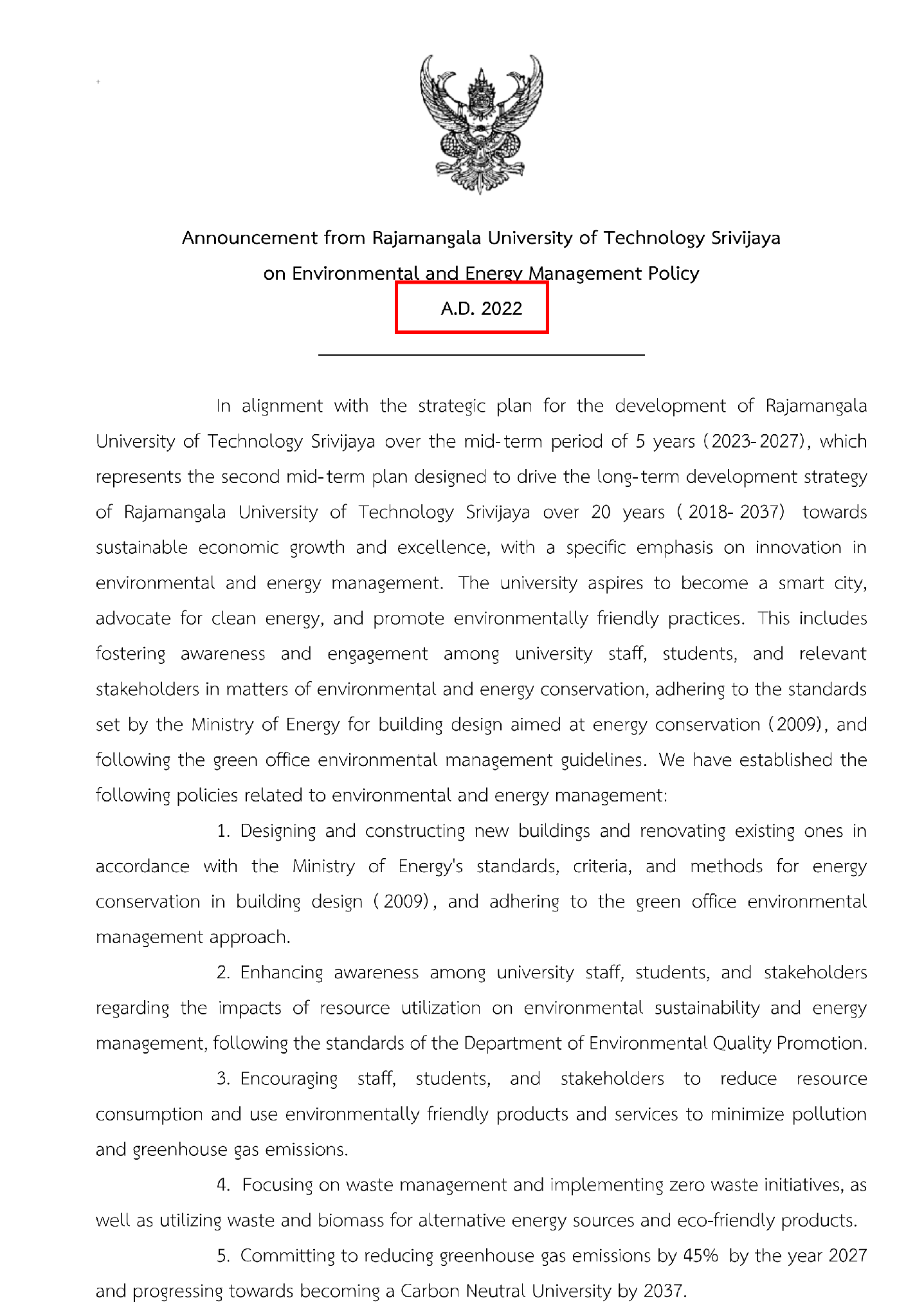
Environmental and Energy Management Policy
Rajamangala University of Technology Srivijaya (RUTS)
Commitment and Vision
In alignment with RUTS’s 20-Year Long-Term Development Strategy (2018–2037), and driven by the current 5-Year Mid-Term Plan (2023–2027), Rajamangala University of Technology Srivijaya is committed to achieving sustainable economic growth and excellence. Our specific focus is on innovation in environmental and energy management as we transition the university towards becoming a Smart City that champions clean energy and environmentally friendly practices. We aim to foster awareness and engagement among all staff, students, and stakeholders while adhering to national standards (Ministry of Energy 2009) and Green Office guidelines.
Environmental and Energy Management Policies
The following policies are established to guide our operations and development:
1.Sustainable Infrastructure: Design, construct, and renovate all buildings to meet the Ministry of Energy’s standards for energy conservation (2009) and comply with Green Office environmental management guidelines.
2.Awareness and Education: Enhance awareness among all university staff, students, and stakeholders regarding the environmental impacts of resource use and the importance of effective energy management, in line with the Department of Environmental Quality Promotion standards.
3.Resource Reduction: Encourage the reduction of overall resource consumption and promote the use of environmentally friendly products and services to minimize pollution and greenhouse gas (GHG) emissions.
4.Waste Innovation: Implement comprehensive waste management and zero waste initiatives. This includes exploring the utilization of waste and biomass for alternative energy sources and eco-friendly products.
5.Carbon Neutrality Goal: Commit to reducing greenhouse gas emissions by 45% by 2027 and progressing toward becoming a Carbon Neutral University by 2037.
6.Renewable Energy: Increase the use of renewable energy sources to account for 25% of the university’s total energy consumption by 2027.
7.Community Collaboration: Promote and support collaborative activities with external organizations, including the local community, government agencies, and industry, to create a low-carbon society and improve energy management efficiency.
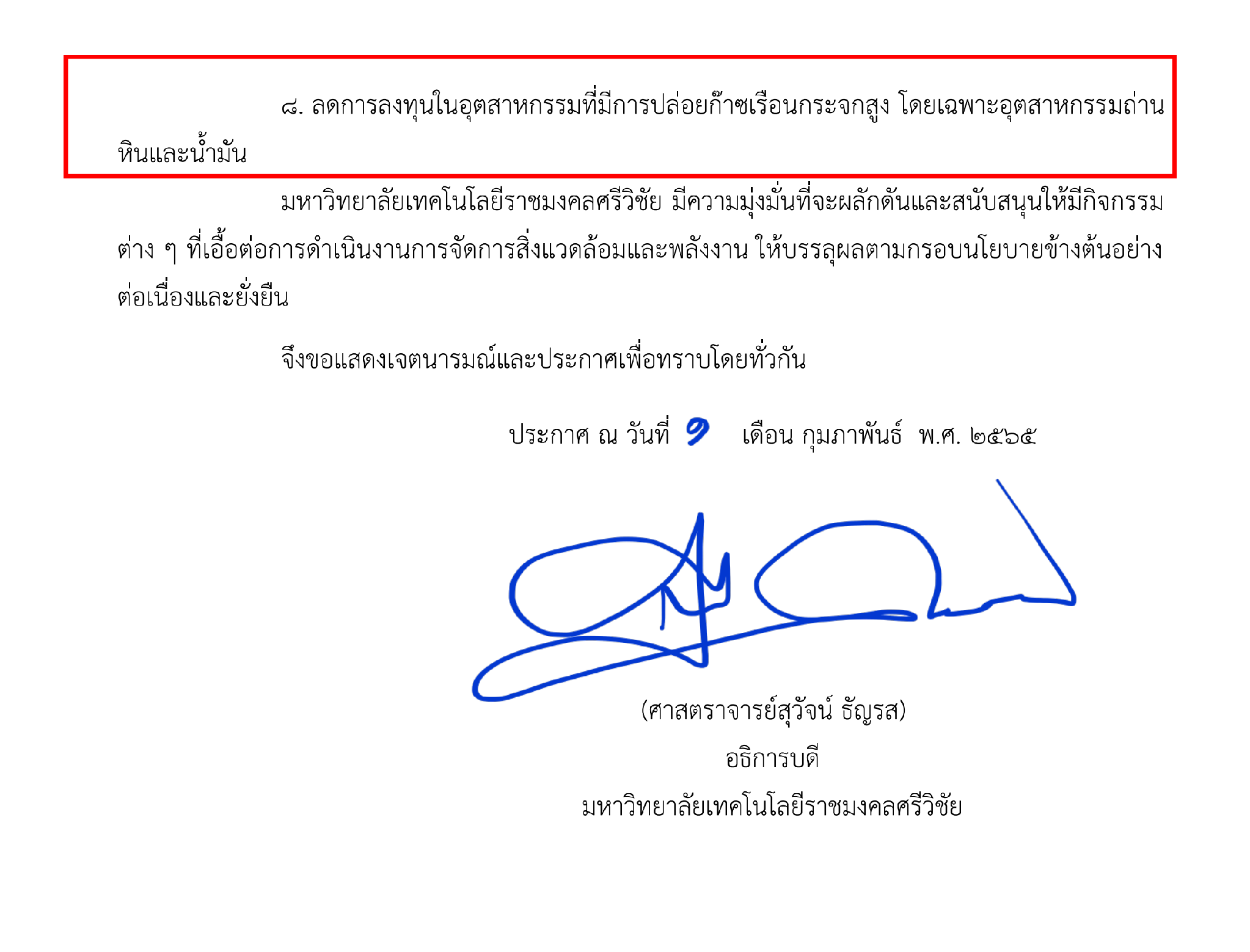
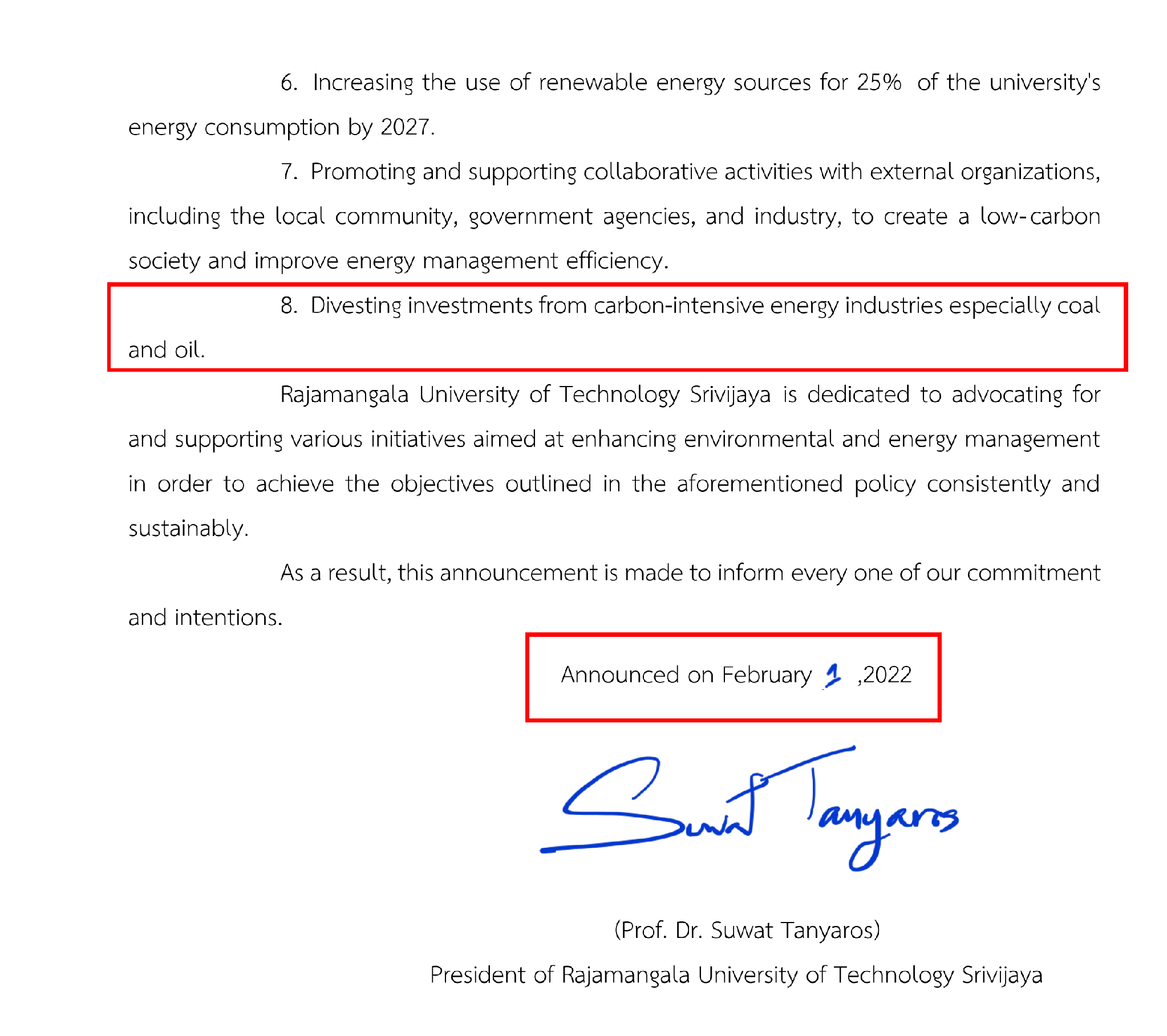
8.Responsible Investment: Divest investments from carbon-intensive energy industries, particularly coal and oil.
Conclusion
Rajamangala University of Technology Srivijaya is dedicated to championing and supporting these initiatives to ensure the consistent and sustainable achievement of all stated environmental and energy objectives. This announcement serves to formally communicate our commitment and intentions to the public and all stakeholders.
Related Links:
RUTS Announces Environmental and Energy Management Policy
Reinforcing its commitment to sustainability, Rajamangala University of Technology Srivijaya (RUTS) today unveiled its new Environmental and Energy Management Policy. By establishing clear, quantifiable goals for energy transition, emission reduction, and green infrastructure, the policy accelerates RUTS’s transformation into a Smart City and a hub for environmental innovation. This framework directly supports the United Nations 2030 SDGs, with a strong focus on Goal 7 (Affordable and Clean Energy) and Goal 13 (Climate Action).
Key Commitments and Targets
RUTS’s action plan is driven by its 20-Year Long-Term Development Strategy (2022–2041), highlighted by four landmark commitments:
- Carbon Neutrality Goal: Reducing greenhouse gas (GHG) emissions by 45% by 2026, transitioning to a fully Carbon Neutral University by 2041.
- Renewable Energy Integration: Increasing renewable energy utilization to comprise 25% of total consumption by 2026.
- Sustainable Infrastructure: Ensuring all new construction and renovations meet Ministry of Energy conservation standards and comply with Green Office guidelines.
- Responsible Investment: Divesting from carbon-intensive energy sectors, specifically coal and oil.
Related Links:
https://sdgs.rmutsv.ac.th/announcement/
Announcement of Rajamangala University of Technology Srivijaya: Policy on Environmental and Energy Management, Health, Well-Being, and Safety
Rajamangala University of Technology Srivijaya (RUTS)
Policy on Environmental Management, Energy, Health, and Safety
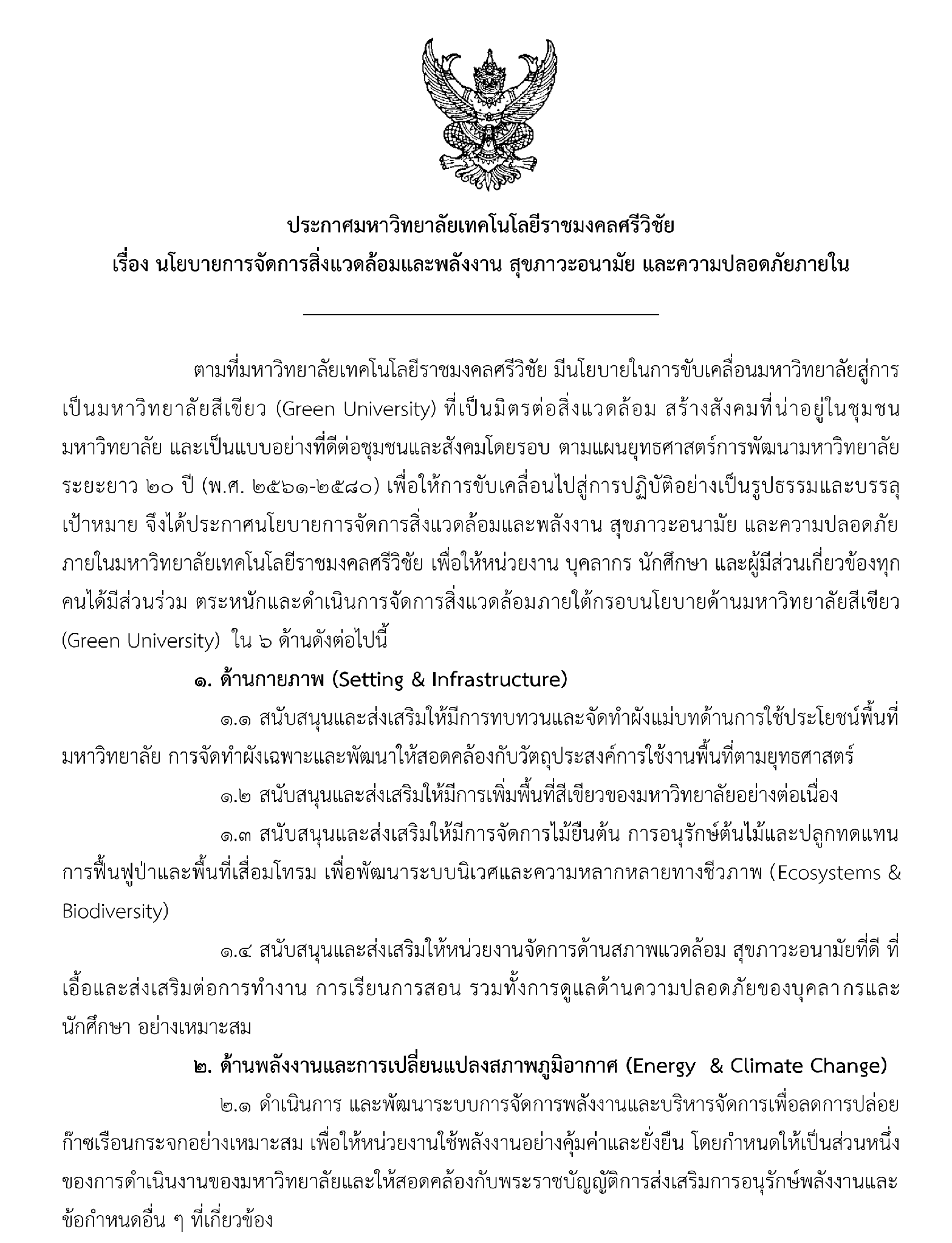
RUTS is committed to transforming into a Green University by fostering an eco-friendly, livable campus and serving as a sustainable model for the community. This policy integrates with the university’s Long-Term Strategic Development Plan (2018–2038), requiring the collective awareness and active engagement of all departments, staff, students, and stakeholders.
Six Core Policy Areas
1. Physical Environment (Setting & Infrastructure)
1.1. Space Planning: Review and develop a campus master plan to optimize space utilization, ensuring all localized spatial plans strictly align with the university’s strategic objectives.
1.2. Green Spaces: Continuously expand and promote green areas throughout the university.
1.3. Ecosystem & Biodiversity: Enhance campus ecosystems and biodiversity by preserving mature trees, managing perennial plants, and actively restoring degraded forest areas.
1.4. Health, Safety & Environment: Foster a safe, healthy, and supportive environment across all departments to facilitate effective working, teaching, and learning while ensuring the well-being of staff and students.
2. Energy and Climate Change
2.1. Energy Management System: Implement and develop an energy management system to enhance energy efficiency and sustainability across all departments, effectively reducing greenhouse gas (GHG) emissions in compliance with the Energy Conservation Promotion Act and related regulations.
2.2. Energy Efficiency: Continuously improve energy efficiency across all units by upgrading to energy-saving devices, adopting technology and best practices, and integrating renewable energy sources.
2.3. Innovation: Promote and support energy-related innovations and best practices for energy conservation, GHG reduction, and renewable energy integration.
2.4. Renewable Energy Target: Increase the share of renewable energy sources on campus to at least 25% by 2026.
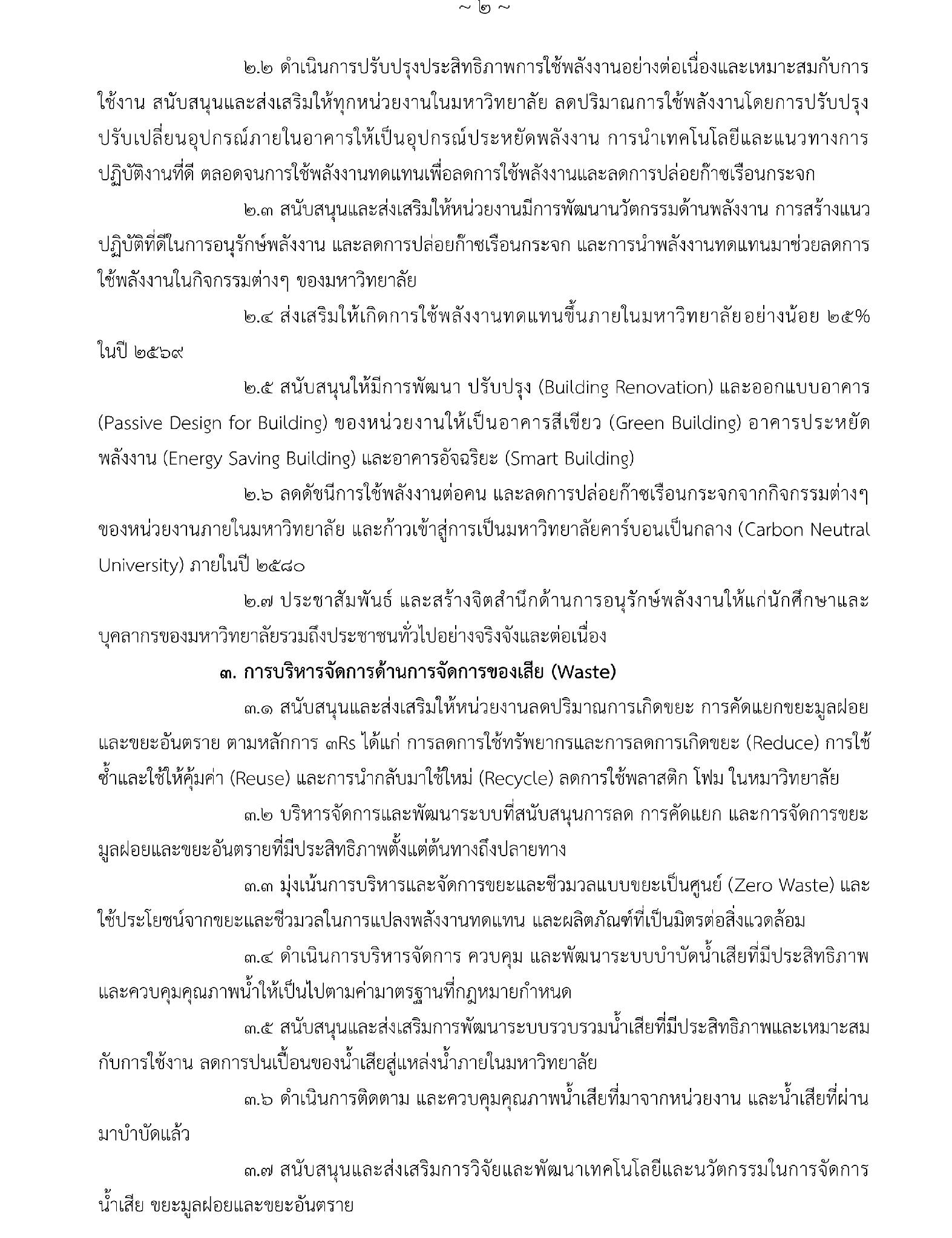
2.5. Green Buildings: Support facility design and renovation—utilizing passive design principles—to create smart, energy-saving, and green buildings.
2.6. Carbon Neutrality Goal: Reduce per capita energy consumption and lower GHG emissions across all activities to achieve Carbon Neutral University status by 2037.
2.7. Public Awareness: Continuously promote and foster energy conservation awareness among students, staff, and the general public.
3. Waste Management
3.1 Waste Reduction (3Rs): Supporting campus units in reducing waste and segregating municipal and hazardous waste via the 3Rs, with an emphasis on eliminating plastic and foam.
3.2. System Development: Developing and managing integrated systems for efficient, end-to-end municipal and hazardous waste management.
3.3. Zero Waste & Resource Utilization: Maximizing waste and biomass utilization through a Zero Waste approach, focusing on renewable energy conversion and eco-friendly products..
3.4. Wastewater Treatment: Managing and controlling wastewater treatment systems to ensure compliance with legal water quality standards.
3.5. Wastewater Collection: Improving wastewater collection networks to minimize contamination risks in university water sources.
3.6. Monitoring: Monitoring effluent and water quality from individual points of origin through to final discharge.
3.7. R&D: Facilitating research, development, and innovation in comprehensive waste and wastewater management technologies.
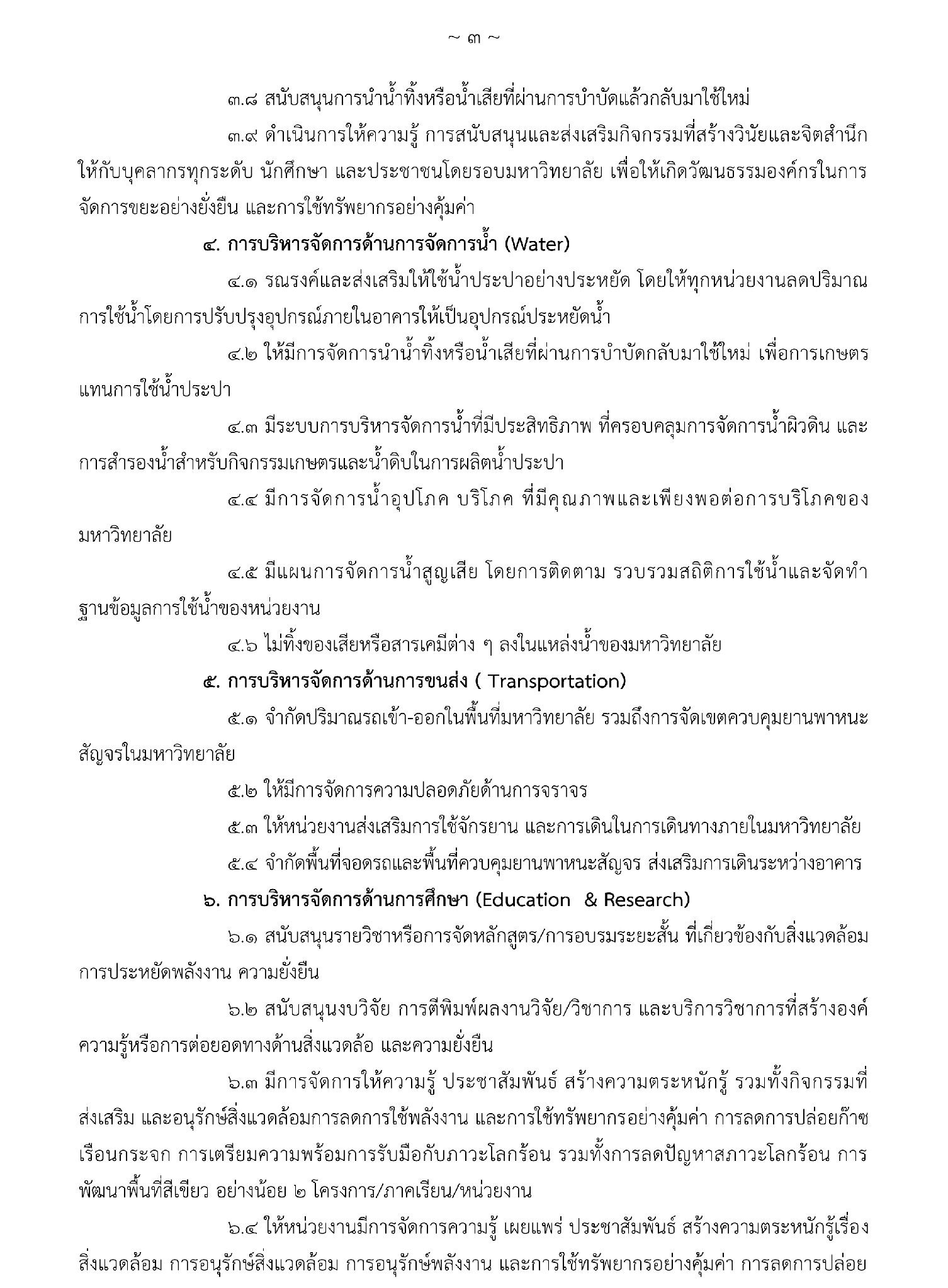
3.8. Water Reuse: Advancing the safe and efficient recycling and reuse of treated wastewater within the campus.
3.9. Culture: Cultivating awareness, discipline, and a sustainability-driven mindset among all university stakeholders and adjacent communities.
4. Water Management
4.1. Water Conservation: Promote tap water conservation by encouraging all university units to upgrade to water-saving devices.
4.2. Wastewater Reuse: Establish a recycling system that treats wastewater for agricultural use as an alternative to tap water.
4.3. Reservoir Management: Implement an effective water management system governing surface water and reserves for agriculture and potable water production.
4.4. Potable Water Quality: Ensure the university’s potable water management delivers sufficient quality and quantity for campus consumption.
4.5. Water Loss Reduction: Develop a water loss management plan by tracking consumption statistics and establishing a unit-specific usage database.
4.6. Pollution Prohibition: Prohibit the disposal of waste or hazardous chemicals into all university water sources.
5. Transportation Management
5.1. Vehicle Control: Regulate the volume of vehicles entering and exiting the campus while establishing dedicated vehicle-controlled zones.
5.2. Safety: Ensure comprehensive and effective traffic safety management across the university.
5.3. Active Transport: Support university departments in fostering active mobility, specifically cycling and walking, for on-campus transit.
5.4. Pedestrian Prioritization: Optimize pedestrian safety and walkability between buildings by limiting parking facilities and vehicular access.
6. Education, Research, and Safety Management
6.1. Curriculum: Support courses or short-term training programs on environment, energy conservation, and sustainability.
6.2. Research Funding: Provide funding for academic research and services that enhance sustainability and environmental knowledge.
6.3. Knowledge Dissemination: Organize at least two projects per semester per unit to promote environmental conservation, energy reduction, resource efficiency, GHG mitigation, and climate resilience.
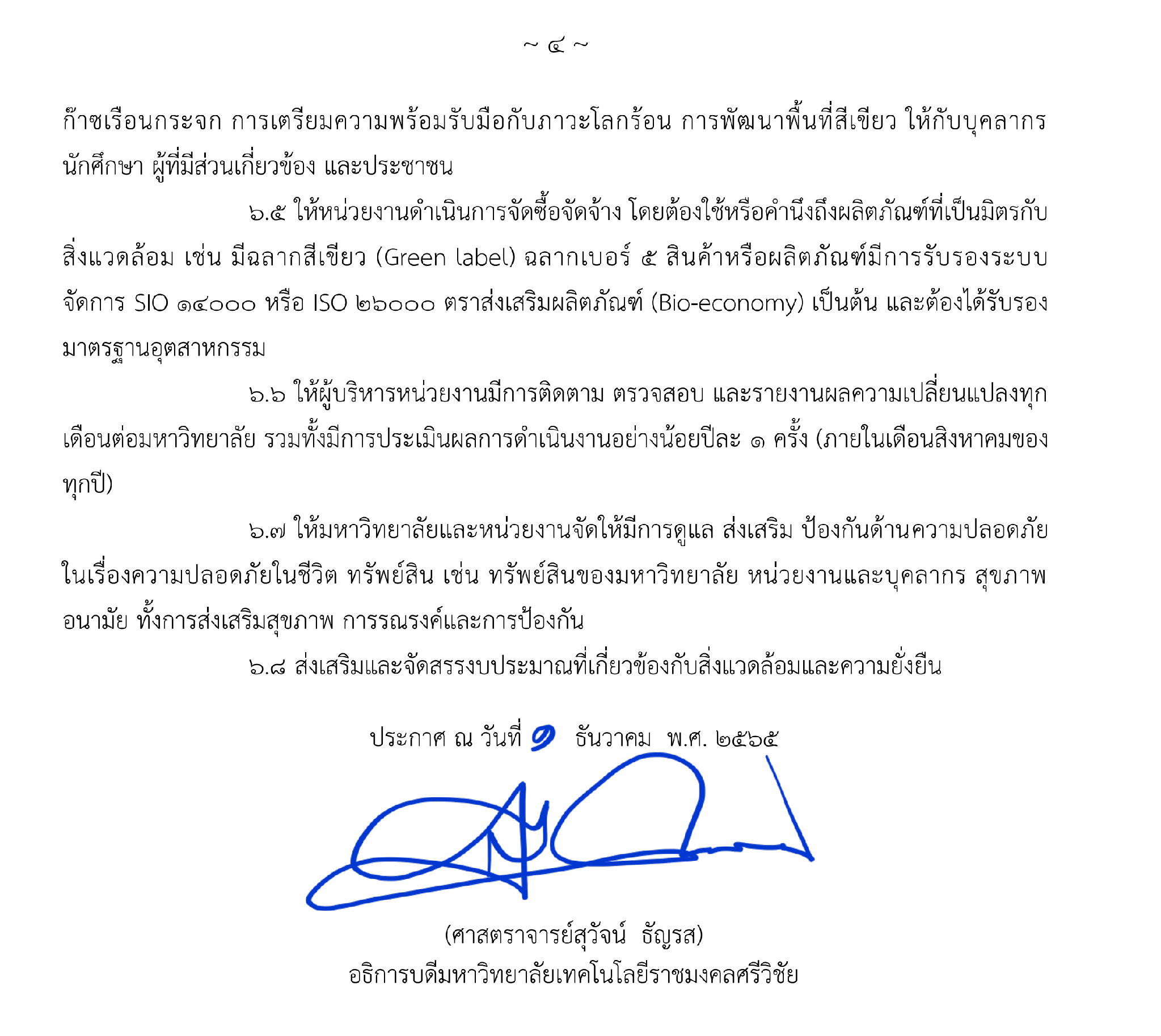
6.4. Awareness & Green Spaces: Disseminate knowledge to prepare staff, students, and the public for climate impacts while expanding university green spaces.
6.5. Sustainable Procurement: Mandate the procurement of certified eco-friendly products (e.g., Green Label, ISO 14000/26000, or bio-economy products).
6.6. Monitoring & Reporting: Require unit managers to submit monthly progress reports and an annual performance evaluation by August.
6.7. Safety & Health: Implement safety, asset protection, and comprehensive health and wellness measures for all staff.
6.8. Budget Allocation: Allocate dedicated budgets to support environmental sustainability initiatives.