
SDG 4: QUALITY EDUCATION
1. Equal Access Policy for Lifelong Learning
2. Free Public Learning Resources
3. Campuses Open to the Public through Educational Events
4. Vocational Training for the Southern Workforce
5. Educational Outreach beyond Campus
1. Equal Access Policy for Lifelong Learning
Rajamangala University of Technology Srivijaya (RUTS) operates across southern Thailand, with Songkhla Campus, Nakhon Si Thammarat Campus and Trang Campus. Its learning activities serve both enrolled students and members of the public of all ages. The university therefore treats lifelong learning as something everyone must be able to access, not only those in formal study, and sets this out at both the regulatory and the strategic level.
A regulation that guarantees access without discrimination
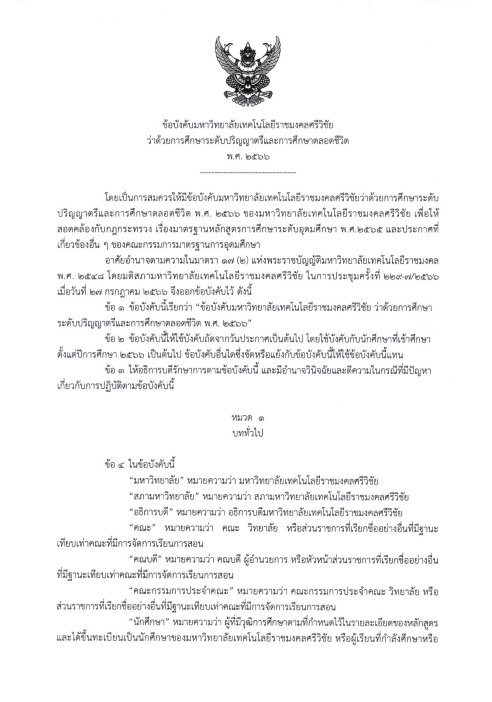
The RUTS Regulation on Bachelor's Degree and Lifelong Education B.E. 2566 (2023) applies to education provision on every campus and to all of the university's lifelong learning activities. The University Council reviewed and amended it as Regulation (No. 2) B.E. 2568 on 15 October 2025. Under this regulation, every type of lifelong learning activity must be open to all, without discrimination on the grounds of ethnicity, religion, disability, immigration status or gender, as well as age and socio-economic status.
The regulation covers formal, non-formal and informal learning: free online courses on RUTS MOOC, use of libraries and campus facilities, public lectures and academic events, short vocational training, and educational activities in schools and communities. People with experience gained outside the classroom can also transfer credit for prior experiential learning, an alternative pathway that lets learners of all ages study according to their own interests, potential, readiness and opportunities.
Lifelong learning in the long-term strategy
Under the vision of an "Innovation University for Society", the 20-Year Long-Term Development Plan (2018–2037) makes the promotion of lifelong learning for all groups, regardless of age, background or socio-economic status, a key direction. The plan supports learners inside and outside the formal system through online courses, short vocational training and the opening of university learning resources to the public. The Office of Innovation Management and Technology Transfer leads the transfer of knowledge and technology to communities and industry.
Measures that support access
- Online courses and digital learning resources are free for anyone to study at their own pace.
- People with disabilities or physical limitations are served by ramps, lifts, accessible toilets and a library service guide for users with special needs.
- All activities are publicised openly in Thai and English through every channel.
In 2025, the university allocated THB 22,603,815 for academic services and creative culture to support equal access to lifelong learning, offered 46 free online courses, and achieved 75 percent of its indicators for research, academic services and creative culture.
2. Free Public Learning Resources
The labour market in southern Thailand needs new skills in coastal tourism, digital work and entrepreneurship. Throughout 2025, the university opened three groups of learning resources to people who are not RUTS students, with no registration fee, entry fee or certificate fee.
RUTS MOOC online courses with certificates
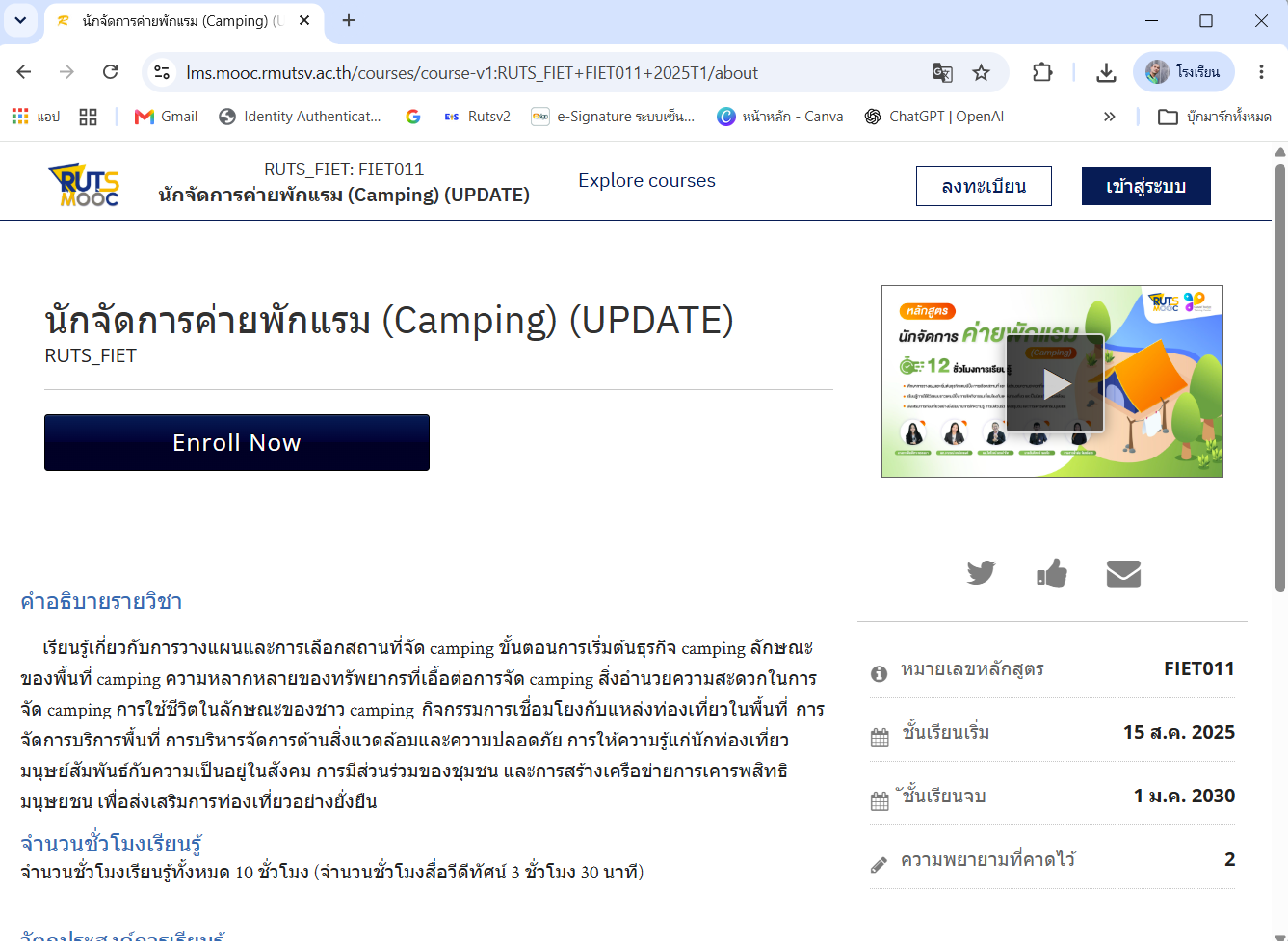
The university offered 46 online courses on the RUTS MOOC platform, all developed by its own faculty members across four subject groups: communication innovation and technology, general education, business administration, and engineering and technology. Examples include Camp Management, Professional Bartending, Professional Barista Standards and Community Tour Guiding. Registration requires only a name and email address, and learners who pass receive an electronic certificate free of charge. Those who want hands-on practice can train at three Southern Development Centres in Songkhla, Nakhon Si Thammarat and Trang.
Libraries and the aquarium
Six university libraries let external users use books, computers, wireless internet, online databases and co-working spaces free of charge under the RUTS Announcement on Library Service Regulations; users only need to show a national ID card and register. On Trang Campus, the Rajamangala Trang Aquarium, run by the Natural Resources and Environment Institute, is open to the public free of charge every day, with an information technology room on dugongs and sea turtles, a 3D hologram exhibition and more than 100 species of aquatic animals.
Online learning resources
The Research Information Srivijaya System (RISS) makes 6,970 research items publicly searchable without registration. A Virtual Exhibition at Rajamangala Srivijaya Fair 2025, held on 27–28 November 2025, presented the university's academic work, research and innovations online free of charge.
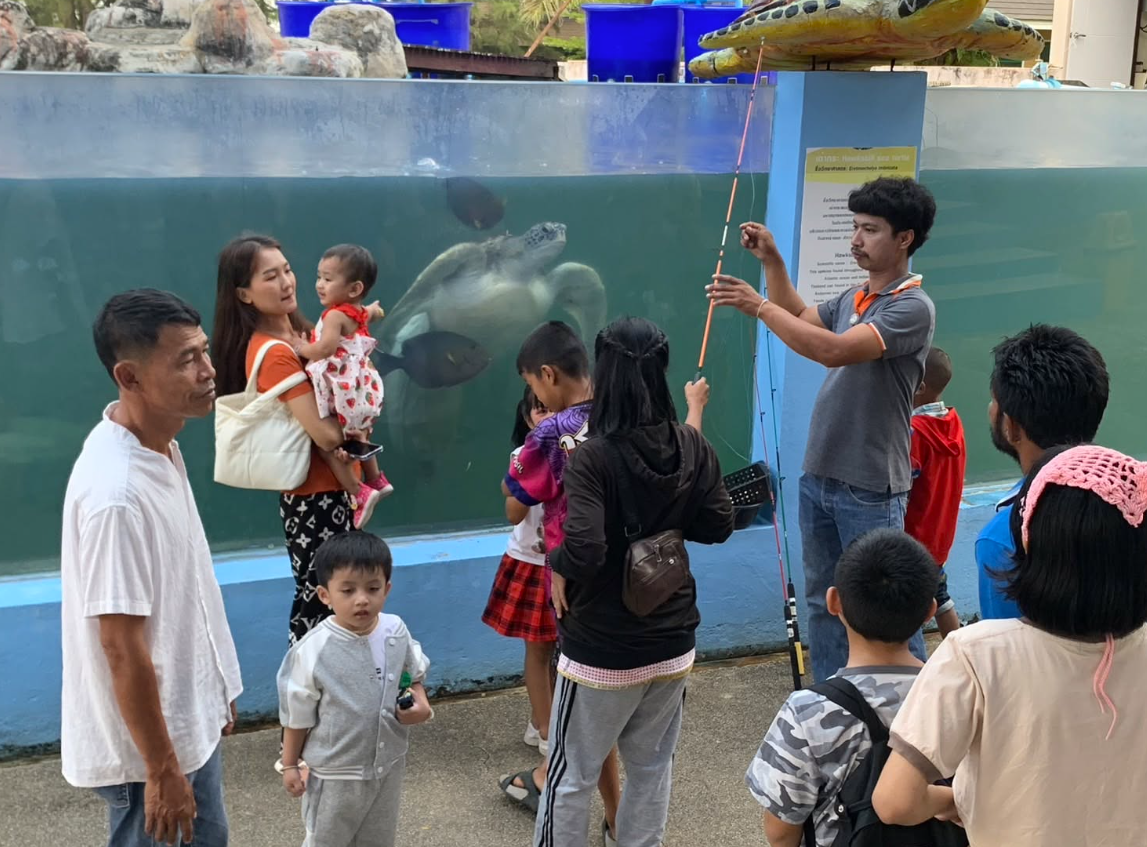
In 2025, 1,158 learners who are not RUTS students received RUTS MOOC certificates, and five courses were updated. The aquarium received 85,288 visitors, RISS recorded 154,300 visits, and the Virtual Exhibition received 23,000 visits.
3. Campuses Open to the Public through Educational Events
The university uses its campuses as places where the public, young people and farming and fishing communities can see advances in science, research results and university teaching at first hand. In 2025, it hosted five educational events under four projects on its campuses, all open to external participants free of charge.
Regional national science week
The Faculty of Science and Technology, with the Ministry of Higher Education, Science, Research and Innovation (MHESI), hosted the event on 18–20 August 2025 at Nakhon Si Thammarat Campus (Sai Yai). It featured science, technology and innovation exhibitions, special lectures, short courses on energy conservation and herbal incense production, and competitions for primary, secondary and vocational students.
Research exhibitions at the agricultural and fisheries fairs
The Thung Yai Agricultural Fair, held from 28 February to 9 March 2025, exhibited agricultural research, demonstrated agricultural drones and ran a free durian orchard management workshop for 40 participants. The Faculty of Science and Fisheries Technology held the Fisheries Fair (Trang Blue Swimming Crab Day) twice, on 6–8 February and 26–27 December 2025, with exhibitions of research project results, forums between researchers and communities, and demonstrations of crab, sea bass and oyster processing. At the 6th edition, the faculty presented plaques of honour to 80 coastal communities in Trang and Krabi.
An open house that shows real teaching
The Faculty of Industrial Education and Technology held FIET Open House 2025 on 27 August 2025. Secondary and vocational students, parents and other visitors observed teaching, practised basic skills at hands-on stations for 7 programmes and received guidance on further study.
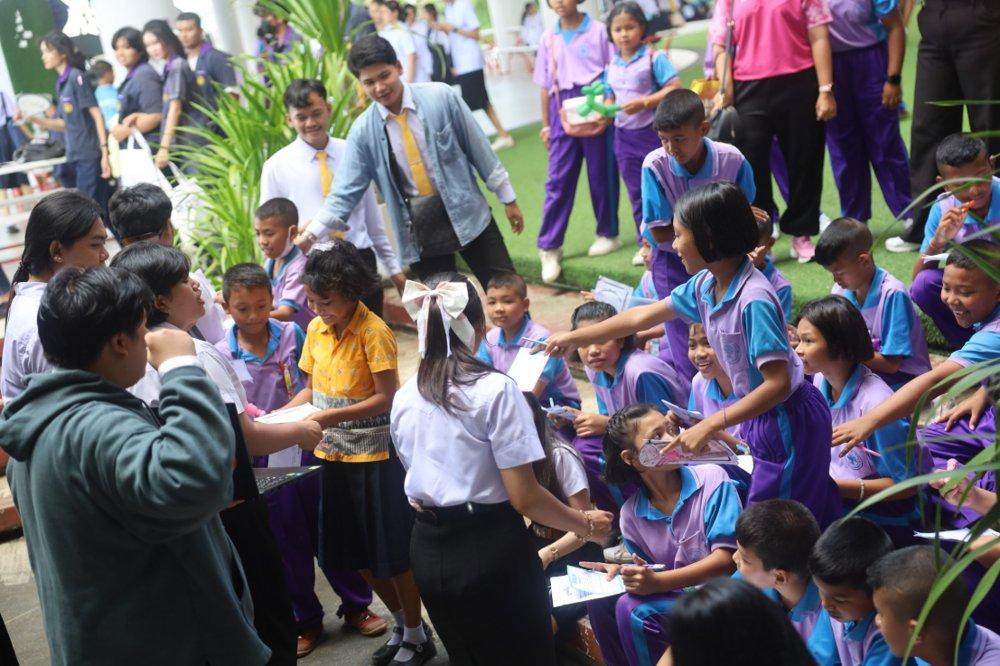
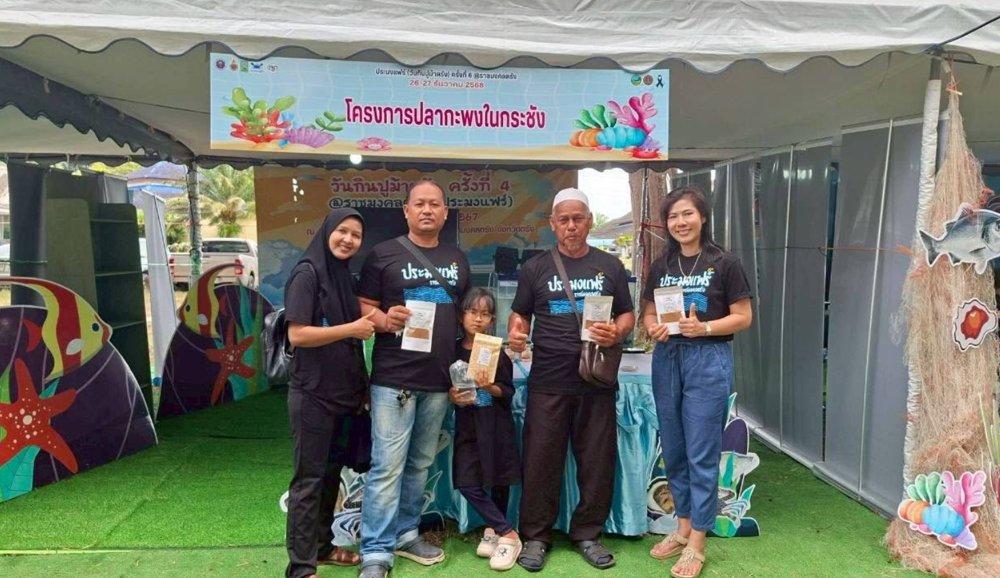
The five events drew about 39,100 participants in total: about 35,000 at the Thung Yai Agricultural Fair, 2,000 at Science Week, about 1,200 and 500 at the 5th and 6th Fisheries Fairs, and about 400 students from 12 institutions at FIET Open House.
4. Vocational Training for the Southern Workforce
Tourism operators, restaurant owners, community entrepreneurs, workers changing careers and unemployed people in southern Thailand need skills they can use at work straight away, and industry needs staff who meet professional standards. In 2025, the university ran 15 vocational training and short courses on campus, on both a programmed and an ad-hoc basis.
Annual training plan at three Southern Development Centres
The Southern Border, Andaman and Gulf of Thailand Southern Development Centres delivered seven courses under a training plan announced in advance, funded by MHESI and free for participants. Training is hands-on and takes place in university laboratories, covering subjects such as professional bartending, barista standards, reviewing, event management, and product design and branding for tourism entrepreneurs. Trainers from Boncafe taught the barista course at the College of Industrial Technology and Management alongside programme lecturers.
Digital skills courses for working people
The Office of Innovation Management and Technology Transfer ran six short courses for civil servants, company employees, teachers and SME owners: GIS, 3D animation, sensors and transducers, automatic control systems (PLC), AI for teaching materials, and the Internet of Things for teachers.
Ad-hoc training with industry
The Faculty of Liberal Arts and Sodexo Amarit (Thailand) Co., Ltd. ran Thai Chef skills upgrading training on 30–31 January 2025 for offshore food and beverage staff. The Faculty of Engineering, with TWI Training & Services and Thai Nippon Steel, ran the CSWIP 3.0 Visual Welding Inspector course on 23 June 2025 for students, staff and external participants, with certification by TWI Certification Ltd, United Kingdom.
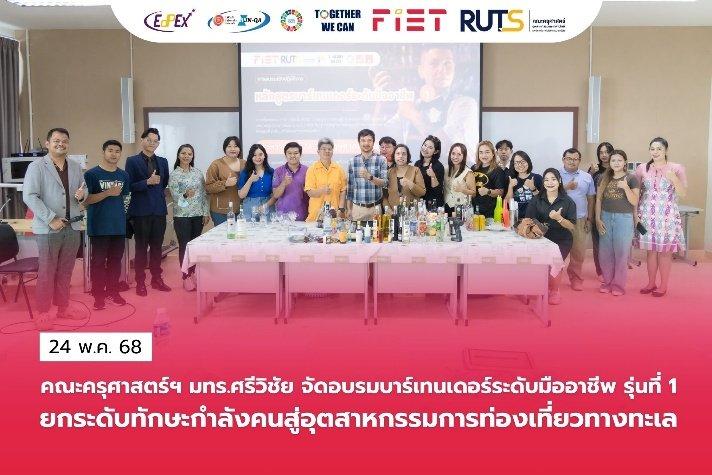
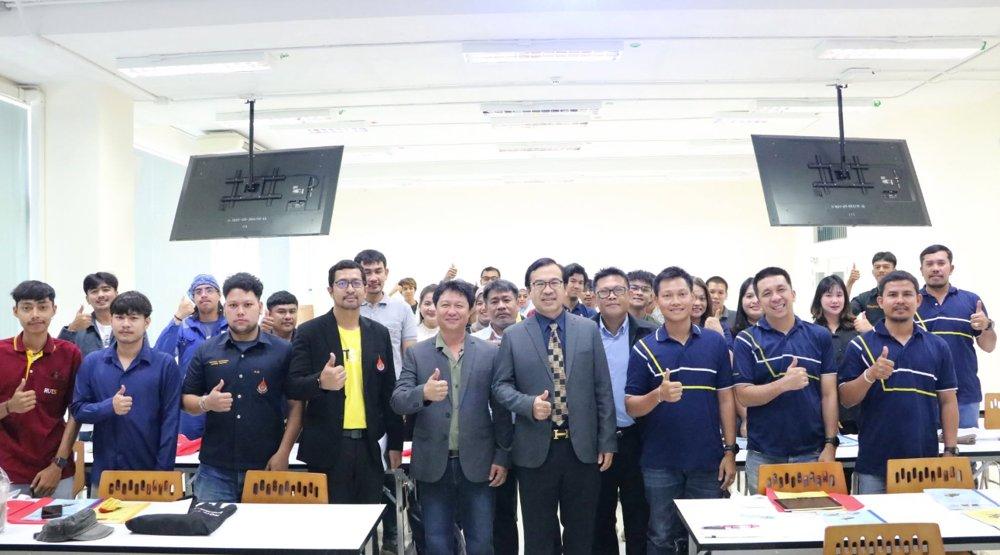
More than 443 people completed the training in 2025. The Southern Development Centres trained 243 people from 7 provinces, all of whom received certificates, and follow-up showed that 85 percent used what they learned to work or increase their income within three months. The digital skills courses trained 130 people, all 30 Thai Chef trainees passed the national skill standard test, and more than 40 participants from a range of companies attended the CSWIP 3.0 course.
5. Educational Outreach beyond Campus
Some remote schools in Songkhla serve children and young people with limited access to education. Community enterprises need technology to improve the quality and value of their products, and major flooding in Hat Yai District on 21–28 November 2025 affected schools and communities in the area. The university sent lecturers and students out to schools and communities in Songkhla and Trang, on both a programmed and an ad-hoc basis.
Teaching activities designed by students
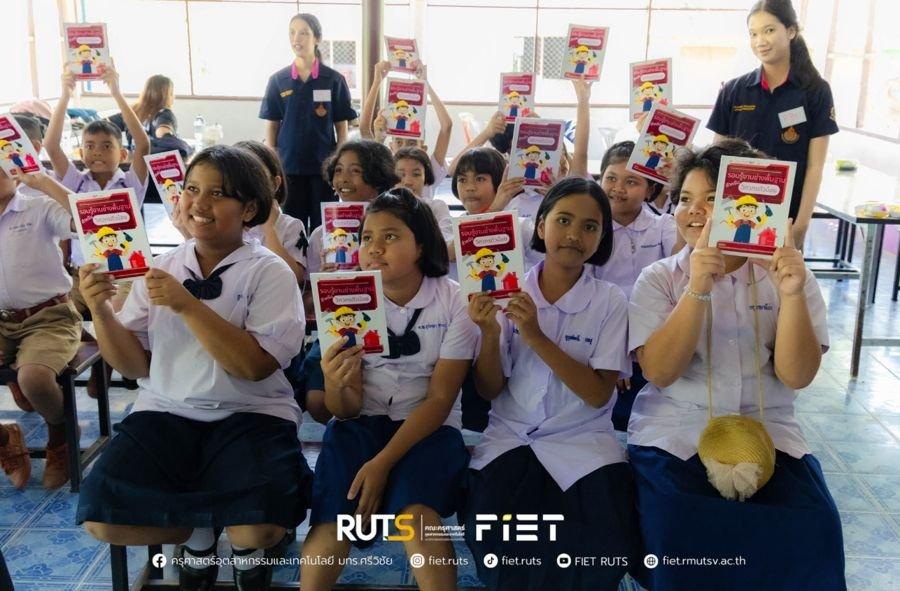
Twenty-four second-year Industrial Engineering students designed "Little Engineers: Book & Build" under the 2025 Education Quality and Local Development Project. The activity pairs reading with basic technical work and uses peer teaching. On 10–11 November 2025, the students taught pupils at Ban Baroi Border Patrol Police School, Sadao District, and Tha Chin Udom Witthaya School, Hat Yai District.
Student-run volunteer schemes held regularly
The Student Union of the Faculty of Industrial Education and Technology ran its 9th Kru Racha Volunteers for Community Development project on 2 June 2025. Students learned natural fabric dyeing with the Hua Khao Women's Community Enterprise, Singhanakhon District, and worked with the Faculty of Architecture Student Union to design patterns with an embedded QR code that opens an AR story of the community. The Electrical Education Club held its 3rd community development project at Wat Sala Luang Lang School, Ranot District, on 9–10 May 2025, repairing electrical systems and teaching teachers and residents about electrical safety.
Technology transfer and demonstrations in communities
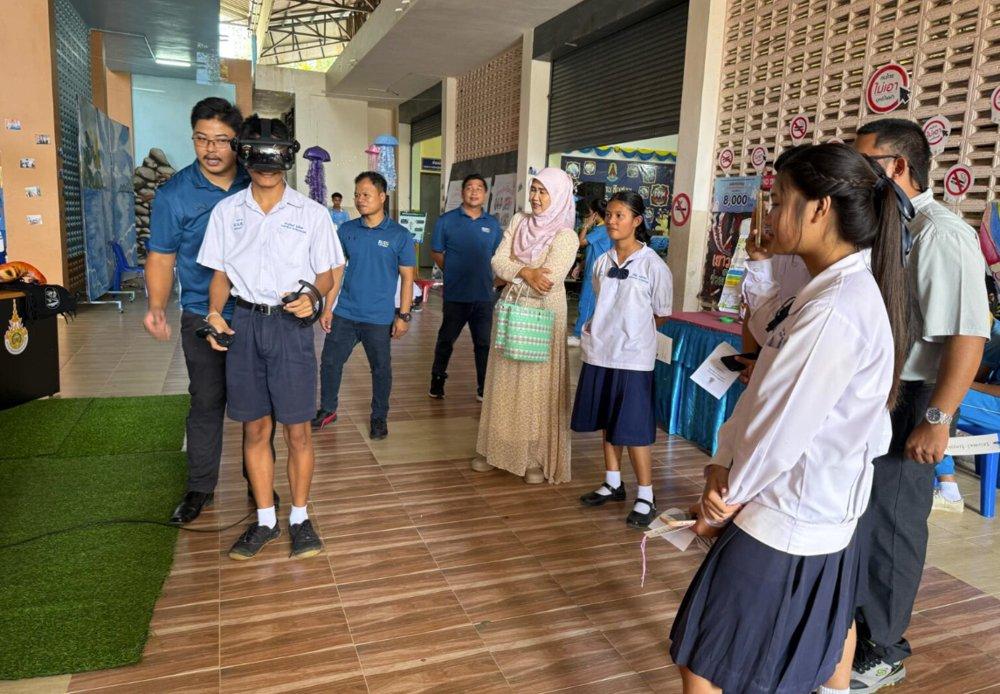
Researchers transferred solar dryer technology to two curry paste community enterprises in Na Thawi and Krasae Sin districts on 10–11 November 2025, as Activity 5 of a research project funded by PMU A. Rattaphum College taught honey and stingless bee propolis processing at the Phueng Jiw Mueang Ban Phru Community Enterprise on 5 July 2025. The Natural Resources and Environment Institute brought a VR exhibition on marine litter to pupils at Sikao Prachaphadungwit School, Trang, on 6 February 2025.
Volunteers develop and restore schools
The Faculty of Engineering and Technology, Trang Campus, and its alumni association upgraded the computer classroom, electrical system and grounds of Ban Nong Song Phi Nong School, Huai Yot District, on 14–16 February 2025. After the floods, the Faculty of Engineering's RUTS Rescue team restored electrical systems at Srisawangwong School on 4–5 December 2025 and showed teachers how to check flooded equipment before switching it on. On 13 December 2025, the Student Union, the Mirror Foundation and the RUTS Alumni Association cleaned Municipal School 6, repaired appliances and advised residents on using electricity safely after the floodwaters receded.
Counting only activities with confirmed figures, more than 160 pupils and community members took part. More than 62 pupils joined Book & Build, 28 people attended the propolis workshop, and 70 pupils at Ban Nong Song Phi Nong School benefited from the school upgrade. After the floods, more than half of Srisawangwong School's equipment was working again on the first day, and 80 student volunteers helped 48 households.