1. Overview
Rajamangala University of Technology Srivijaya (RUTS) has a plan to reduce electricity consumption and greenhouse gas emissions by replacing existing 40-watt fluorescent tubes with 18-watt LED tubes in university buildings, thereby improving the energy efficiency of lighting systems.
2. Energy Conservation Approach
The measure focuses on replacing existing fluorescent tubes with lower-wattage LED lighting. Photographs included in the original supporting document show personnel working on light fixtures inside a building and in a building area, providing visual evidence of lighting-system improvement activities.
| Comparison item | Rated power per tube |
|---|---|
| Existing fluorescent tube | 40 W |
| Proposed replacement LED tube | 18 W |
| Reduction in rated power | 22 W (55%) |
Note: The 55% reduction is calculated from the rated wattages stated in the supporting document: (40 − 18) / 40 × 100.
3. Relevance to SDG 7.2.3
Replacing fluorescent lighting with LEDs is an energy-efficiency measure that can reduce electricity demand for lighting and has the potential to lower indirect greenhouse gas emissions associated with purchased electricity (Scope 2). Quantifying actual emission reductions requires information on the number of tubes replaced, operating hours, electricity savings, and an appropriate greenhouse gas emission factor.
Appendix: Photographic Evidence from the Original Document
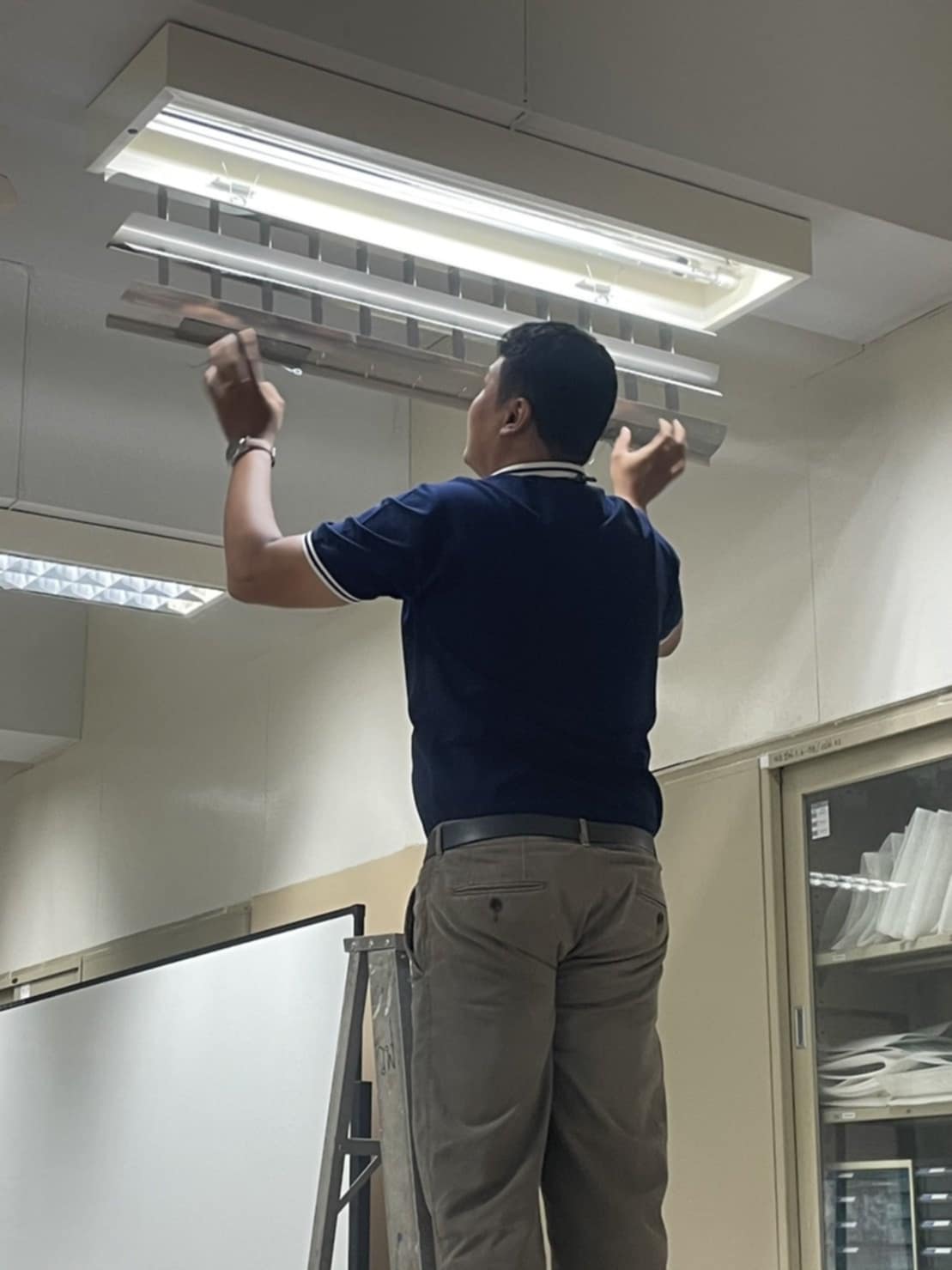
Evidence Figure 1. Personnel working on an indoor lighting fixture.
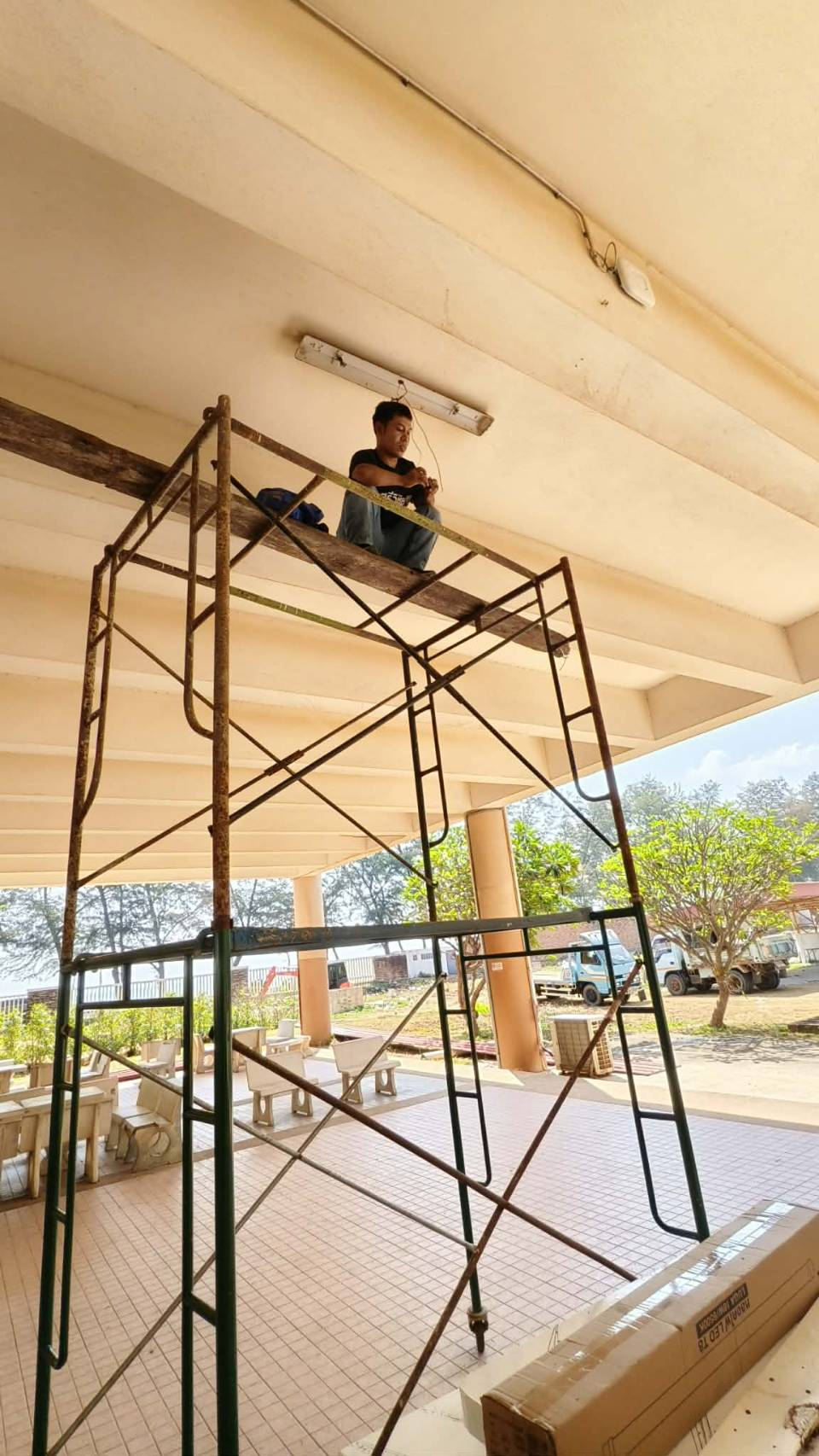
Evidence Figure 2. Personnel carrying out lighting-system work in a building area.
Source: Attached document “7.2.3.docx”, titled “RUTS Energy Efficiency Initiative: Replacing Fluorescent Tubes with LED for Sustainable Energy Conservation”.