Rajamangala University of Technology Srivijaya (RUTS)

Official Sustainable Development Goals (SDG 1 – 17) Public Evidence Directory — THE Impact Rankings (Data Year 2025)

📅 Data Year: 2025 🎯 Active SDGs: 17 / 17 📄 Published Evidence Pages: 179 📚 SDG 1–17 Reports 🏠 Back to RUTS SDG Home
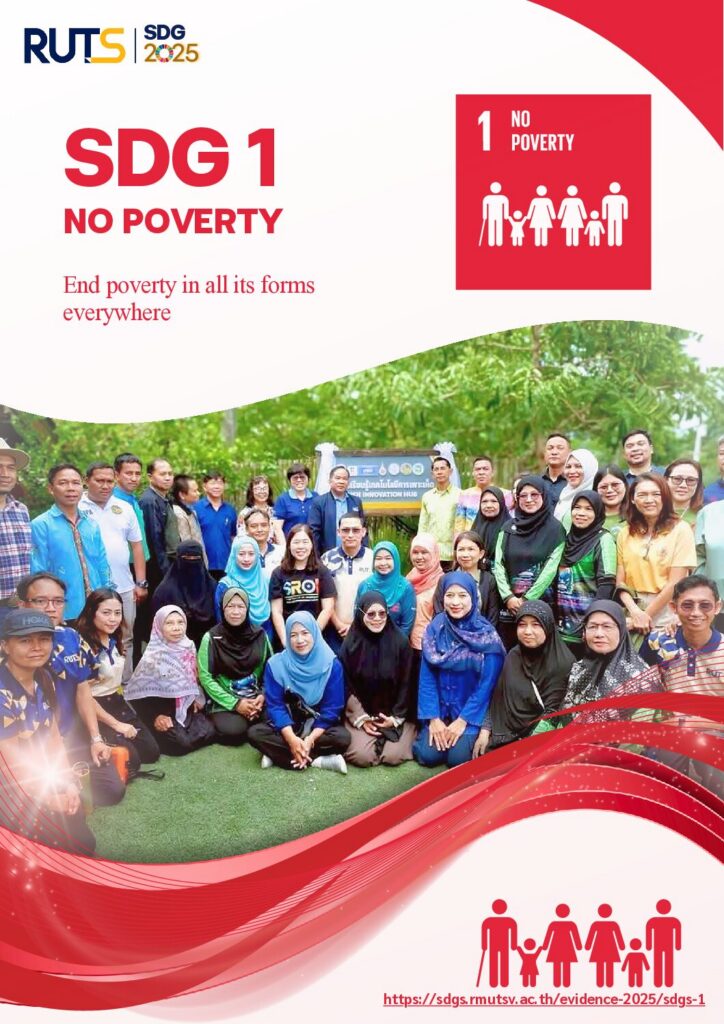
SDG 1
📜 Official Evidence • Data Year 2025
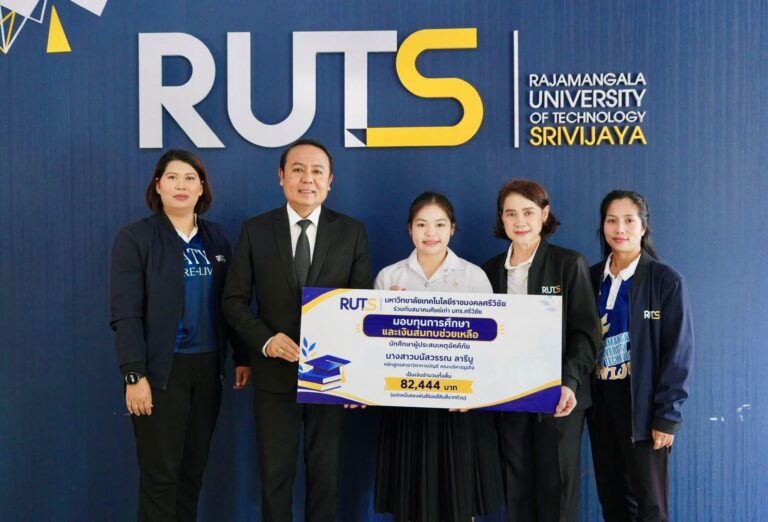
[1.3.3] Rajamangala University of Technology Srivijaya Promotes Equitable Access to Education through Scholarships, Financial Assistance, and Resource Mobilization 1.3.3
Rajamangala University of Technology Srivijaya Promotes Equitable Access to Education through Scholarships, Financial Assistance, and Resource Mobilization

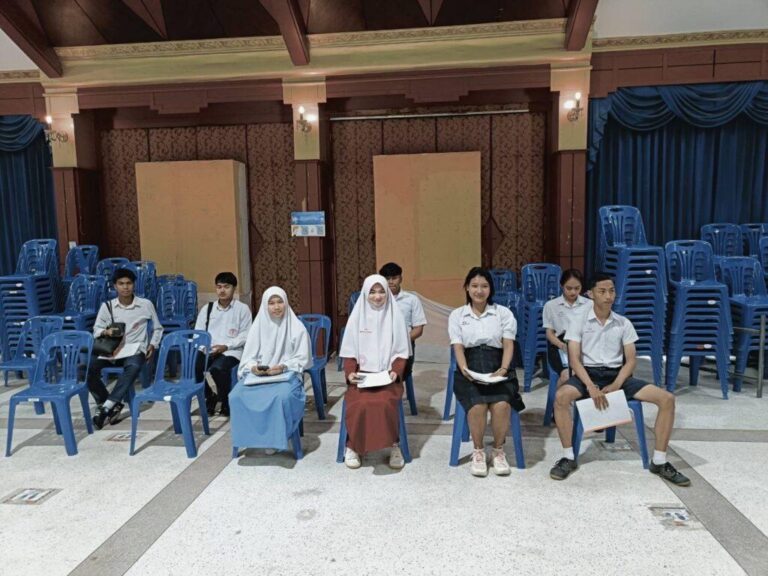
Rajamangala University of Technology Srivijaya (RUTS) is committed to promoting equitable access to education by providing scholarships, emergency financial assistance, administering the Student Loan Fund (SLF), and mobilizing resources through alumni networks, private-sector partnerships, and public donations. These initiatives aim to reduce students’ financial burdens, address urgent economic hardships, and support students in continuing their education. The university’s activities demonstrate its ongoing efforts to provide financial support across its campuses and academic units, particularly for students from disadvantaged backgrounds and those affected by unexpected emergencies. On 23 June 2025, the Trang Campus conducted interviews for new applicants to the Student Loan Fund for the 2025 academic year.

View Full Evidence Page →
SDG 1
📜 Official Evidence • Data Year 2025
[1.4.1] Supporting Local Start-ups and Entrepreneurial Development through Technology and Innovation 1.4.1
Supporting Local Start-ups and Entrepreneurial Development through Technology and Innovation

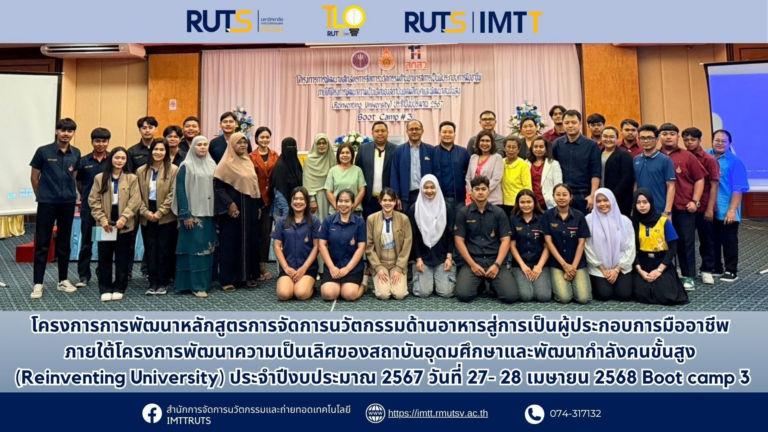
Rajamangala University of Technology Srivijaya (RUTS) supports the development of local start-ups and businesses by providing entrepreneurial training in the food and machinery sectors, promoting the adoption of technology and innovation, and monitoring the application of research outcomes in local communities. These initiatives aim to strengthen the knowledge and practical capabilities needed for business development while expanding access to the university’s research and expertise. Through these activities, the university seeks to foster entrepreneurship, enhance local economic opportunities, and support sustainable business growth in Southern Thailand. Developing Entrepreneurship in Food Innovation

View Full Evidence Page →
SDG 2
📜 Official Evidence • Data Year 2025
[2.2.1] Campus Food Waste Tracking 2.2.1
Campus Food Waste Tracking
Policy and Operation

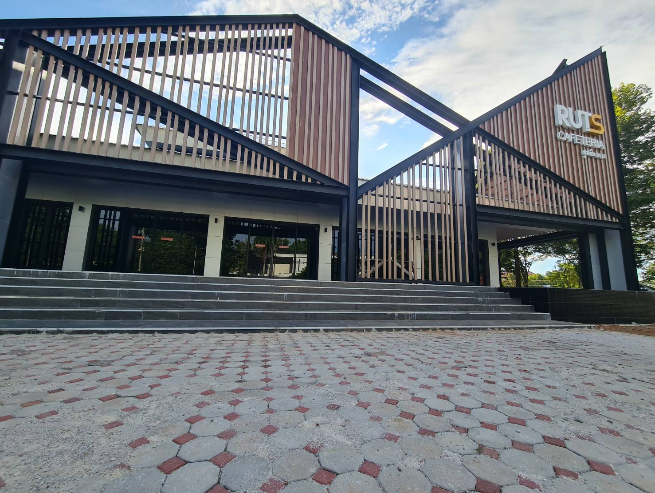
The provision of food services in the university is carried out by external service providers, with detailed operational conditions specified in a contractual agreement. These conditions are established under the criteria outlined in the announcement of the Rajamangala University of Technology Srivijaya regarding criteria, terms, and methods for the rental rates and maintenance costs of property under the university's care, within the Songkhla district. The rental rates and property maintenance costs under the university's care are set in the year. 2025. This is further regulated by a committee responsible for leasing properties, following the university's order number 956/2023. This committee ensures that businesses complying with the university's criteria operate under the specified standards. Within the university, there are various food establishments on 3 campuses.

View Full Evidence Page →
SDG 2
📜 Official Evidence • Data Year 2025
[2.2.2] Campus Food Waste Tracking 2.2.2
Campus Food Waste Tracking
Policy and Operation

The provision of food services in the university is carried out by external service providers, with detailed operational conditions specified in a contractual agreement. These conditions are established under the criteria outlined in the announcement of the Rajamangala University of Technology Srivijaya regarding criteria, terms, and methods for the rental rates and maintenance costs of property under the university's care, within the Songkhla district. The rental rates and property maintenance costs under the university's care are set in the year. 2025. This is further regulated by a committee responsible for leasing properties, following the university's order number 956/2023. This committee ensures that businesses complying with the university's criteria operate under the specified standards. Within the university, there are various food establishments on 3 campuses.

View Full Evidence Page →
SDG 2
📜 Official Evidence • Data Year 2025
2.4.1
The number of graduated students in the field of Agricultural Science and related fields
Policy and Operation

Proportion of graduates in agriculture and aquaculture including sustainability aspects In 2025, Rajamangala University of Technology Srivijaya had a total of 3,987 undergraduate degree graduates and 18 master's degree graduates. These individuals studied in programs related to sustainable food within the faculties of Agriculture, Agro-Industry, and Liberal Arts. Specifically, there were 441 graduates in the Bachelor's degree program in Food and Nutrition, accounting for 11.06% of all undergraduate degree graduates. As for the Master's degree program, there were 2 graduates. FacultyGraduated Student Bachelor DegreeMaster Degree Faculty of Liberal Arts960 Faculty of Agriculture (Saiyai)1962 Faculty of Agriculture (Thungyai)00 Faculty of Agro-Industry350 Faculty of Science and Fisheries1120 Total4392 Information Source: Faculty of Liberal Arts, Rajamangala University of Technology Srivijaya

View Full Evidence Page →
SDG 2
📜 Official Evidence • Data Year 2025
2.4.2
The number of graduated students in the field of Agricultural Science and related fields
Policy and Operation

Proportion of graduates in agriculture and aquaculture including sustainability aspects In 2025, Rajamangala University of Technology Srivijaya had a total of 3,987 undergraduate degree graduates and 18 master's degree graduates. These individuals studied in programs related to sustainable food within the faculties of Agriculture, Agro-Industry, and Liberal Arts. Specifically, there were 441 graduates in the Bachelor's degree program in Food and Nutrition, accounting for 11.06% of all undergraduate degree graduates. As for the Master's degree program, there were 2 graduates. FacultyGraduated Student Bachelor DegreeMaster Degree Faculty of Liberal Arts960 Faculty of Agriculture (Saiyai)1962 Faculty of Agriculture (Thungyai)00 Faculty of Agro-Industry350 Faculty of Science and Fisheries1120 Total4392 Information Source: Faculty of Liberal Arts, Rajamangala University of Technology Srivijaya

View Full Evidence Page →
SDG 2
📜 Official Evidence • Data Year 2025
[2.5.1] Training on durian inspection and harvesting standards (TAS 9070-2023) 2.5.1
Training on durian inspection and harvesting standards (TAS 9070-2023)

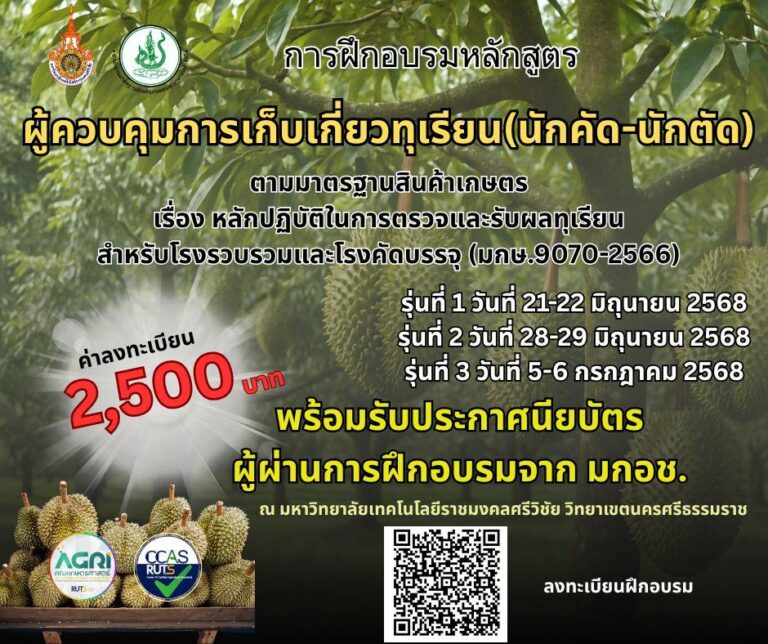
The Faculty of Agriculture arranges workshops on durian inspection and harvesting standards (TAS 9070-2023) between 21June and 6 July 2025 (several cohorts) for durian maturity inspectors, harvest supervisors, including packing-house QC staff, durian cutters, farmers and entrepreneurs. Participants receive certificates from ACFS and RUTS. The registration Fee costs THB 2,500 per person per course. Training on Cocoa Product Processing to Enhance the Value of Local Agricultural Products On 20 January 2025, a research team from the Faculty of Agro-Industry, Rajamangala University of Technology Srivijaya (RUTS), led by Ms. Sriubon Thongpradit, Principal Investigator of a research project funded by the Program Management Unit on Area-Based Development (PMU-A) in fiscal year 2023, together with Associate Professor Dr.

View Full Evidence Page →
SDG 2
📜 Official Evidence • Data Year 2025
[2.5.2] RUTS Hosts Six Agriculture and Food Seminars to Celebrate 90 Years of Sai Yai 2.5.2
RUTS Hosts Six Agriculture and Food Seminars to Celebrate 90 Years of Sai Yai

NAKHON SI THAMMARAT, Thailand – The Faculty of Agriculture and Agro-Industry at Rajamangala University of Technology Srivijaya (RUTS), Nakhon Si Thammarat Campus (Sai Yai), organized a series of six agriculture and food seminars from 24–28 November 2025 as part of the “90 Years of Sai Yai & Rajamangala Srivijaya Fair 2026.” The seminar series provided a platform for knowledge exchange and networking among farmers, entrepreneurs, academics, and members of the public. The initiative aimed to strengthen agricultural knowledge, promote food innovation, and support the development of agricultural businesses and local industries in Southern Thailand. The six seminars covered a range of topics relevant to regional agriculture and food production.

View Full Evidence Page →
SDG 2
📜 Official Evidence • Data Year 2025
[2.5.3] Opening of "Ros41 Farm Outlet", a space to sell and test-market university and community produce 2.5.3
Opening of "Ros41 Farm Outlet", a space to sell and test-market university and community produce

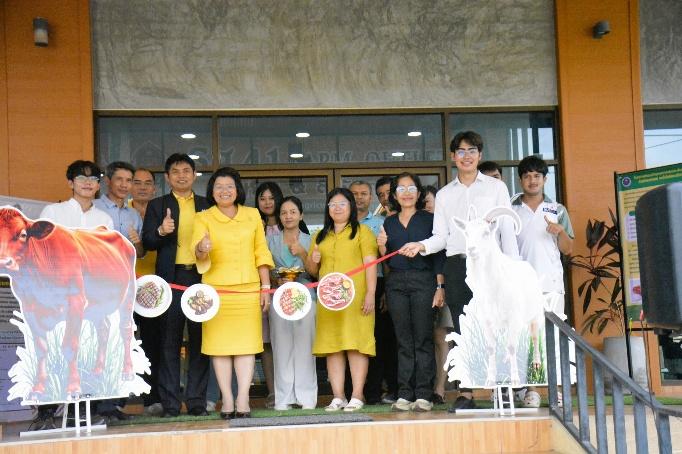
On 30 July 2025, Rajamangala University of Technology Srivijaya (RMUTSV), Thung Yai Campus, officially opened Ros 41 Farm Outlet, a retail outlet established to sell agricultural products, test new products in the market, and provide a sales platform for products developed by the university and local communities. The outlet also features food menus developed using beef and goat meat under the project entitled “Enhancing Livestock Production Capacity and Adding Value to Livestock Products through Science, Technology, and Innovation (STI) in Southern Thailand.” RUTS serves as the project management institution, working in collaboration with three partner universities: Walailak University, Prince of Songkla University, and Princess of Naradhiwas University. The opening ceremony was presided over by Assistant Professor Dr. Khwanhathai Jaipiem, Vice President for Nakhon Si Thammarat Campus.

View Full Evidence Page →
SDG 3
📜 Official Evidence • Data Year 2025
[3.3.1] RUTS Strengthens Collaboration with the Department of Mental Health to Enhance Student Mental Health Support and Counseling Systems 3.3.1
RUTS Strengthens Collaboration with the Department of Mental Health to Enhance Student Mental Health Support and Counseling Systems

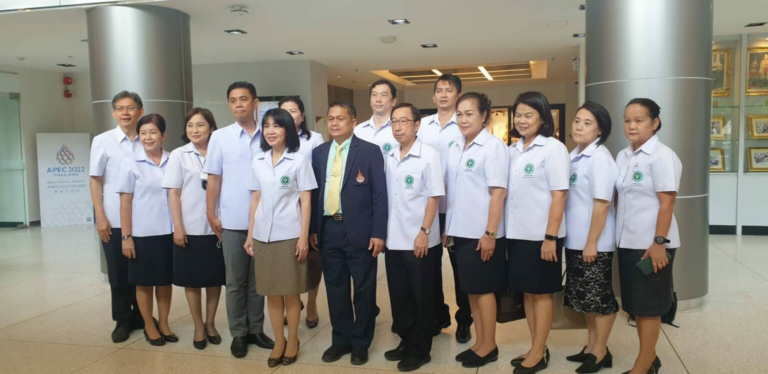
Rajamangala University of Technology Srivijaya (RUTS) actively promotes health and well-being through ongoing collaboration with healthcare institutions at national, regional, and local levels, supporting Sustainable Development Goal 3 (Good Health and Well-being). As part of its national-level collaboration, RUTS partnered with the Department of Mental Health, Ministry of Public Health, by sending university personnel to participate in a capacity-building workshop held on 30–31 July 2025 at the Best Western Plus Wanda Grand Hotel, Nonthaburi, Thailand. The workshop focused on developing trainers' competencies, strengthening university student counseling systems, and monitoring the implementation of counseling programs in higher education institutions.

View Full Evidence Page →
SDG 3
📜 Official Evidence • Data Year 2025
[3.3.2] RUTS Promotes Community Health and Well-being through Sports, Preventive Healthcare, and Veterinary Outreach  3.3.2
RUTS Promotes Community Health and Well-being through Sports, Preventive Healthcare, and Veterinary Outreach 

On 2 February 2025, Rajamangala University of Technology Srivijaya (RUTS), Nakhon Si Thammarat Campus, participated in the Higher Education Institutions Sports Friendship Event for the 2024 Academic Year, held at Nakhon Si Thammarat College of Dramatic Arts. The opening ceremony was presided over by Asst. Prof. Dr. Kwanhathai Jaipiam, Vice President for Nakhon Si Thammarat Campus and Chairperson of the Nakhon Si Thammarat Higher Education Institutions Network. The event brought together representatives from 10 higher education institutions across the province to strengthen institutional collaboration, promote unity, and encourage active participation among staff, students, and local communities through sports and recreational activities.

View Full Evidence Page →
SDG 3
📜 Official Evidence • Data Year 2025
[3.3.3] RUTS Supports Community Health and Youth Development through Access to University Sports Facilities 3.3.3
RUTS Supports Community Health and Youth Development through Access to University Sports Facilities

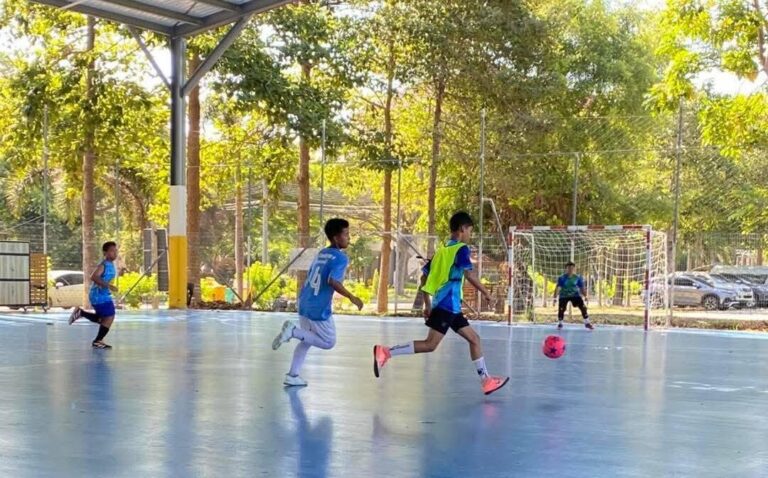
Rajamangala University of Technology Srivijaya (RUTS) demonstrated its commitment to community health and well-being by providing free access to its sports facilities and supporting equipment for community use. On Saturday, 26 April 2025, from 9:00 a.m. to 5:00 p.m., the university granted the Ko Taeo Youth Football Club permission to use its futsal court, tables, and plastic chairs free of charge to organize a futsal tournament for children under the age of 13. This initiative reflected the university's commitment to making its sports infrastructure and recreational facilities accessible to local communities without financial barriers.

View Full Evidence Page →
SDG 3
📜 Official Evidence • Data Year 2025
[3.3.4] RUTS Promotes Sexual and Reproductive Health through HPV Vaccination and Cervical Cancer Screening 3.3.4
RUTS Promotes Sexual and Reproductive Health through HPV Vaccination and Cervical Cancer Screening

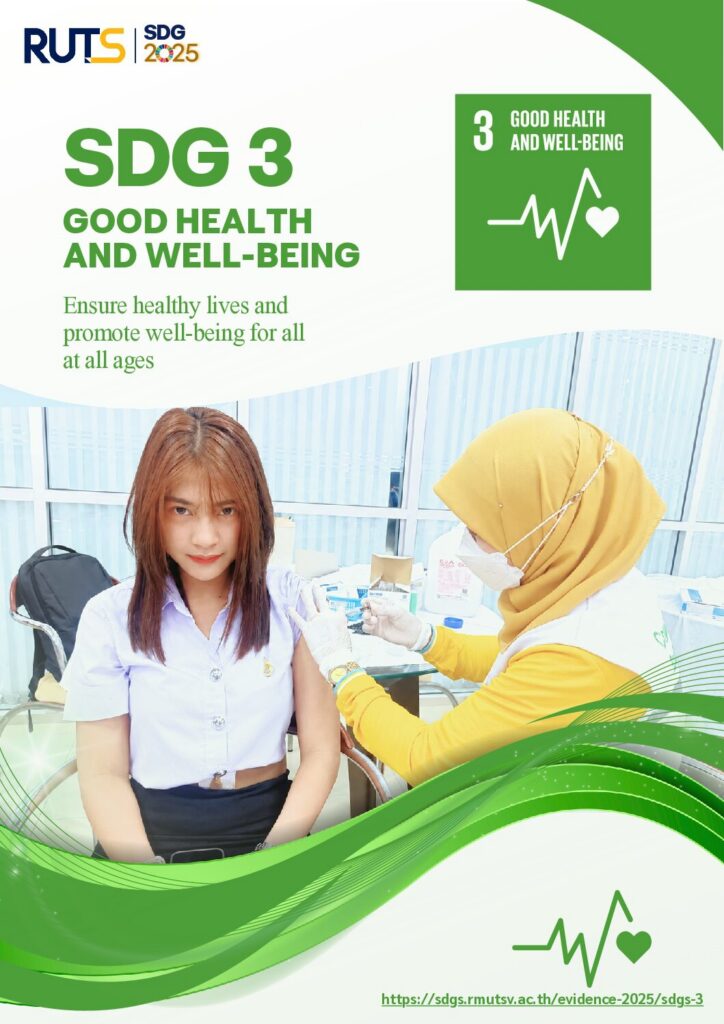
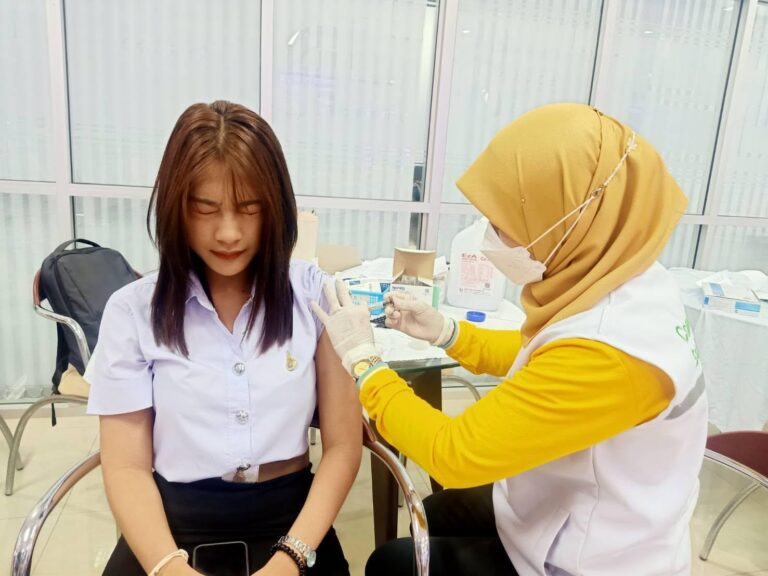
On August 27, 2025, Rajamangala University of Technology Srivijaya (RUTS), in collaboration with Songkhla Hospital, organized an HPV vaccination service for 100 students at the Co-Working Space, 1st Floor, Office of Academic Resources and Information Technology Building, RUTS Songkhla. The initiative aimed to prevent Human Papillomavirus (HPV) infection, a major cause of cervical cancer, while promoting students' sexual and reproductive health and overall well-being. Recognizing the importance of preventive healthcare, RUTS sought to strengthen students' protection against HPV-related diseases and support a healthy learning environment that contributes to their academic success and quality of life. Throughout the activity, medical professionals from Songkhla Hospital provided health consultations, explained the benefits of HPV vaccination, and closely monitored students' safety following vaccination.

View Full Evidence Page →
SDG 3
📜 Official Evidence • Data Year 2025
[3.3.5] RUTS Strengthens Mental Health and Well-being through Institutional Partnerships, Counseling Services, and Preventive Care 3.3.5
RUTS Strengthens Mental Health and Well-being through Institutional Partnerships, Counseling Services, and Preventive Care

Rajamangala University of Technology Srivijaya (RUTS) has entered into a Memorandum of Understanding (MoU) with the Department of Mental Health, Ministry of Public Health, and eight other Rajamangala Universities of Technology under the initiative “Partner Network for Mental Care: Stepping Towards Quality Thai People.” The agreement aims to strengthen and expand comprehensive mental health services for students across all nine Rajamangala Universities of Technology through coordinated collaboration between public health agencies and universities in their respective health regions. The partnership focuses on establishing an integrated and sustainable mental health support system encompassing mental health promotion, prevention, early identification, care and assistance, continuous monitoring, and surveillance of mental health concerns.

View Full Evidence Page →
SDG 3
📜 Official Evidence • Data Year 2025
[3.3.6] RUTS Advances Smoke-Free University Policy to Protect Student and Staff Health 3.3.6
RUTS Advances Smoke-Free University Policy to Protect Student and Staff Health

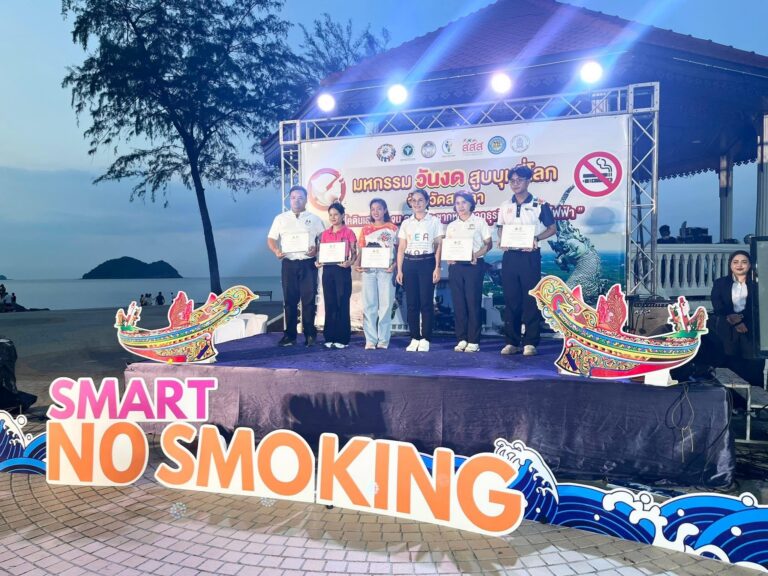
On 23 August 2023, Rajamangala University of Technology Srivijaya (RUTS) officially issued its “Smoke-Free Educational Institution Policy and Measures” to reinforce its commitment to creating a healthy, safe, and smoke-free university environment. The policy was established in accordance with Thailand's Tobacco Products Control Act B.E. 2560 (2017) and relevant guidelines issued by the Ministry of Higher Education, Science, Research and Innovation (MHESI), providing an institutional framework for tobacco prevention, control, and health promotion across the university.

View Full Evidence Page →
SDG 3
📜 Official Evidence • Data Year 2025
[3.3.7] RUTS CARE MENTAL HEALTH PROJECT 3.3.7
RUTS CARE MENTAL HEALTH PROJECT

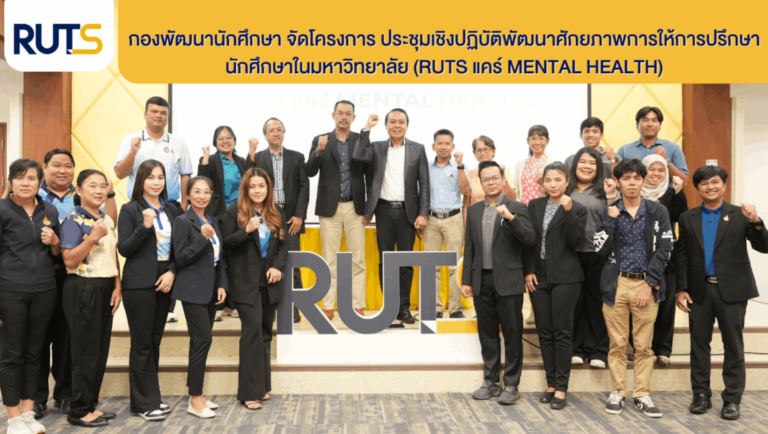
On 27 May 2025, the Student Development Division of Rajamangala University of Technology Srivijaya organized the workshop "Developing Capacity for Counseling Students in the University (RUTS Care Mental Health)" at the Samila Meeting Room, President's Office Building (Mueang Songkhla District, Songkhla Province). Asst. Prof. Piya Prasongchan, Vice President, presided over the opening. The project was carried out under the Memorandum of Understanding (MOU) for the "Partner Network for Mental Care: Stepping Towards Quality Thai People" project, in collaboration with the Mental Health Center 12, Department of Mental Health, Ministry of Public Health, to upgrade the care and monitoring system for mental health problems among students and staff so that it is comprehensive and meets standards. The key operations are as follows: 1.

View Full Evidence Page →
SDG 4
📜 Official Evidence • Data Year 2025
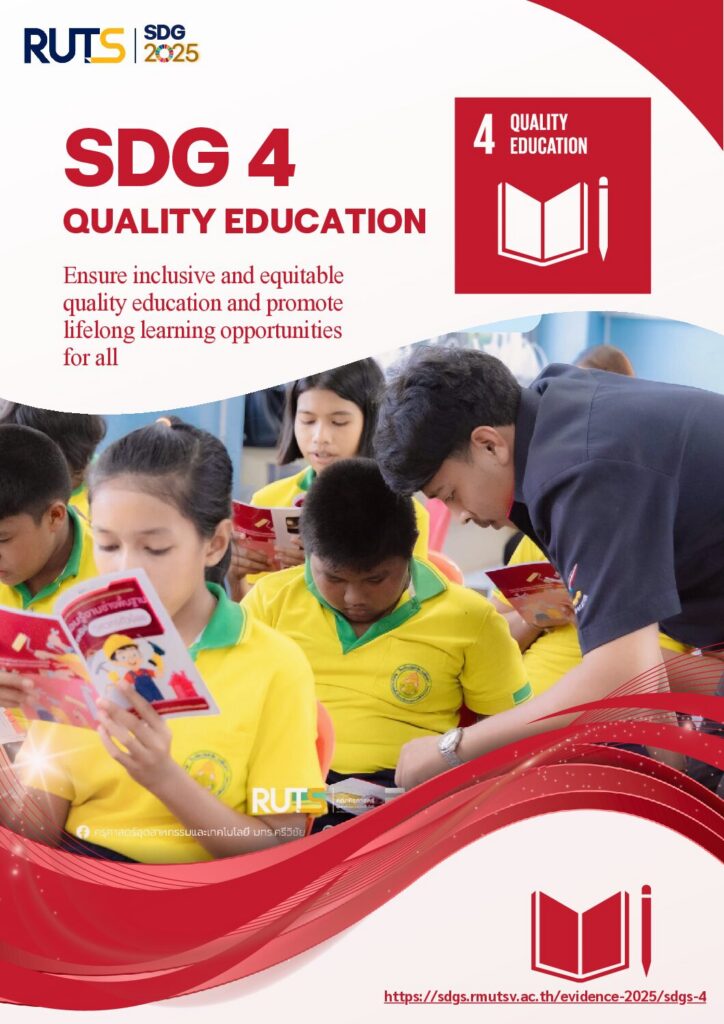
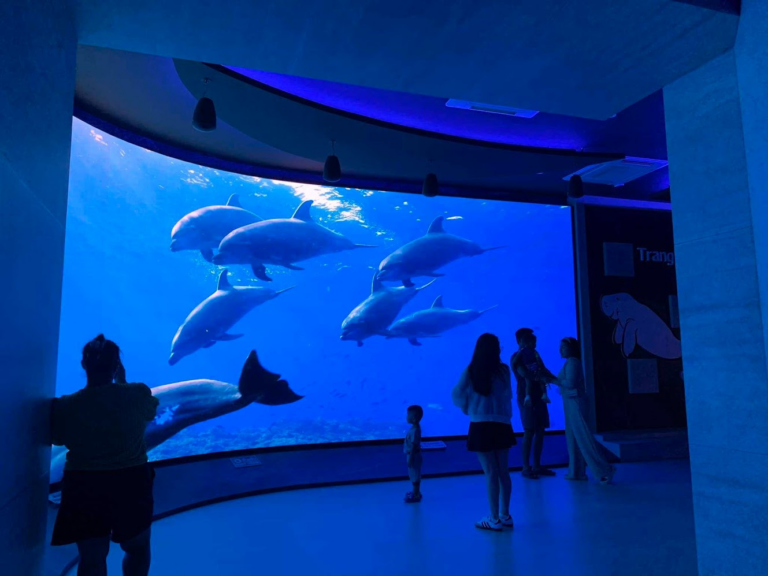
[4.3.1] RUTS Opens Lifelong Learning Resources to the Public Free of Charge in 2025: Online Certificate Courses, Libraries, an Aquarium and Online Research Resources 4.3.1
RUTS Opens Lifelong Learning Resources to the Public Free of Charge in 2025: Online Certificate Courses, Libraries, an Aquarium and Online Research Resources
Policy and Operation Teaching and Learning Outreach and Engagement Research and Innovation

SDG 4.3.1 Public Resources (Lifelong Learning) Performance News and Evidence (Part 1), 2025 SDG 4 Quality Education 4.3.1 Public resources (lifelong learning) – Free courses leading to certificate – Free access to campus facilities and equipment – Free access to online resources 11.2.2 SDG 8 Decent Work and Economic Growth (skills development for employment) SDG 9 Industry, Innovation and Infrastructure (research dissemination) SDG 11 Sustainable Cities and Communities (public access to university spaces) SDG 14 Life Below Water January – December 2025 - Office of Academic Promotion and Registration, with the Faculty of Industrial Education and Technology (RUTS MOOC) - Office of Academic Resources and Information Technology (libraries) - Natural Resources and Environment Institute (Rajamangala Trang Aquarium)

View Full Evidence Page →
SDG 4
📜 Official Evidence • Data Year 2025
[4.3.2] RUTS Opens Its Campuses to Students, the Public and Communities through Science Week, Agricultural and Fisheries Fairs and Open House Events in 2025 4.3.2
RUTS Opens Its Campuses to Students, the Public and Communities through Science Week, Agricultural and Fisheries Fairs and Open House Events in 2025
Teaching and Learning Outreach and Engagement Research and Innovation

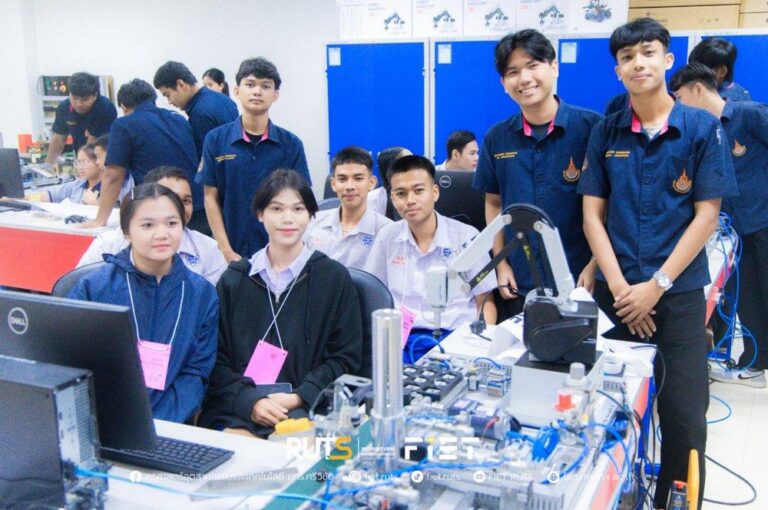
SDG 4.3.2 Public Events (Lifelong Learning) Performance News and Evidence (Part 1), 2025 SDG 4 Quality Education 4.3.2 Public events (lifelong learning) Educational events hosted at the university and open to the general public Full points when all events are free of charge SDG 2 Zero Hunger (agriculture and food, Thung Yai Agricultural Fair) SDG 9 Industry, Innovation and Infrastructure (innovation and entrepreneurship) SDG 14 Life Below Water (marine and coastal conservation, Fisheries Fair) SDG 17 Partnerships for the Goals (partnerships with MHESI, government, private sector, communities and partner universities) 6 February – 27 December 2025 5th Fisheries Fair: 6–8 Feb 2025 | Thung Yai Agricultural Fair: 28 Feb – 9 Mar 2025 Science Week: 18–20 Aug 2025 | FIET Open House: 27 Aug 2025 | 6th Fisheries Fair: 26–27 Dec 2025

View Full Evidence Page →
SDG 4
📜 Official Evidence • Data Year 2025
[4.3.3] RUTS Runs 15 Vocational Training and Short Courses on Campus for the Public and Working People in 2025, on Both a Programmed and an Ad-hoc Basis 4.3.3
RUTS Runs 15 Vocational Training and Short Courses on Campus for the Public and Working People in 2025, on Both a Programmed and an Ad-hoc Basis
Outreach and Engagement

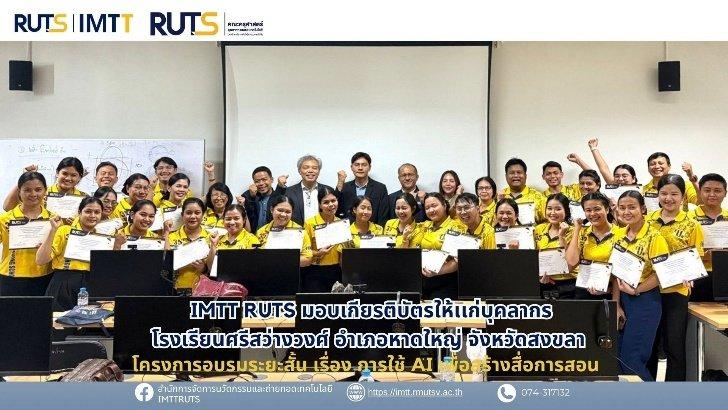
SDG 4.3.3 Vocational Training Events (Lifelong Learning) Performance News and Evidence (Part 1), 2025 SDG 4 Quality Education 4.3.3 Vocational training events (lifelong learning) Executive education or vocational training hosted at the university and open to people who are not students Full points when events are held on both an ad-hoc and a programmed basis SDG 8 Decent Work and Economic Growth (workforce upskilling) January – December 2025 Southern Development Centres: 10 Feb – 25 May 2025 | Digital skills courses: 3 Feb – 21 Dec 2025 | Thai Chef: 30–31 Jan 2025 | CSWIP 3.0: 23 Jun 2025 Faculty of Industrial Education and Technology (Southern Border Development Centre) College of Hospitality and Tourism (Andaman Southern Development Centre) College of Industrial Technology and Management (Gulf of Thailand Southern Development Centre)

View Full Evidence Page →
SDG 4
📜 Official Evidence • Data Year 2025
[4.3.4] RUTS Takes Learning to Schools and Communities throughout 2025: Student-Designed Programmes, Technology Transfer to Community Enterprises and Volunteer Work to Develop and Restore Schools 4.3.4
RUTS Takes Learning to Schools and Communities throughout 2025: Student-Designed Programmes, Technology Transfer to Community Enterprises and Volunteer Work to Develop and Restore Schools
Teaching and Learning Outreach and Engagement Research and Innovation

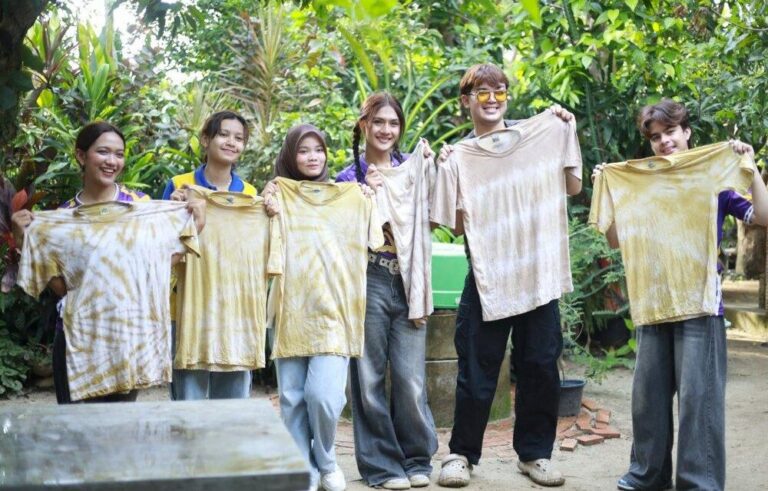
Performance News and Evidence (Part 1), 2025 SDG 4 Quality Education Tailored lectures or demonstrations in local schools or communities, including voluntary student-run schemes Full points when activities are both ad-hoc and programmed SDG 7 Affordable and Clean Energy (solar technology) SDG 8 Decent Work and Economic Growth (raising community enterprise income) SDG 11 Sustainable Cities and Communities (Songkhla's local wisdom and culture; community recovery after floods) SDG 14 Life Below Water (reducing marine litter) SDG 17 Partnerships for the Goals (schools, community enterprises, the Mirror Foundation, the alumni association and PMU A funding) 6 February – 13 December 2025 6 Feb | 14–16 Feb | 9–10 May | 2 Jun | 5 Jul | 10–11 Nov | 4–5 Dec | 13 Dec 2025 Faculty of Industrial Education and Technology ("Little Engineers: Book & Build" and solar dryer technology transfer)

View Full Evidence Page →
SDG 4
📜 Official Evidence • Data Year 2025
[4.3.5] RUTS Regulation and Long-Term Plan Guarantee Equal Access to Lifelong Learning for All, without Discrimination 4.3.5 📄 PDF
RUTS Regulation and Long-Term Plan Guarantee Equal Access to Lifelong Learning for All, without Discrimination
Policy and Operation

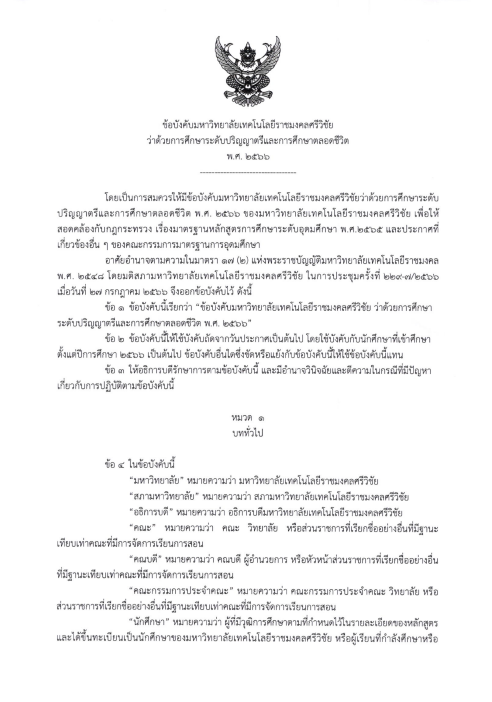
SDG 4.3.5 Lifelong Learning Access Policy Performance News and Evidence (Part 1), 2025 SDG 4 Quality Education 4.3.5 Lifelong learning access policy A policy that ensures access to lifelong learning activities is accessible to all, regardless of ethnicity, religion, disability, immigration status or gender Policy created or reviewed in the period 2022–2026 SDG 5 Gender Equality SDG 10 Reduced Inequalities SDG 11 Sustainable Cities and Communities (local cultural heritage) Regulation B.E. 2566 (2023), amended as Regulation (No. 2) on 15 October 2025 20-Year Long-Term Development Plan (2018–2037) Policy implementation: January – December 2025 Office of Academic Promotion and Registration (Regulation on Bachelor's Degree and Lifelong Education) Division of Policy and Planning (20-Year Long-Term Development Plan)

View Full Evidence Page →
SDG 5
📜 Official Evidence • Data Year 2025
[5.3.1] Rajamangala University of Technology Srivijaya Monitors and Enhances Student Admission Strategies for Academic Year 2025 5.3.1
Rajamangala University of Technology Srivijaya Monitors and Enhances Student Admission Strategies for Academic Year 2025
Policy and Operation Outreach and Engagement

On March 25, 2025, Rajamangala University of Technology Srivijaya (RUTS), led by the University President and university administrators, held its fifth Student Admission Monitoring Meeting for Academic Year 2025 via Zoom Cloud Meeting. The meeting brought together representatives from faculties and colleges, academic staff, public relations personnel, educational guidance officers, and admission coordinators to review admission progress, address challenges, and enhance student recruitment strategies. RUTS provides an accessible online admission system that enables prospective students to register, select academic programmes, submit applications, and track their admission status.

View Full Evidence Page →
SDG 5
📜 Official Evidence • Data Year 2025
[5.3.2] Rajamangala University of Technology Srivijaya (RUTS) Offers Special Admission Opportunities for Male and Female Students with Outstanding Athletic Abilities for Academic Year 2025 5.3.2 📄 PDF
Rajamangala University of Technology Srivijaya (RUTS) Offers Special Admission Opportunities for Male and Female Students with Outstanding Athletic Abilities for Academic Year 2025
Outreach and Engagement

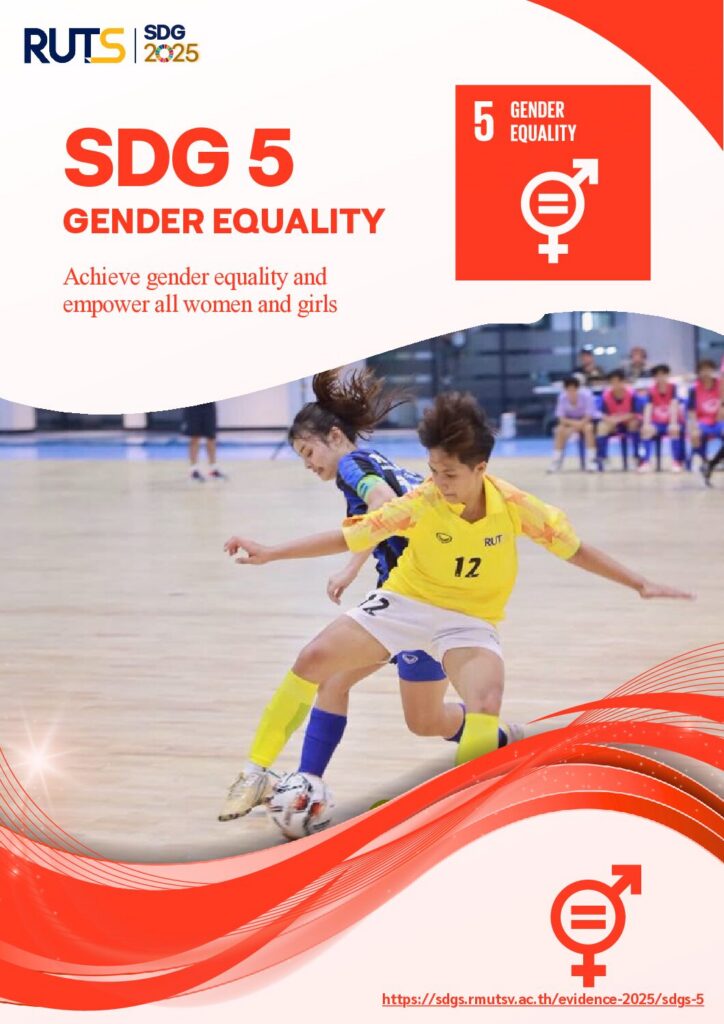
On March 30 and October 18, 2025, the Student Development Division of Rajamangala University of Technology Srivijaya (RUTS) organized special admission selection activities for students with outstanding athletic abilities for Academic Year 2025. The selection committee, chaired by Assistant Professor Piya Prasongchan, included faculty members specializing in athletics, football, volleyball, and badminton. The selection activities were conducted at the university's multipurpose building to assess applicants' sporting skills and achievements. This special admission initiative provides an alternative pathway to higher education for talented male and female athletes, recognizing their sporting achievements alongside their academic potential.

View Full Evidence Page →
SDG 5
📜 Official Evidence • Data Year 2025
[5.3.3] RUTS Student Support Schemes: Scholarships and Counselling Services to Promote Educational Opportunities and Student Well-being 5.3.3
RUTS Student Support Schemes: Scholarships and Counselling Services to Promote Educational Opportunities and Student Well-being
Outreach and Engagement

Rajamangala University of Technology Srivijaya (RUTS), through its Division of Student Development, is committed to promoting equal educational opportunities and supporting student well-being through scholarship information services and counselling-related initiatives. These efforts aim to reduce financial and emotional barriers to higher education while ensuring that both female and male students have access to essential support services. In 2025, the Division of Student Development actively publicized scholarship opportunities to help students, including female students, access financial assistance and pursue their academic goals. Additionally, on May 27, 2025, the university organized the “RUTS Cares Mental Health” workshop to strengthen university personnel's skills in counselling, providing initial mental health support, and referring students and staff to qualified specialists when necessary.

View Full Evidence Page →
SDG 5
📜 Official Evidence • Data Year 2025
[5.3.4] Promoting Women’s Participation in Engineering and Technology through Inclusive Education and Srivijaya Fair at RUTS 5.3.4
Promoting Women’s Participation in Engineering and Technology through Inclusive Education and Srivijaya Fair at RUTS
Outreach and Engagement

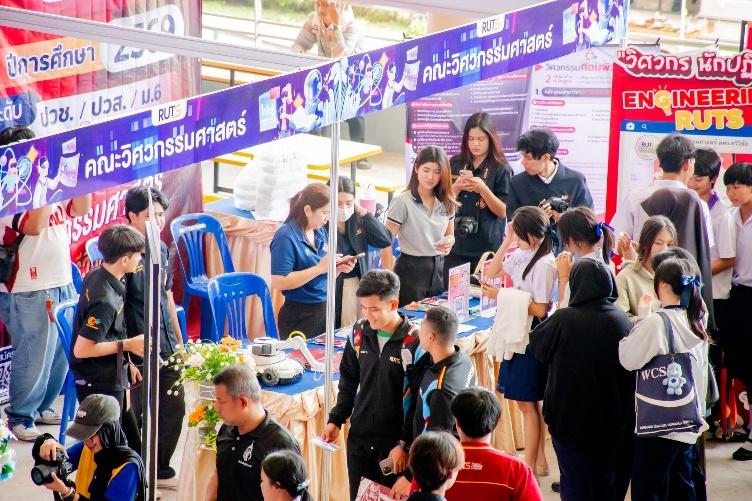
Faculty of Engineering, Faculty of Industrial Education and Technology, and the university units responsible for student recruitment and educational guidance, Rajamangala University of Technology Srivijaya (RUTS). Rajamangala University of Technology Srivijaya (RUTS) is committed to advancing gender equality and expanding educational opportunities for female students, particularly in engineering and technology disciplines where women have traditionally been underrepresented. The university encourages women's participation in fields such as Marine Engineering by highlighting female students' achievements and promoting mentoring, workshops, and networking opportunities that support their academic and professional development.

View Full Evidence Page →
SDG 5
📜 Official Evidence • Data Year 2025
[5.6.1] Rajamangala University of Technology Srivijaya Announces Commitment to Gender Equality and Non-Discrimination 5.6.1 📄 PDF
Rajamangala University of Technology Srivijaya Announces Commitment to Gender Equality and Non-Discrimination
Policy and Operation

Rajamangala University of Technology Srivijaya (RUTS) has announced its commitment to promoting gender equality and eliminating unfair gender-based discrimination, in accordance with Thailand’s Gender Equality Act B.E. 2558 (2015). The university recognizes the importance of creating an inclusive and equitable working environment that respects the dignity, rights, and gender identities of all personnel. The university’s commitment outlines practical measures to promote gender equality in personnel administration and workplace practices. These include allowing personnel to dress in accordance with their gender identity or expression, providing appropriate facilities based on individual needs and circumstances, ensuring that recruitment announcements and job qualifications do not unfairly specify gender, and promoting the appropriate use of language and terminology to prevent stereotyping and discrimination.

View Full Evidence Page →
SDG 5
📜 Official Evidence • Data Year 2025
[5.6.3] Maternity Leave Entitlements for Employees at Rajamangala University of Technology Srivijaya 5.6.3 📄 PDF
Maternity Leave Entitlements for Employees at Rajamangala University of Technology Srivijaya
Policy and Operation

Rajamangala University of Technology Srivijaya (RUTS) is committed to promoting employee welfare, gender equality, and a supportive working environment that prioritizes maternity protection and work–life balance. The university has established personnel regulations to safeguard employees' rights and provide maternity leave benefits. Under Clause 26.2 of the 2025 Regulations Governing Income-Funded Employees, eligible employees are entitled to up to 90 days of maternity leave, including 45 days of paid leave provided by the university. This policy supports female employees during pregnancy, childbirth, and postnatal recovery while helping to ensure financial stability and family well-being. The maternity leave policy promotes physical and mental well-being, work–life balance, and equal employment opportunities.

View Full Evidence Page →
SDG 5
📜 Official Evidence • Data Year 2025
[5.6.4] Student Motherhood Support Facilities at RUTS 5.6.4
Student Motherhood Support Facilities at RUTS
Outreach and Engagement

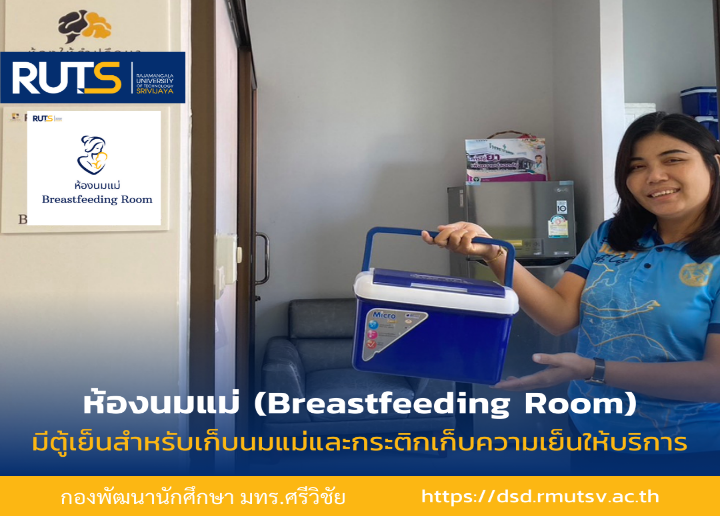
RUTS initiative to support female students who are mothers is a commendable effort to create a more inclusive and accommodating environment for students. The university has set up dedicated areas where female students who are mothers can comfortably breastfeed their babies or use breast pumps. These spaces are designed to provide privacy and comfort, making it easier for mothers to continue their academic pursuits while still caring for their infants. The availability of breast pumps ensures that students can express breast milk conveniently, even if they need to be away from their babies for extended periods. To ensure that expressed breast milk remains fresh and safe, the university provides refrigeration facilities for storing breast milk.

View Full Evidence Page →
SDG 5
📜 Official Evidence • Data Year 2025
[5.6.5] Child care facilities and services by RUTS 5.6.5
Child care facilities and services by RUTS
Outreach and Engagement

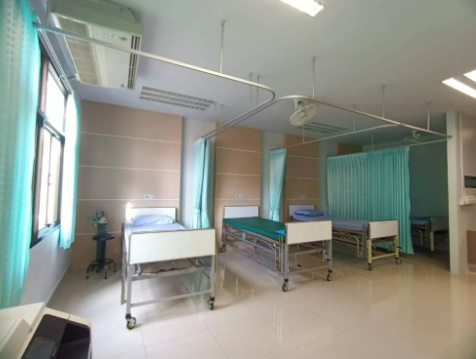
RUTS has made provisions to support female employees with child care facilities and services. Including areas for breastfeeding with breast pumps and refrigerators for storing breast milk. Also, there are accommodations available for pregnant employees to rest as needed. Breastfeeding areas equipped with breast pumps offer vital support for nursing mothers. These spaces provide a comfortable and private environment, allowing employees to express milk during their workday. For breast milk we prepared refrigerators for storing expressed breast milk is an important enhancement to breastfeeding facilities. This ensures that milk remains safe and fresh until mothers can access it for feeding their infants. Moreover, providing rest accommodations for pregnant employees is crucial for their well-being.

View Full Evidence Page →
SDG 5
📜 Official Evidence • Data Year 2025
[5.6.7] RUTS Tracks Female Graduate Numbers and Graduate Outcomes 5.6.7
RUTS Tracks Female Graduate Numbers and Graduate Outcomes
Outreach and Engagement

_________ RUTS tracks the graduation rates of its students. For the academic year 2025, a total of 2,210 female students successfully completed their studies. The university also has a system in place to monitor the employment status of its graduates. Monitoring graduation rates and tracking the employment status of graduates are vital for evaluating the educational outcomes and success of students at Rajamangala University of Technology Srivijaya. These initiatives enable the university to refine its programs and support services, ensuring that students are well-prepared for their future careers and equipped for success after graduation.

View Full Evidence Page →
SDG 5
📜 Official Evidence • Data Year 2025
[5.6.8] RUTS Strengthens Gender Equality Through Accessible Complaint and Reporting Mechanisms 5.6.8 📄 PDF
RUTS Strengthens Gender Equality Through Accessible Complaint and Reporting Mechanisms
Policy and Operation

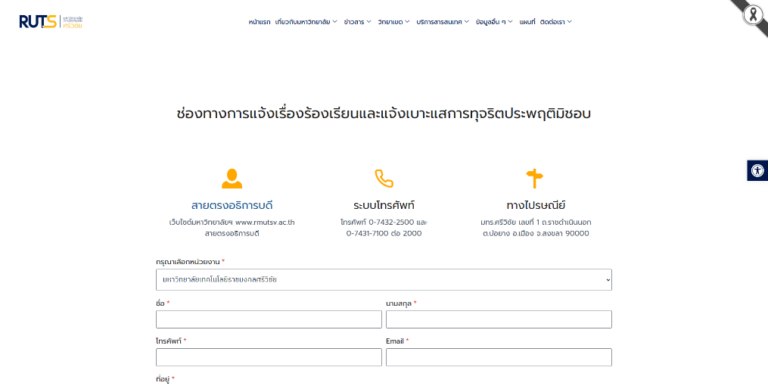
Rajamangala University of Technology Srivijaya (RUTS) is committed to promoting gender equality, fairness, and inclusivity by providing accessible complaint and reporting channels for students, staff, and the wider community. Through its official complaint platform, individuals can raise concerns and report incidents of discrimination, sexual harassment, or unfair treatment via telephone, postal mail, or email. These channels support transparency, accountability, and the protection of individual rights while encouraging a safe and respectful university environment. By facilitating access to complaint and grievance procedures, RUTS reinforces its commitment to equal opportunities and non-discrimination.

View Full Evidence Page →
SDG 5
📜 Official Evidence • Data Year 2025
5.6.9 📄 PDF
Rajamangala University of Technology Srivijaya Promotes Gender Equality by Supporting Male Employees in Caring for Their Wives During Childbirth
Policy and Operation

SDG 5 GENDER EQUALITY SDG 5.6.9 Paternity policy Ongoing policy implementation under the university's 2018 regulations governing working hours, leave, and compensation for university employees. Rajamangala University of Technology Srivijaya (RUTS) promotes gender equality and a family-friendly working environment by providing leave entitlements for male employees to assist their legally recognized wives during childbirth. The policy is based on the university's regulations governing working hours, leave, and compensation for university employees, together with the Prime Minister's Office Regulations on Leave for Government Officials B.E. 2555 (2012). Under Clause 20 of the university's regulations, eligible employees may request leave to assist their wives during childbirth for a continuous period of up to 15 working days.

View Full Evidence Page →
SDG 6
📜 Official Evidence • Data Year 2025
[6.2.1] Water at RUTS: Sources, Consumption and Monitoring in 2025 6.2.1 📄 PDF
Water at RUTS: Sources, Consumption and Monitoring in 2025
Policy and Operation

Primary SDG: SDG 6 Related Indicators: 6.2.1, 6.2.2 Related SDGs: Category: Title: Water at RUTS: Sources, Consumption and Monitoring in 2025 Activity/Implementation Date: January – December 2025 News Content: Rajamangala University of Technology Srivijaya (RUTS) systematically monitors and records water consumption across its five main operational areas: Songkhla, Sai Yai, Thung Yai, Khanom, and Trang. Water consumption varies across these areas depending on campus infrastructure, academic and research activities, facility types, local climate, and the number of students and staff. During the reporting period from 1 January to 31 December 2025, the University recorded a total water consumption of 626,008 cubic meters (m³), comprising 580,493 m³ (92.73%) from the mains water supply and 45,515 m³ (7.27%) from natural water sources. Figure 1. Water Consumption from Main Supply vs.

View Full Evidence Page →
SDG 6
📜 Official Evidence • Data Year 2025
[6.3.1] RUTS Wastewater Treatment and Water Pollution Prevention 2025 6.3.1 📄 PDF
RUTS Wastewater Treatment and Water Pollution Prevention 2025
Policy and Operation

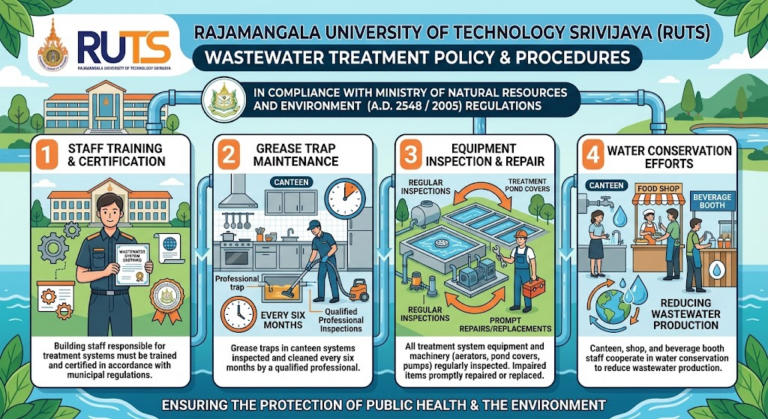
Primary SDG: SDG 6 Related Indicators: 6.3.1, 6.3.2 Related SDGs: Category: Title: RUTS Wastewater Treatment and Water Pollution Prevention 2025 Activity/Implementation Date: 2025 Responsible Unit: News Content: Institutional Commitment to Wastewater Management and Water Pollution Prevention Rajamangala University of Technology Srivijaya (RUTS) recognizes that effective wastewater management is essential to maintaining a healthy campus environment, protecting surrounding water resources, and supporting sustainable university operations. As part of its commitment to environmental responsibility, the University has established institutional measures to ensure that wastewater generated from campus activities is properly managed and that potential sources of water pollution are addressed. This commitment is formally supported by the University's Announcement on Wastewater Guidelines and Standards A.D.

View Full Evidence Page →
SDG 6
📜 Official Evidence • Data Year 2025
[6.3.2] RUTS Wastewater Treatment and Water Pollution Prevention 2025 6.3.2 📄 PDF
RUTS Wastewater Treatment and Water Pollution Prevention 2025
Policy and Operation

Primary SDG: SDG 6 Related Indicators: 6.3.1, 6.3.2 Related SDGs: Category: Title: RUTS Wastewater Treatment and Water Pollution Prevention 2025 Activity/Implementation Date: 2025 Responsible Unit: News Content: Institutional Commitment to Wastewater Management and Water Pollution Prevention Rajamangala University of Technology Srivijaya (RUTS) recognizes that effective wastewater management is essential to maintaining a healthy campus environment, protecting surrounding water resources, and supporting sustainable university operations. As part of its commitment to environmental responsibility, the University has established institutional measures to ensure that wastewater generated from campus activities is properly managed and that potential sources of water pollution are addressed. This commitment is formally supported by the University's Announcement on Wastewater Guidelines and Standards A.D.

View Full Evidence Page →
SDG 6
📜 Official Evidence • Data Year 2025
[6.3.3] Free Drinking Water Provision at RUTS in 2025 6.3.3
Free Drinking Water Provision at RUTS in 2025
Policy and Operation

Primary SDG: SDG 6 Related Indicators: 6.3.3 Related SDGs: Category: Title: Free Drinking Water Provision at RUTS in 2025 Activity/Implementation Date: 2025 Responsible Unit: News Content: Access to Free Drinking Water Across University Campuses Rajamangala University of Technology Srivijaya (RUTS) provides free drinking water for students, staff, and visitors as part of its regular campus services. Drinking water stations are installed in buildings across the university, allowing people to access drinking water conveniently throughout the day without having to pay. In 2025, the university continued to maintain these facilities across its campuses. Drinking water stations were provided in academic buildings, administrative offices, and shared facilities to meet the daily needs of the university community.

View Full Evidence Page →
SDG 6
📜 Official Evidence • Data Year 2025
[6.3.4] Water-Efficient Building Design and Infrastructure at RUTS 6.3.4 📄 PDF
Water-Efficient Building Design and Infrastructure at RUTS
Policy and Operation

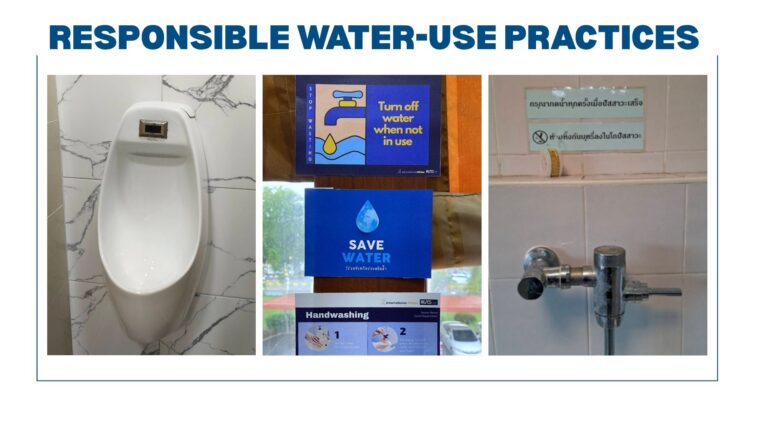
Primary SDG: SDG 6 Related Indicators: 6.3.4 Related SDGs: Category: Title: Water-Efficient Building Design and Infrastructure at RUTS Activity/Implementation Date: 2025 Institutional Approach to Water Conservation in Buildings Rajamangala University of Technology Srivijaya (RUTS) recognizes the importance of efficient water use as part of its commitment to sustainable campus development and responsible resource management. The university incorporates water conservation considerations into the planning, construction, renovation, and maintenance of its buildings and facilities. Particular attention is given to the selection of water-saving sanitary fixtures and equipment that help reduce unnecessary water consumption while maintaining functionality, hygiene, and convenience for building users. Figure 1. Water-saving fixtures and facilities supporting efficient water use in university buildings.

View Full Evidence Page →
SDG 6
📜 Official Evidence • Data Year 2025
[6.3.5] Sustainable Landscape Management and Water-Efficient Planting at RUTS 6.3.5 📄 PDF
Sustainable Landscape Management and Water-Efficient Planting at RUTS
Policy and Operation

Primary SDG: SDG 6 Related Indicators: 6.3.5 Related SDGs: Category: Title: Sustainable Landscape Management and Water-Efficient Planting at RUTS Activity/Implementation Date: 2025 Responsible Unit: News Content: Sustainable Campus Landscaping Rajamangala University of Technology Srivijaya (RUTS) maintains landscaped areas and green spaces across its campuses to provide pleasant and functional surroundings for students, staff, and visitors. These areas form an important part of the campus environment, offering greenery, shade, and spaces for everyday activities. In managing these areas, the university generally selects ornamental plants, shrubs, and trees that are well suited to local climatic conditions and relatively easy to maintain. This approach helps the university maintain its landscaped areas throughout the year while taking into account the resources needed for regular maintenance, including water.

View Full Evidence Page →
SDG 6
📜 Official Evidence • Data Year 2025
[6.4.1] Water Reuse Policy and Practices at RUTS in 2025 6.4.1 📄 PDF
Water Reuse Policy and Practices at RUTS in 2025
Policy and Operation

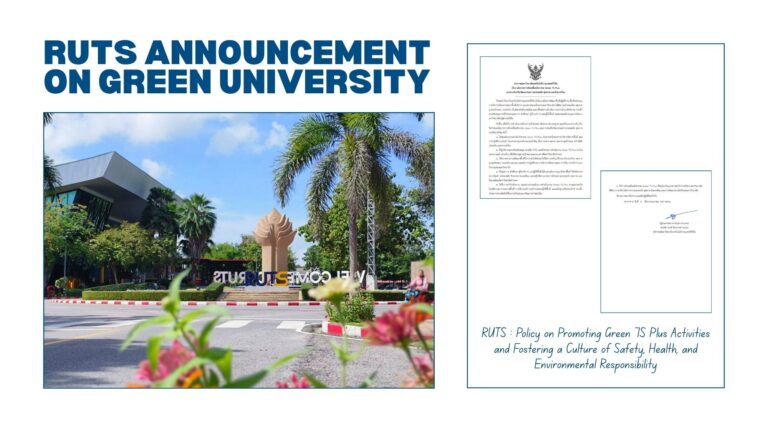
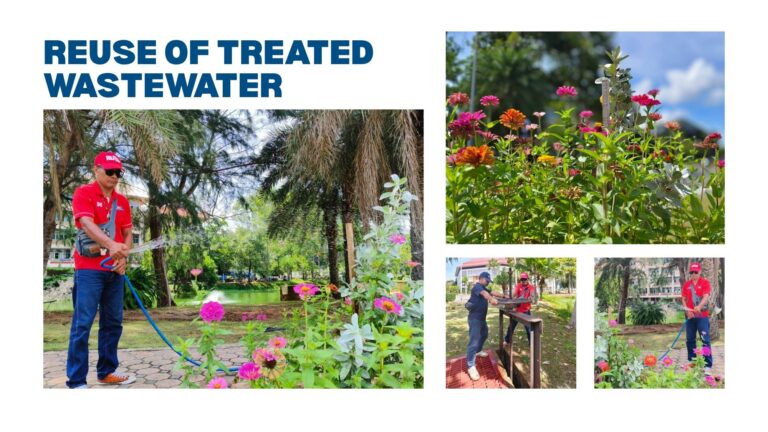
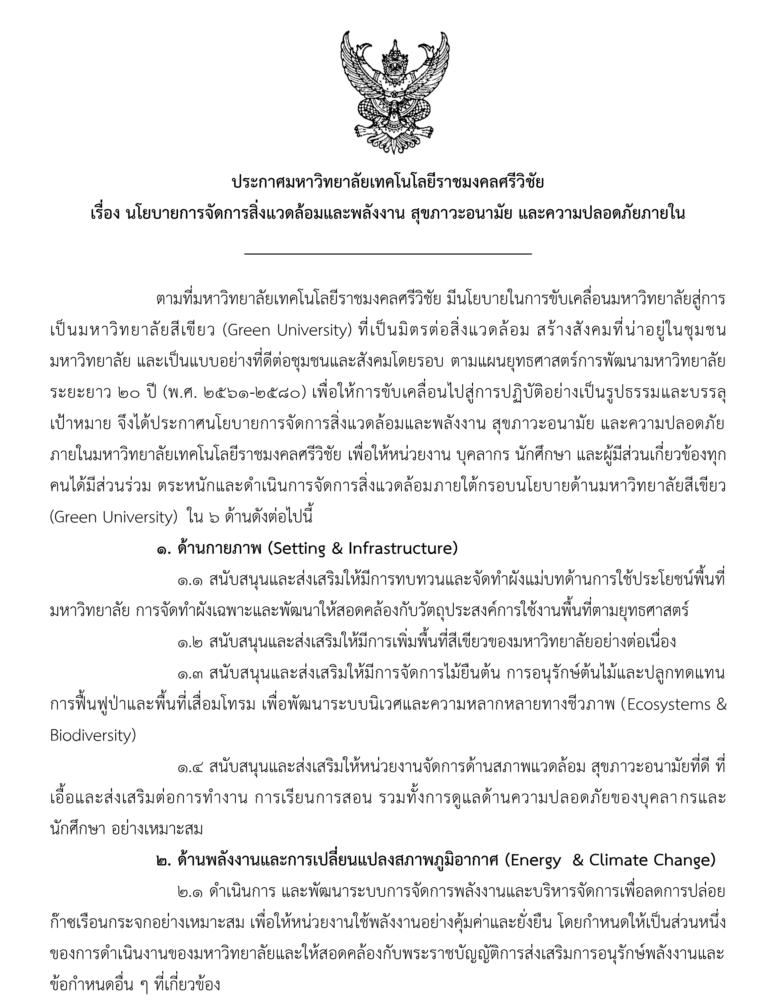
Primary SDG: SDG 6 Related Indicators: 6.4.1-6.4.2 Related SDGs: Category: Title: Water Reuse Policy and Practices at RUTS in 2025 Activity/Implementation Date: January – December 2025 Responsible Unit: News Content: Institutional Commitment to Sustainable Water Management Rajamangala University of Technology Srivijaya (RUTS) is committed to developing an environmentally responsible university through its Green University policy, in line with the University's 20-Year Strategic Development Plan (2018–2037). To support this commitment, RUTS has established an institutional policy on environmental and energy management, health, hygiene, and safety. The policy provides a framework for university departments, staff, students, and other stakeholders to participate in environmental conservation and the responsible management of natural resources.

View Full Evidence Page →
SDG 6
📜 Official Evidence • Data Year 2025
[6.4.2] Water Reuse Policy and Practices at RUTS in 2025 6.4.2 📄 PDF
Water Reuse Policy and Practices at RUTS in 2025
Policy and Operation

Primary SDG: SDG 6 Related Indicators: 6.4.1-6.4.2 Related SDGs: Category: Title: Water Reuse Policy and Practices at RUTS in 2025 Activity/Implementation Date: January – December 2025 Responsible Unit: News Content: Institutional Commitment to Sustainable Water Management Rajamangala University of Technology Srivijaya (RUTS) is committed to developing an environmentally responsible university through its Green University policy, in line with the University's 20-Year Strategic Development Plan (2018–2037). To support this commitment, RUTS has established an institutional policy on environmental and energy management, health, hygiene, and safety. The policy provides a framework for university departments, staff, students, and other stakeholders to participate in environmental conservation and the responsible management of natural resources.

View Full Evidence Page →
SDG 6
📜 Official Evidence • Data Year 2025
[6.5.1] Empowering Local Communities through Smart Water Management Education 6.5.1
Empowering Local Communities through Smart Water Management Education
Outreach and Engagement Research and Innovation

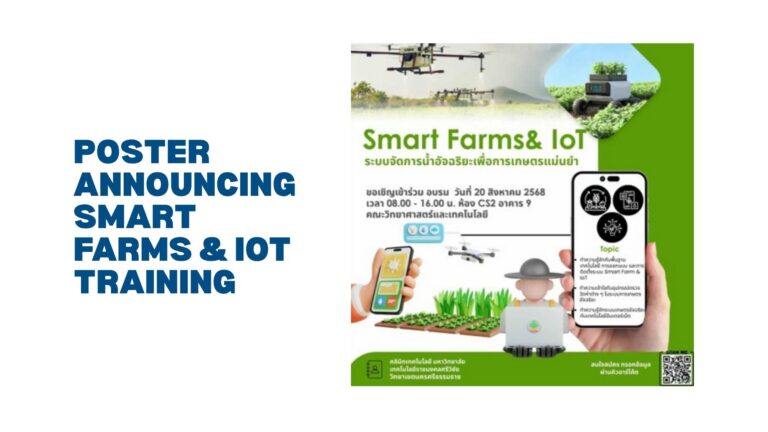
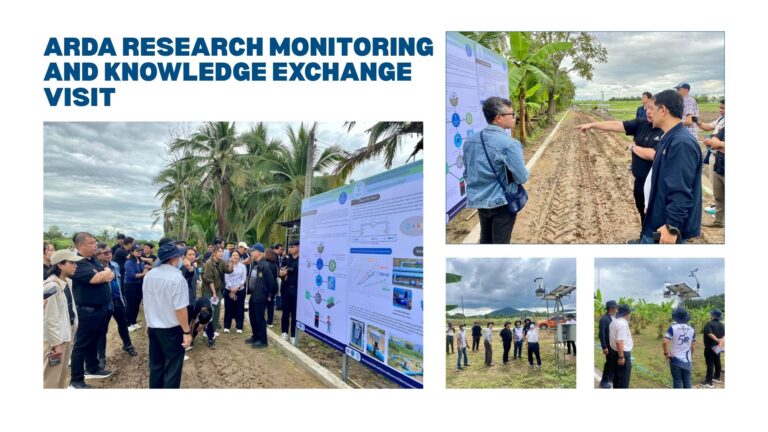
Primary SDG: SDG 6 Related Indicators: 6.5.1 Related SDGs: Category: Title: Empowering Local Communities through Smart Water Management Education Activity/Implementation Date: August 2025 Responsible Unit: News Content: Advancing Water Management Knowledge in Local Communities Rajamangala University of Technology Srivijaya (RUTS) recognises the importance of providing local communities with access to practical knowledge and modern technologies that support effective water management, particularly in agricultural areas where water resources are essential to local livelihoods. Through its academic expertise and community engagement activities, the university promotes opportunities for local residents to learn about water management practices and the application of technology in agriculture. Smart Water Management Training for Precision Agriculture

View Full Evidence Page →
SDG 6
📜 Official Evidence • Data Year 2025
[6.5.3] Supporting Community Water Conservation and Sustainable Water Resource Management 6.5.3
Supporting Community Water Conservation and Sustainable Water Resource Management
Outreach and Engagement Research and Innovation

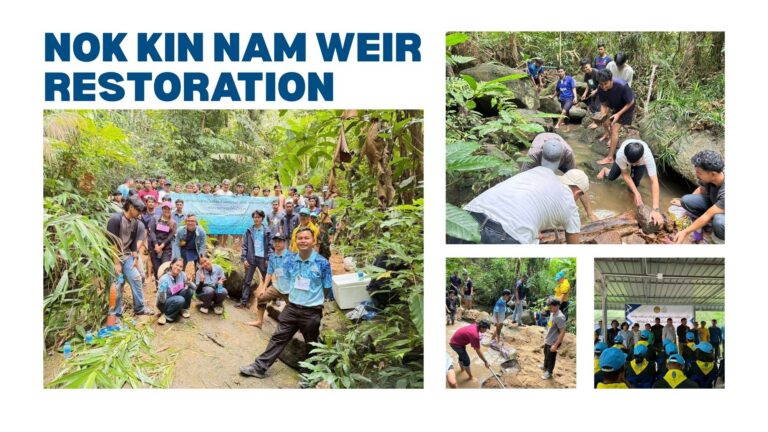
Primary SDG: SDG 6 Related Indicators: 6.5.3 Related SDGs: Category: Title: Supporting Community Water Conservation and Sustainable Water Resource Management Activity/Implementation Date: August 2025 Responsible Unit: News Content: Rajamangala University of Technology Srivijaya (RUTS) recognizes the importance of sustainable water resource management in supporting local communities, agricultural livelihoods, and environmental sustainability. Through academic expertise, community engagement, and collaboration with government agencies, the university contributes to initiatives aimed at conserving water resources, maintaining local water infrastructure, and promoting responsible water management practices beyond its campuses.

View Full Evidence Page →
SDG 6
📜 Official Evidence • Data Year 2025
[6.5.4] Smart Water Monitoring, Sustainable Water Extraction Management and Government Cooperation in the Songkhla Lake Basin 6.5.4
Smart Water Monitoring, Sustainable Water Extraction Management and Government Cooperation in the Songkhla Lake Basin
Outreach and Engagement Research and Innovation

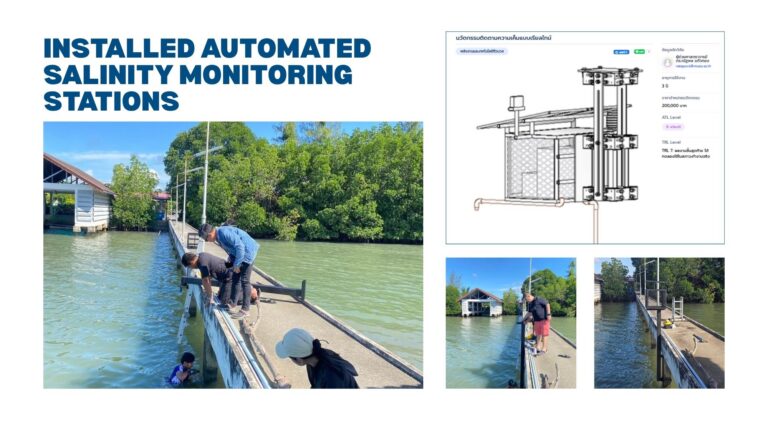
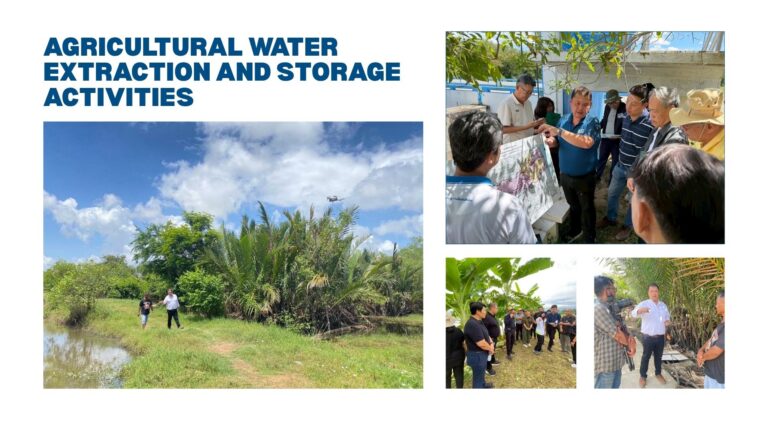
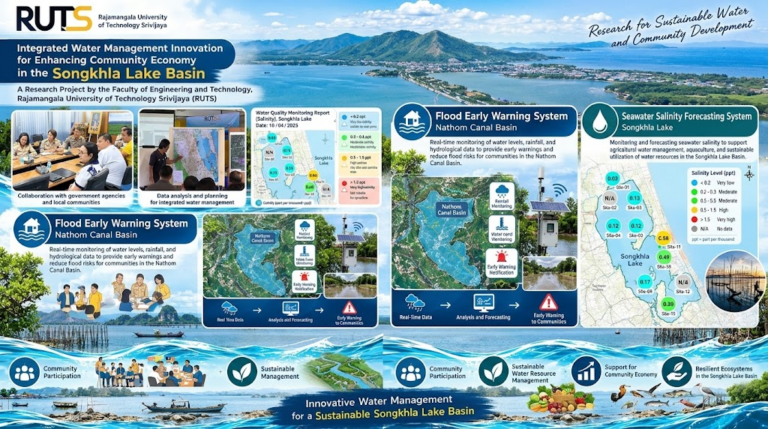
Primary SDG: SDG 6 Related Indicators: 6.5.4, 6.5.5 Related SDGs: Category: Title: Smart Water Monitoring, Sustainable Water Extraction Management and Government Cooperation in the Songkhla Lake Basin Activity/Implementation Date: 2025 Responsible Unit: News Content: Integrated Water Management for Agricultural Communities Rajamangala University of Technology Srivijaya (RUTS), through its Water Management and Geoinformatics Research Unit under the Faculty of Engineering, has undertaken an integrated water management research initiative to address challenges related to freshwater availability, seasonal saltwater intrusion, and agricultural water use in the Songkhla Lake Basin. Led by Asst. Prof. Dr.

View Full Evidence Page →
SDG 6
📜 Official Evidence • Data Year 2025
[6.5.5] Smart Water Monitoring, Sustainable Water Extraction Management and Government Cooperation                    in the Songkhla Lake Basin 6.5.5
Smart Water Monitoring, Sustainable Water Extraction Management and Government Cooperation in the Songkhla Lake Basin
Outreach and Engagement Research and Innovation

Primary SDG: SDG 6 Related Indicators: 6.5.4, 6.5.5 Related SDGs: Category: Title: Smart Water Monitoring, Sustainable Water Extraction Management and Government Cooperation in the Songkhla Lake Basin Activity/Implementation Date: 2025 Responsible Unit: News Content: Integrated Water Management for Agricultural Communities Rajamangala University of Technology Srivijaya (RUTS), through its Water Management and Geoinformatics Research Unit under the Faculty of Engineering, has undertaken an integrated water management research initiative to address challenges related to freshwater availability, seasonal saltwater intrusion, and agricultural water use in the Songkhla Lake Basin. Led by Asst. Prof. Dr.

View Full Evidence Page →
SDG 6
📜 Official Evidence • Data Year 2025
[6.5.6] Promoting Responsible Water Use across RUTS Campuses 6.5.6 📄 PDF
Promoting Responsible Water Use across RUTS Campuses
Policy and Operation

Primary SDG: SDG 6 Related Indicators: 6.5.6 Related SDGs: Category: Title: Promoting Responsible Water Use across RUTS Campuses Activity/Implementation Date: 2025 Responsible Unit: News Content: Institutional Commitment to Responsible Water Consumption Rajamangala University of Technology Srivijaya (RUTS) places importance on the responsible use of water resources as part of its commitment to environmental sustainability and efficient campus management. Recognizing that water conservation requires both effective resource management and responsible individual behavior, the university has established institutional measures to encourage students, staff, and university departments to use water efficiently and avoid unnecessary waste. In 2025, RUTS formalized its approach through the Announcement on Energy and Resource Conservation Measures, A.D.

View Full Evidence Page →
SDG 6
📜 Official Evidence • Data Year 2025
[6.5.7] Promoting Responsible Water Use in Agricultural Communities through Smart Water Monitoring and Community Engagement 6.5.7
Promoting Responsible Water Use in Agricultural Communities through Smart Water Monitoring and Community Engagement
Outreach and Engagement Research and Innovation

Primary SDG: SDG 6 Related Indicators: 6.5.7 Related SDGs: Category: Title: Promoting Responsible Water Use in Agricultural Communities through Smart Water Monitoring and Community Engagement Activity/Implementation Date: 2025 Responsible Unit: News Content: Supporting Informed Water Use in Local Communities Rajamangala University of Technology Srivijaya (RUTS) recognizes the importance of promoting responsible water use beyond its campuses, particularly in agricultural communities where freshwater availability and water quality are influenced by seasonal environmental changes. In the Songkhla Lake Basin, freshwater resources are essential for agricultural production and local livelihoods. However, seasonal saltwater intrusion can affect water quality, making it difficult for farmers to determine when water from natural waterways is suitable for irrigation.

View Full Evidence Page →
SDG 7
📜 Official Evidence • Data Year 2025
[7.2.1] Energy-efficient Renovation and Building 7.2.1
Energy-efficient Renovation and Building

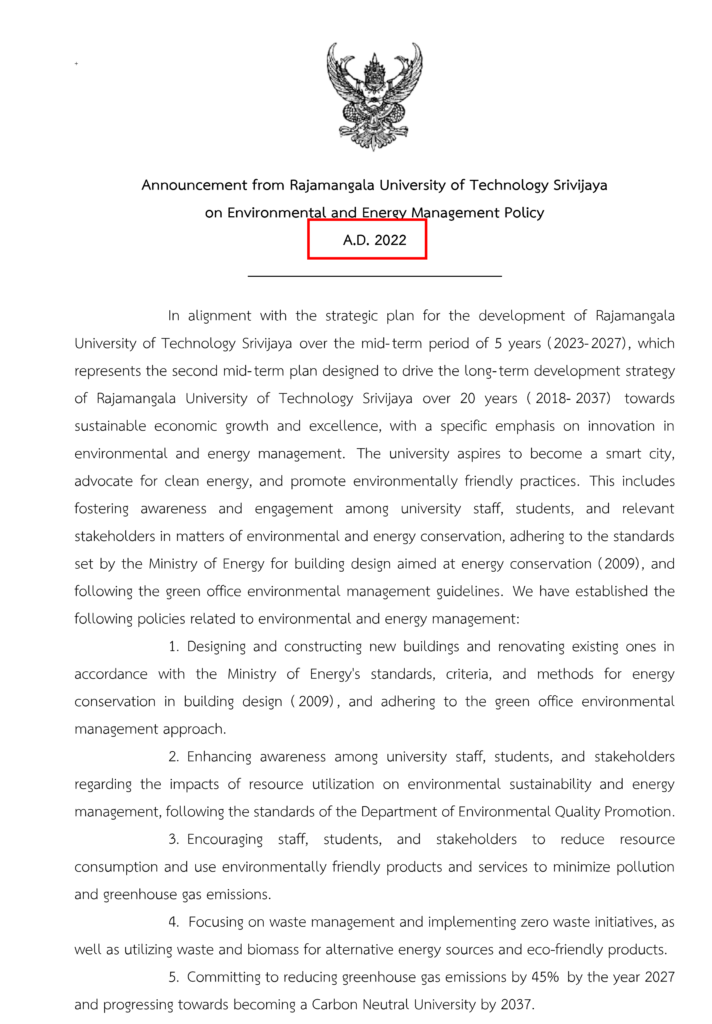
SDG 7.2.1 Evidence Report Policy on Energy-efficient New Construction and Building Renovation Rajamangala University of Technology Srivijaya | Supporting Evidence for THE Impact Rankings 2027 1. Overview Rajamangala University of Technology Srivijaya (RUTS) has established an Environmental and Energy Management Policy to promote efficient energy use and sustainable infrastructure development under its 20-year long-term development strategy (2022–2041). The supporting evidence specifies that all new construction and building renovations must comply with the Ministry of Energy’s energy conservation standards and Green Office guidelines. This policy directly addresses the focus of SDG indicator 7.2.1. 2. Energy-efficient Building Policy The university requires building design and renovation to take account of energy conservation standards and environmental management practices.

View Full Evidence Page →
SDG 7
📜 Official Evidence • Data Year 2025
[7.2.2] Upgrade Buildings to Higher Energy Efficiency 7.2.2
Upgrade Buildings to Higher Energy Efficiency

SDG 7.2.2 Evidence Report Rajamangala University of Technology Srivijaya | Supporting Evidence for THE Impact Rankings 2027 1. Overview Rajamangala University of Technology Srivijaya (RUTS) has established a policy on environmental and energy management, health, well-being, and safety to advance its Green University development and improve energy efficiency across its organizational units. The policy is aligned with the University’s long-term development plan. 2. Policy on Upgrading Existing Buildings for Higher Energy Efficiency Under its energy and climate change policy, the University is committed to developing an energy management system in accordance with applicable laws and regulations and continuously improving energy efficiency across all units. The policy promotes the adoption of energy-saving equipment, appropriate technologies and best practices, as well as renewable energy.

View Full Evidence Page →
SDG 7
📜 Official Evidence • Data Year 2025
[7.2.3] Carbon Reduction and Emission Reduction Process 7.2.3
Carbon Reduction and Emission Reduction Process

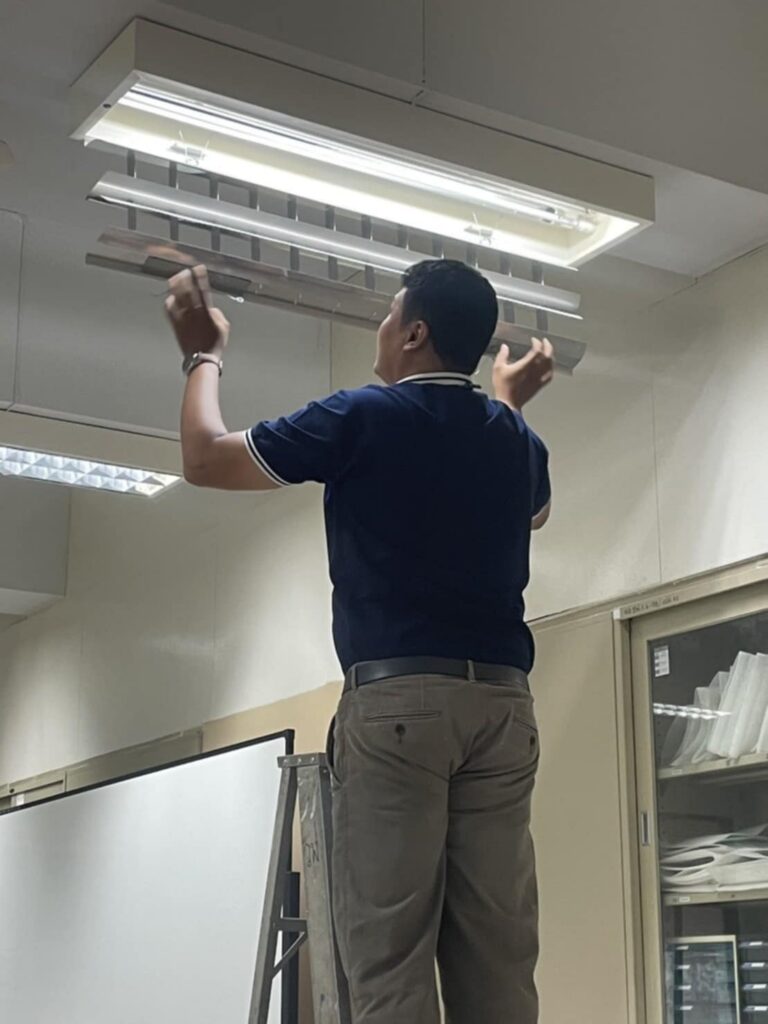
SDG 7.2.3 Evidence Report Energy Conservation and Greenhouse Gas Emission Reduction Measures Rajamangala University of Technology Srivijaya (RUTS) | THE Impact Rankings 2027 1. Overview Rajamangala University of Technology Srivijaya (RUTS) has a plan to reduce electricity consumption and greenhouse gas emissions by replacing existing 40-watt fluorescent tubes with 18-watt LED tubes in university buildings, thereby improving the energy efficiency of lighting systems. 2. Energy Conservation Approach The measure focuses on replacing existing fluorescent tubes with lower-wattage LED lighting. Photographs included in the original supporting document show personnel working on light fixtures inside a building and in a building area, providing visual evidence of lighting-system improvement activities. Comparison itemRated power per tube Existing fluorescent tube40 W Proposed replacement LED tube18 W

View Full Evidence Page →
SDG 7
📜 Official Evidence • Data Year 2025
[7.2.4] Preventive Maintenance of Building Electrical Power Supply Systems 7.2.4
Preventive Maintenance of Building Electrical Power Supply Systems

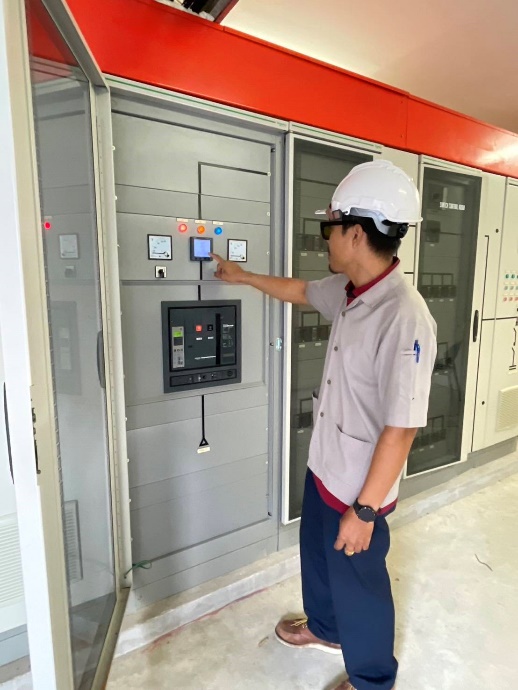
SDG 7.2.4 — Plan to Reduce Energy Consumption Rajamangala University of Technology Srivijaya (RUTS) 1. Overview Rajamangala University of Technology Srivijaya (RUTS) carries out inspections and maintenance of electrical power supply equipment serving university buildings. The purpose of these activities is to maintain efficient operation, support reliable electricity distribution, and extend the service life of electrical infrastructure. The submitted evidence describes an engineering team responsible for inspecting equipment and establishing a regular annual maintenance schedule. 2. Inspection and Preventive Maintenance Activities The University conducts annual inspection and maintenance of electrical transformers and associated power distribution equipment. Its engineering personnel also inspect main distribution boards (MDBs), as illustrated in the photographic evidence.

View Full Evidence Page →
SDG 7
📜 Official Evidence • Data Year 2025
[7.2.5] Energy wastage identification 7.2.5
Energy wastage identification

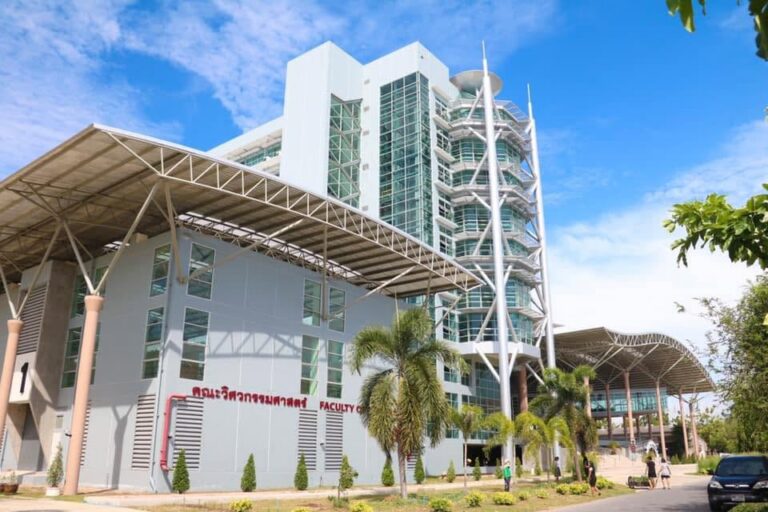
SDG 7.2.5 | Energy Wastage Identification 1. Overview Rajamangala University of Technology Srivijaya (RUTS) reports that a university-appointed committee assessed potentially wasteful electricity consumption in the Songkhla area. The assessment identified the Faculty of Engineering complex as the highest electricity-consuming facility or group of buildings within the area reviewed. This identification provides a starting point for prioritising further investigation of energy-use patterns and potential inefficiencies. 2. Identification of High Electricity Consumption According to the supplied evidence, the Faculty of Engineering complex comprises multiple structures and accommodates large machinery, electrical equipment and extensive air-conditioning systems. These operational characteristics contribute to its relatively high electricity demand.

View Full Evidence Page →
SDG 7
📜 Official Evidence • Data Year 2025
[7.2.6] Evidence Report | Rajamangala University of Technology Srivijaya (RUTS) 7.2.6
Evidence Report | Rajamangala University of Technology Srivijaya (RUTS)

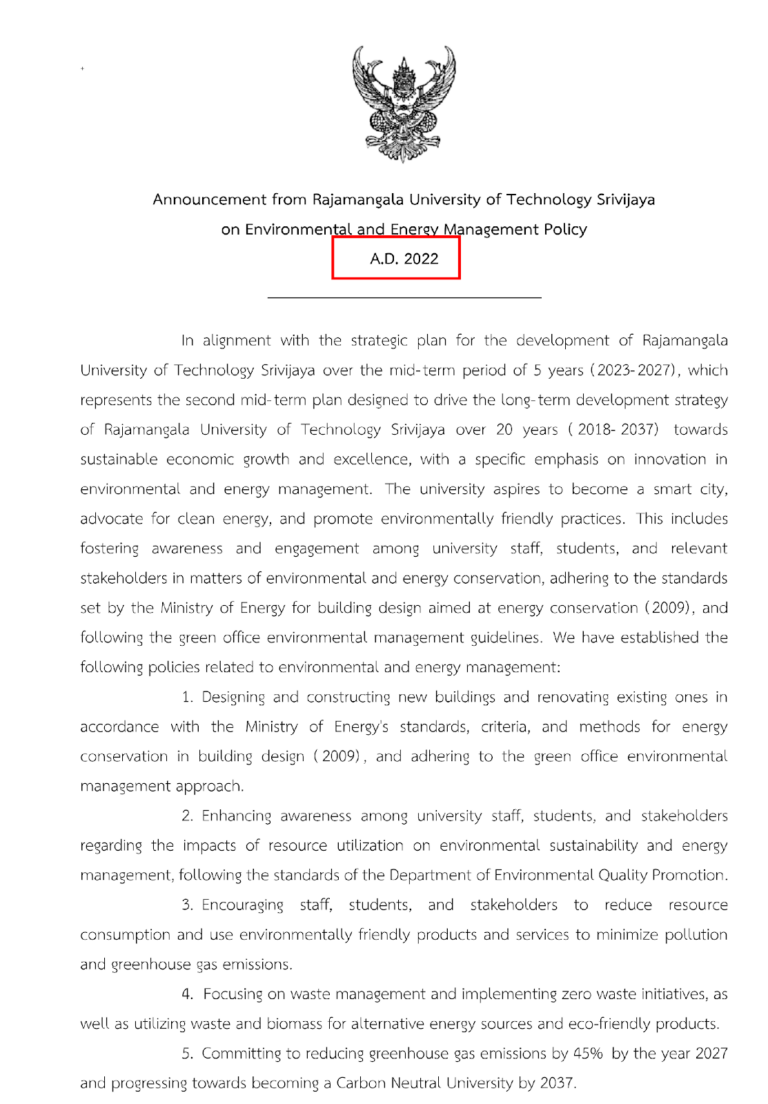
SDG 7: Affordable and Clean Energy 7.2.6 | Divestment Policy 1. Overview Rajamangala University of Technology Srivijaya (RUTS) identifies responsible institutional investment as part of its environmental and energy management approach. The submitted source describes a policy direction to divest from carbon-intensive energy industries, particularly coal and oil. This commitment links financial governance with the University’s wider objectives of environmental responsibility, sustainable development and the transition towards cleaner energy. 2. Institutional Policy on Divestment The supporting announcement on Environmental and Energy Management Policy, identified in the source as an A.D. 2022 document, includes an explicit provision under Item 8: “Divesting investments from carbon-intensive energy industries especially coal and oil.” This provision is the primary documentary evidence for SDG 7.2.6.

View Full Evidence Page →
SDG 7
📜 Official Evidence • Data Year 2025
[7.4.1] Faculty of Technical Education, RMUTSV Enhances Clean Energy Career Skills by Organizing Training on Solar PV Generation System Installation and Maintenance 7.4.1
Faculty of Technical Education, RMUTSV Enhances Clean Energy Career Skills by Organizing Training on Solar PV Generation System Installation and Maintenance

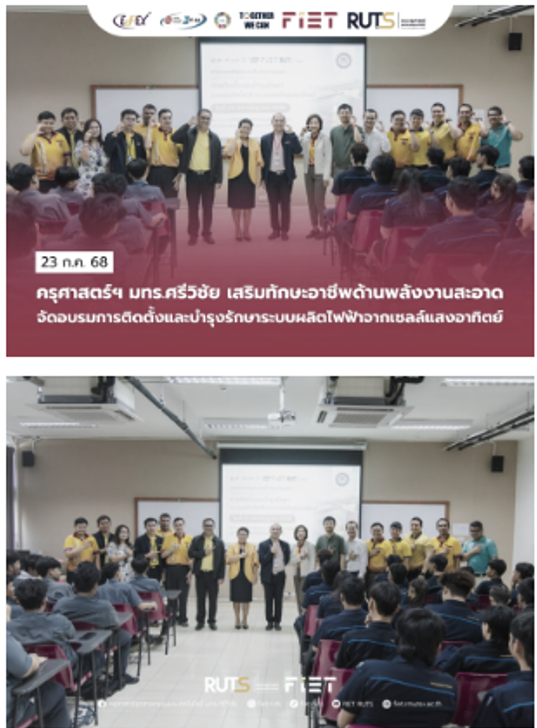
On September 11, 2025, the Faculty of Technical Education and Technology, Rajamangala University of Technology Srivijaya (RMUTSV), organized the 2nd batch of the Non-Degree Short-Course Training Program (Non-Credit Accumulation) titled “Installation and Maintenance of Solar Photovoltaic Power Generation Systems.” Associate Professor Dr. Jakrapong Jitjamnong, Vice Dean for Administration and Planning, presided over the opening ceremony at the Combined Classroom and Laboratory Building, Faculty of Technical Education and Technology. This training program aims to elevate professional skills in renewable energy and empower learners to adapt to future changes in the clean energy industry. It provides youth with opportunities to learn and gain hands-on experience with solar cell technology at the vocational level.

View Full Evidence Page →
SDG 7
📜 Official Evidence • Data Year 2025
[7.4.2] Energy-efficient Renovation and Building 7.4.2
Energy-efficient Renovation and Building

SDG 7.2.1 Evidence Report Policy on Energy-efficient New Construction and Building Renovation Rajamangala University of Technology Srivijaya | Supporting Evidence for THE Impact Rankings 2027 1. Overview Rajamangala University of Technology Srivijaya (RUTS) has established an Environmental and Energy Management Policy to promote efficient energy use and sustainable infrastructure development under its 20-year long-term development strategy (2022–2041). The supporting evidence specifies that all new construction and building renovations must comply with the Ministry of Energy’s energy conservation standards and Green Office guidelines. This policy directly addresses the focus of SDG indicator 7.2.1. 2. Energy-efficient Building Policy The university requires building design and renovation to take account of energy conservation standards and environmental management practices.

View Full Evidence Page →
SDG 7
📜 Official Evidence • Data Year 2025
[7.4.4] Environmental and Energy Management Policy of Rajamangala University of Technology Srivijaya (RUTS) about Environmental and Energy Management 7.4.4 📄 PDF
Environmental and Energy Management Policy of Rajamangala University of Technology Srivijaya (RUTS) about Environmental and Energy Management

Environmental and Energy Management Policy Rajamangala University of Technology Srivijaya (RUTS) Commitment and Vision In alignment with RUTS's 20-Year Long-Term Development Strategy (2018–2037), and driven by the current 5-Year Mid-Term Plan (2023–2027), Rajamangala University of Technology Srivijaya is committed to achieving sustainable economic growth and excellence. Our specific focus is on innovation in environmental and energy management as we transition the university towards becoming a Smart City that champions clean energy and environmentally friendly practices. We aim to foster awareness and engagement among all staff, students, and stakeholders while adhering to national standards (Ministry of Energy 2009) and Green Office guidelines. Environmental and Energy Management Policies The following policies are established to guide our operations and development:

View Full Evidence Page →
SDG 8
📘 Annual SDG Progress Report
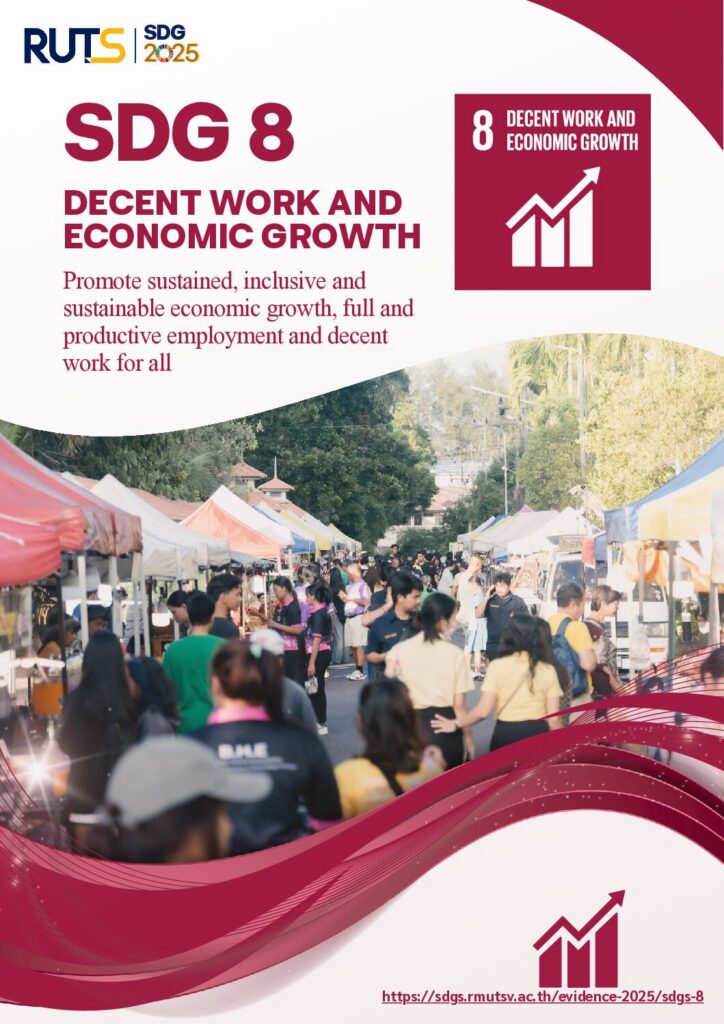
[8_Summary] RUTS SDG 8 Progress Report 2025: Decent Work and Economic Growth 8_Summary 📄 PDF
RUTS SDG 8 Progress Report 2025: Decent Work and Economic Growth

Rajamangala University of Technology Srivijaya (RUTS) manages the employment of its non-civil-service staff through a set of formal regulations covering recruitment, contracts, pay, benefits, discipline and appeals. The rules aim to ensure fairness, transparency and good governance, though they do not extend to workers supplied by outside contractors. Merit-based hiring Under its 2020 Regulations on Criteria and Procedures for Recruiting and Selecting University Employees, the university selects candidates on their knowledge, abilities, qualifications, experience and suitability for the post. The rules cover how vacancies are announced, how selection committees are formed, and how candidates are assessed through examinations and interviews.

View Full Evidence Page →
SDG 8
📜 Official Evidence • Data Year 2025
[8.2.1] RUTS Implements Fair Compensation Practices to Support Employee Welfare 8.2.1
RUTS Implements Fair Compensation Practices to Support Employee Welfare

Rajamangala University of Technology Srivijaya (RUTS) has established a formal policy for adjusting employee compensation to promote fair remuneration and recognize staff performance. Under the university's announcement on employee compensation adjustments, effective from 1 October 2019, salary increases are determined based on performance appraisal results, position categories, and established university criteria. The policy allocates a budget for salary adjustments and considers factors such as employees’ performance, discipline, professional conduct, and suitability for university employment. It also provides guidelines for distributing salary increases across employee groups to ensure a systematic and transparent process. Through this policy, RUTS demonstrates its commitment to structured compensation management and employee recognition, supporting staff welfare and organizational development.

View Full Evidence Page →
SDG 8
📜 Official Evidence • Data Year 2025
[8.2.3] RUTS Rules Set Contract Terms, Pay and Appeal Rights for University Staff 8.2.3
RUTS Rules Set Contract Terms, Pay and Appeal Rights for University Staff

Rajamangala University of Technology Srivijaya (RMUTSV) governs the employment of its non-civil-service staff under its 2018 Regulation on Personnel Administration for University Employees. The regulation was approved by the University Council on 31 August 2018 and replaced the 2016 version. Under the regulation, employees are hired on fixed-term contracts. The first lasts four years, including a one-year probation, and the second lasts six years. A third contract can run until the end of the fiscal year in which the employee turns 60. Renewal depends on a satisfactory performance review, and performance is evaluated twice a year. Staff are entitled to leave, paid leave, overtime pay, travel expenses, and social security benefits. The university council must periodically review pay and benefits, taking cost-of-living changes and private-sector pay into account.

View Full Evidence Page →
SDG 8
📜 Official Evidence • Data Year 2025
[8.2.4] RUTS Rules Set Contract Terms, Pay and Appeal Rights for University Staff 8.2.4
RUTS Rules Set Contract Terms, Pay and Appeal Rights for University Staff

– Rajamangala University of Technology Srivijaya (RMUTSV) governs the employment of its non-civil-service staff under its 2018 Regulation on Personnel Administration for University Employees. The regulation was approved by the University Council on 31 August 2018 and replaced the 2016 version. Under the regulation, employees are hired on fixed-term contracts. The first lasts four years, including a one-year probation, and the second lasts six years. A third contract can run until the end of the fiscal year in which the employee turns 60. Renewal depends on a satisfactory performance review, and performance is evaluated twice a year. Staff are entitled to leave, paid leave, overtime pay, travel expenses, and social security benefits. The university council must periodically review pay and benefits, taking cost-of-living changes and private-sector pay into account.

View Full Evidence Page →
SDG 8
📜 Official Evidence • Data Year 2025
[8.2.5] RUTS Staff Rules Tie Benefits to Civil Service Standards, With No Separate Provisions for Outsourced Workers 8.2.5
RUTS Staff Rules Tie Benefits to Civil Service Standards, With No Separate Provisions for Outsourced Workers

Rajamangala University of Technology Srivijaya (RMUTSV) sets the employment rights of its university employees by borrowing heavily from civil service rules. The 2018 Regulation on Personnel Administration for University Employees says nothing about outsourced or agency-supplied workers. Rights modeled on civil servants. Employees paid from the university's budget receive benefits "by analogy" with those of civil servants in higher education institutions. These cover leave, pay during leave, overtime pay, travel expenses, meeting allowances and overseas travel. Working hours, public holidays and annual leave follow the Cabinet's rules for civil servants. Employees are also covered by social security law, and the university's personnel committee may grant additional benefits and welfare where it sees fit. Pay kept in line with the market.

View Full Evidence Page →
SDG 8
📜 Official Evidence • Data Year 2025
[8.2.8] RUTS Announces Appeal Process for Employee Rights and Pay Matters 8.2.8
RUTS Announces Appeal Process for Employee Rights and Pay Matters

Rajamangala University of Technology Srivijaya (RUTS) has announced a clear procedure for employees who wish to appeal decisions affecting their rights or compensation, as part of its commitment to fairness, transparency, and good governance in the workplace. Under the process, any university employee who believes a decision on pay, benefits, or other employment rights is incorrect or unfair may submit a written appeal to the Human Resources Division within 30 days of receiving notice of the decision. The appeal should state the issue, the reasons for disagreement, and any supporting documents. Once received, the appeal will be reviewed by a designated committee, which may invite the employee to provide additional information. The committee will then make a recommendation to the university’s executive management or the University Council for a final decision.

View Full Evidence Page →
SDG 8
📜 Official Evidence • Data Year 2025
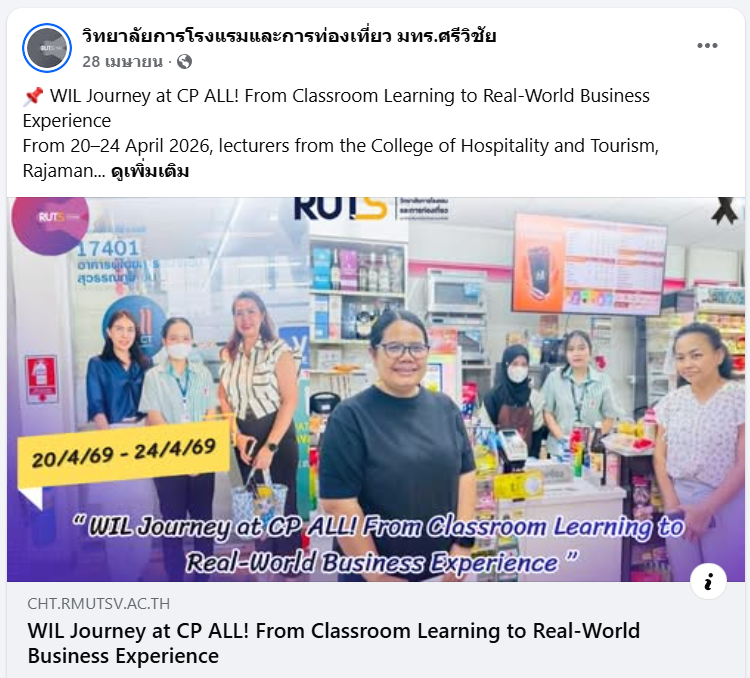
[8.4.2] WIL Journey at CP ALL! From Classroom Learning to Real-World Business Experience 8.4.2
WIL Journey at CP ALL! From Classroom Learning to Real-World Business Experience

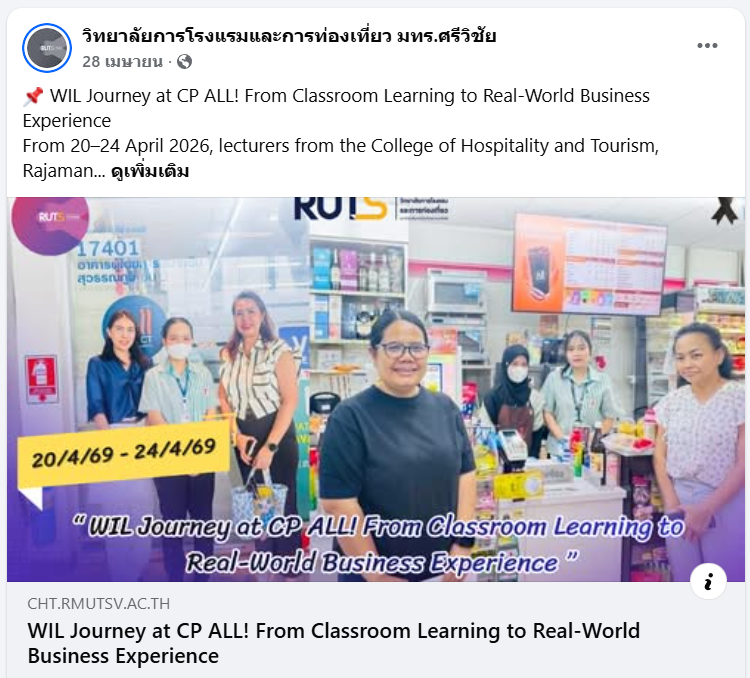
From 20 to 24 April 2026, lecturers from the College of Hospitality and Tourism, Rajamangala University of Technology Srivijaya, Trang Campus, led by Assistant Professor Nuchanat Tubkrut, Dr. Chayanun Khaoplod, Dr. Jatuporn Hokta, and Ms. Kittima Hemjinda, conducted supervisory visits for 67 Business Administration students from the Management and Business Development Program (Plan B) during their professional internship at CP ALL Public Company Limited. The internship placements cover establishments in Bang Na and Lat Krabang (Bangkok), as well as Bang Bo, Bang Phli, and Bang Sao Thong (Samut Prakan), running from 1 March to 31 May 2026. These supervisory visits form an integral part of the Work-integrated Learning (WIL) curriculum, specifically focusing on practical business management modules 2, 4, 6, and 8. The visits were filled with warmth, encouragement, and professional care.

View Full Evidence Page →
SDG 8
📜 Official Evidence • Data Year 2025
[8.4.2-2] The College of Hospitality and Tourism, Rajamangala University of Technology Srivijaya, Trang Campus, has once again achieved national recognition by receiving an award at the 17th Cooperative and Work-Integrated Education Day (CWIE Day #17). 8.4.2-2
The College of Hospitality and Tourism, Rajamangala University of Technology Srivijaya, Trang Campus, has once again achieved national recognition by receiving an award at the 17th Cooperative and Work-Integrated Education Day (CWIE Day #17).
Teaching and Learning

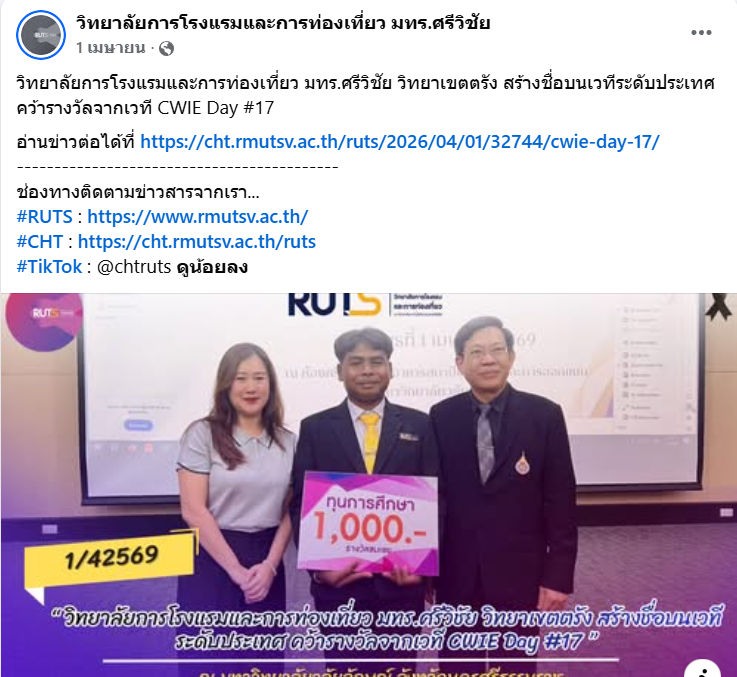
On April 1, 2026, the College of Hospitality and Tourism, Rajamangala University of Technology Srivijaya, Trang Campus, proudly announced that Mr. Jirawat Changnam, a second-year transfer student in the Tourism and Hospitality program, participated in the “17th Cooperative and Work-Integrated Education Day (CWIE Day #17)” held at Walailak University, Nakhon Si Thammarat Province. Mr. Jirawat Changnam was awarded fourth place (Honorable Mention) for his innovative project entitled “Recycled Tip Box from Aluminum Beverage Cans.” This project was collaboratively developed with the industry partner, Pimalai Resort and Spa, Krabi, under the close supervision of Ms. Wanwisa Ploy Insawang. The competition featured a total of 14 teams representing universities across Southern Thailand.

View Full Evidence Page →
SDG 8
📜 Official Evidence • Data Year 2025
[8.4.2-3] WIL Journey at CP ALL! From Classroom Learning to Real-World Business Experience 8.4.2-3
WIL Journey at CP ALL! From Classroom Learning to Real-World Business Experience
Teaching and Learning

From 20 to 24 April 2025, lecturers from the College of Hospitality and Tourism, Rajamangala University of Technology Srivijaya, Trang Campus, led by Assistant Professor Nuchanat Tubkrut, Dr. Chayanun Khaoplod, Dr. Jatuporn Hokta, and Ms. Kittima Hemjinda, conducted supervisory visits for 67 Business Administration students from the Management and Business Development Program (Plan B) during their professional internship at CP ALL Public Company Limited. The internship placements cover establishments in Bang Na and Lat Krabang (Bangkok), as well as Bang Bo, Bang Phli, and Bang Sao Thong (Samut Prakan), running from 1 March to 31 May 2026. These supervisory visits form an integral part of the Work-integrated Learning (WIL) curriculum, specifically focusing on practical business management modules 2, 4, 6, and 8. The visits were filled with warmth, encouragement, and professional care.

View Full Evidence Page →
SDG 9
📜 Official Evidence • Data Year 2025
[9_News_1] RUTS Innovation Management Platform (RinMP) for Poverty Alleviation and Social Mobility 9_News_1
RUTS Innovation Management Platform (RinMP) for Poverty Alleviation and Social Mobility
Research and Innovation

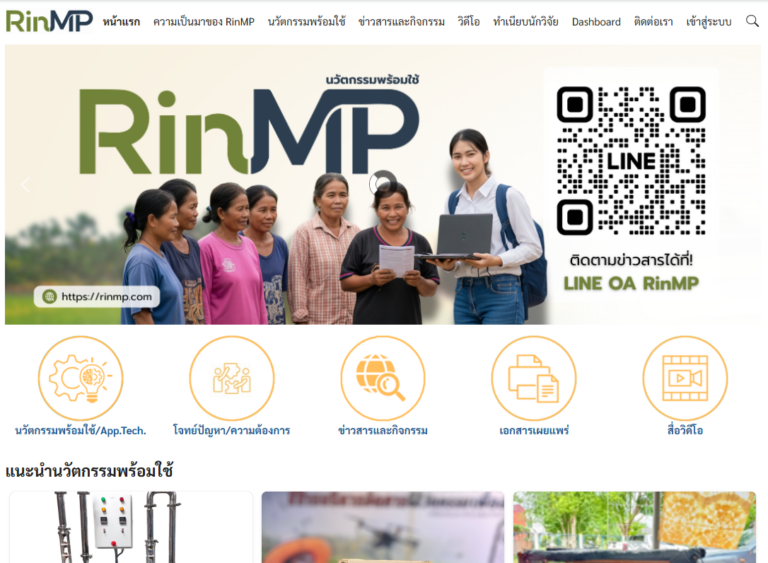
Rajamangala University of Technology Srivijaya (RUTS), serving as the lead institution of a network of nine Rajamangala Universities of Technology (RMUTs), implemented a research initiative entitled “Application and Scaling Up of Appropriate Technologies to Enhance Capabilities and Social Opportunities for Targeted Low-Income Populations in Strategic Research Areas.” The initiative was financially supported by the Program Management Unit on Area-Based Development (PMU-A) under the Ministry of Higher Education, Science, Research and Innovation (MHESI), Thailand. Its primary purpose was to alleviate poverty, reduce social inequality, and enhance economic and social mobility through the application of appropriate technologies, research, and innovation. The program targeted seven strategic research provinces: Lampang, Kalasin, Mukdahan, Roi Et, Phatthalung, Pattani, and Yala.

View Full Evidence Page →
SDG 9
📜 Official Evidence • Data Year 2025
[9_News_2] RUTS–Industry Collaboration on Eco-Friendly Biodegradable Plant Pots from Biomass Ash 9_News_2
RUTS–Industry Collaboration on Eco-Friendly Biodegradable Plant Pots from Biomass Ash
Research and Innovation

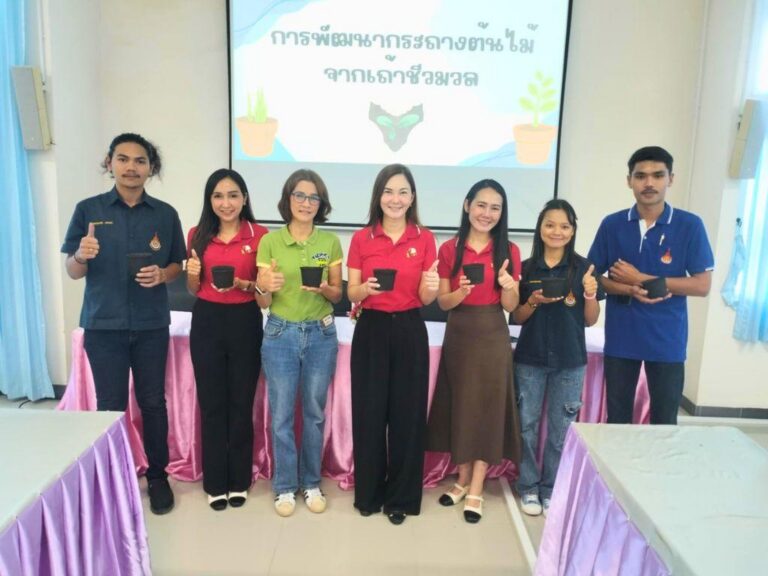
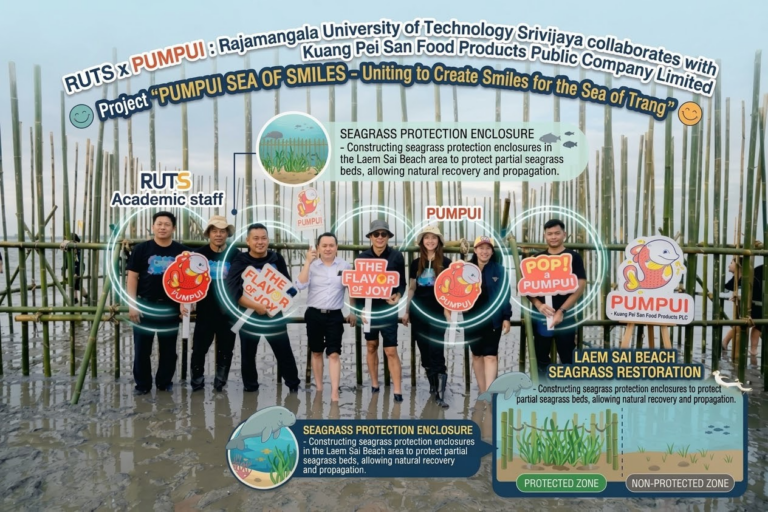
On May 23, 2025, Rajamangala University of Technology Srivijaya (RUTS), Trang Campus, through its Faculty of Engineering and Technology, collaborated with PUMPUI (Kuang Pei San Food Products PCL) to develop and deliver an environmentally friendly innovation entitled “Biodegradable Plant Pots from Biomass Ash.” The initiative was led by Khwancheewa Yongstar, Associate Dean for Student Development, together with three undergraduate students from the Construction Engineering program, with project funding provided by the industrial partner. The project aimed to promote sustainable waste management, resource efficiency, and circular economy practices by converting industrial biomass ash generated from the Pum Pui canned fish factory in Trang Province into biodegradable plant pots. The biomass ash originated from the combustion of agricultural residues, including rice husks, sugarcane bagasse, and wood waste.

View Full Evidence Page →
SDG 9
📜 Official Evidence • Data Year 2025
[9_News_3] Strategic Collaboration between CLP Group and Rajamangala University of Technology Srivijaya (RUTS) 9_News_3
Strategic Collaboration between CLP Group and Rajamangala University of Technology Srivijaya (RUTS)
Research and Innovation

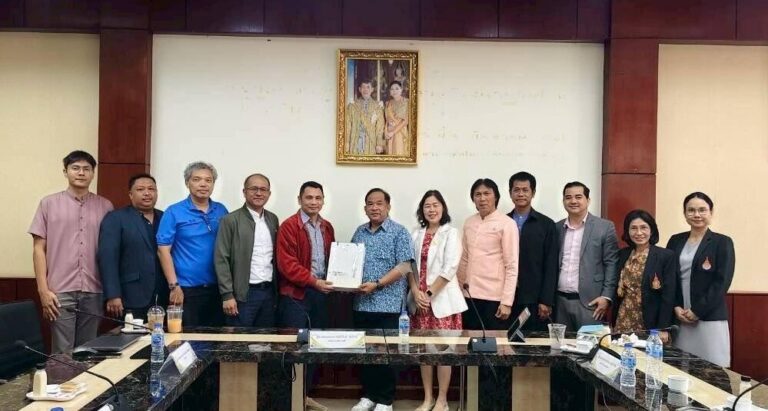
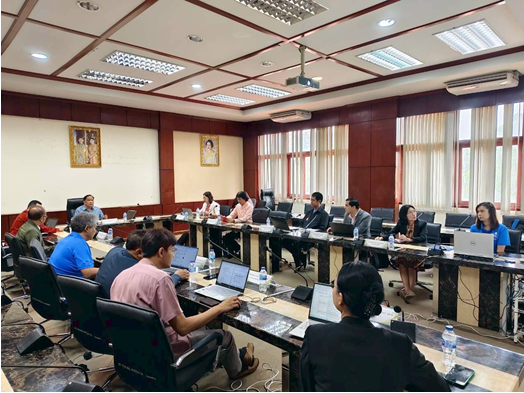
On August 26, 2025, Rajamangala University of Technology Srivijaya (RUTS), led by Assistant Professor Dr. Apirak Songrak, Vice President, together with Assistant Professor Prapasri Srichai and executives from the Institute of Research and Development and the Office of Innovation Management and Technology Transfer (IMTT), organized a monitoring and support activity for the Business Acceleration Platform (RUTS-BAP). The initiative, managed by IMTT and financially supported through the Fundamental Fund (FF) research strategy framework under the Business Acceleration Platform development program of the Institute of Research and Development, aims to strengthen the university's innovation ecosystem and establish an effective platform-based management mechanism for developing innovation-driven entrepreneurs.

View Full Evidence Page →
SDG 9
📜 Official Evidence • Data Year 2025
[9_News_4] Strategic Collaboration between CLP Group and Rajamangala University of Technology Srivijaya (RUTS) 9_News_4
Strategic Collaboration between CLP Group and Rajamangala University of Technology Srivijaya (RUTS)
Research and Innovation

On August 26, 2025, Rajamangala University of Technology Srivijaya (RUTS), led by Assistant Professor Dr. Apirak Songrak, Vice President, together with Assistant Professor Prapasri Srichai and executives from the Institute of Research and Development and the Office of Innovation Management and Technology Transfer (IMTT), organized a monitoring and support activity for the Business Acceleration Platform (RUTS-BAP). The initiative, managed by IMTT and financially supported through the Fundamental Fund (FF) research strategy framework under the Business Acceleration Platform development program of the Institute of Research and Development, aims to strengthen the university's innovation ecosystem and establish an effective platform-based management mechanism for developing innovation-driven entrepreneurs.

View Full Evidence Page →
SDG 9
📜 Official Evidence • Data Year 2025
[9_News_5] Strategic Collaboration between CLP Group and Rajamangala University of Technology Srivijaya (RUTS) 9_News_5
Strategic Collaboration between CLP Group and Rajamangala University of Technology Srivijaya (RUTS)
Policy and Operation

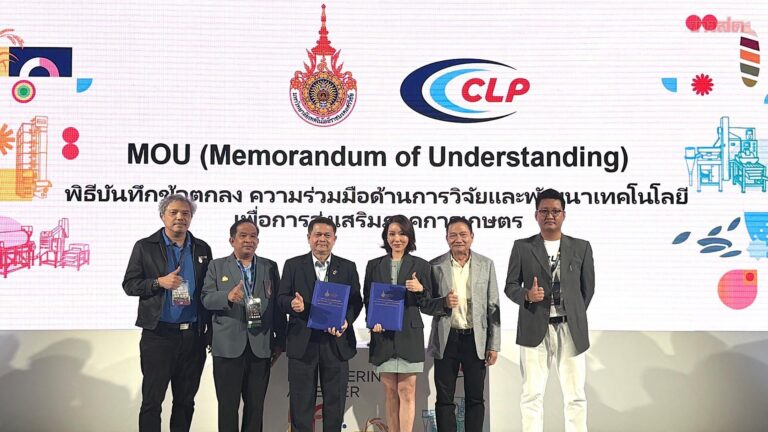
During Farm Expo 2025, held from September 25–28, 2025, at IMPACT Muang Thong Thani, Thailand, CLP Group and Rajamangala University of Technology Srivijaya (RUTS) strengthened their strategic partnership through the signing of a Memorandum of Understanding (MOU) aimed at promoting agricultural innovation, technology development, knowledge transfer, and sustainable community development. Under CLP Group’s vision of “Empowering A Better Life,” the collaboration seeks to bridge academic research and industrial expertise to facilitate the practical application of agricultural technologies, enhance farmers’ productivity, and create new opportunities for local entrepreneurs.

View Full Evidence Page →
SDG 9
📜 Official Evidence • Data Year 2025
[9_News_6] Community-Based Value Creation through Circular Economy and Upcycled Product Development with the Department of Industrial Promotion (DIPROM) 9_News_6
Community-Based Value Creation through Circular Economy and Upcycled Product Development with the Department of Industrial Promotion (DIPROM)
Outreach and Engagement Research and Innovation

Rajamangala University of Technology Srivijaya (RUTS), through the Office of Innovation Management and Technology Transfer, implemented the Circular Design Product – Upcycle Product activity under Project 13.1-1, SME Business Enhancement through the Application of the BCG Economy Model, in collaboration with Industrial Promotion Center Region 11, Department of Industrial Promotion (DIPROM), Ministry of Industry, during fiscal year 2025. The project aimed to promote product design and create added value based on the principles of the circular economy, while assessing reductions in resource consumption, waste, and product carbon footprints. Target groups included community enterprises, OTOP producers, and small and medium-sized enterprises in the fashion and lifestyle and processed food sectors.

View Full Evidence Page →
SDG 9
📜 Official Evidence • Data Year 2025
[9_News_7] RUTS Enhances Community Capacity for Sustainable Tourism Development in Nakhon Si Thammarat Province 9_News_7
RUTS Enhances Community Capacity for Sustainable Tourism Development in Nakhon Si Thammarat Province
Outreach and Engagement

Rajamangala University of Technology Srivijaya (RUTS), in collaboration with the Nakhon Si Thammarat Provincial Office of Tourism and Sports, implemented the Human Capacity Development Project for Tourism in Nakhon Si Thammarat Province to strengthen the knowledge, skills, and capabilities of local tourism personnel, community members, entrepreneurs, and related stakeholders. The project aimed to improve the ability of local stakeholders to manage and develop tourism destinations systematically and effectively while preparing communities to accommodate future tourism growth. Its implementation emphasized participatory learning, practical workshops, and creative tourism development tailored to local contexts.

View Full Evidence Page →
SDG 9
📜 Official Evidence • Data Year 2025
[9_News_8] Industrial Sensor Application Training Program 9_News_8
Industrial Sensor Application Training Program
Teaching and Learning Outreach and Engagement Policy and Operation Research and Innovation Others

Rajamangala University of Technology Srivijaya (RUTS), through the Faculty of Industrial Education and Technology, organized the Industrial Sensor Application Training Program: “Instrument Sensor and Transducer – Batch 1” from 5–8 May 2025 at Room 71605, Faculty of Industrial Education and Technology, RUTS. The program was led by Asst. Prof. Dr. Kosin Teeparuksapun, in collaboration with Assoc. Prof. Dr. Thanat Nonthaput, Deputy Dean for Academic Affairs and Research, Faculty of Industrial Education and Technology. The training sessions were delivered by Mr. Thanat Thanaatsawaphon, Head of the Mechatronics Engineering Program, and Mr. Wannadia Navae, Lecturer in Petroleum Technology. The training aimed to enhance participants’ knowledge and practical skills in the application of industrial sensors, instruments, and transducers.

View Full Evidence Page →
SDG 9
📜 Official Evidence • Data Year 2025
[9_News_9] RUTS Faculty of Agriculture Delivers the ACFS-Certified “Durian Harvest Controller” Course to Raise the Quality of Thai Durian 9_News_9
RUTS Faculty of Agriculture Delivers the ACFS-Certified “Durian Harvest Controller” Course to Raise the Quality of Thai Durian
Teaching and Learning

The Faculty of Agriculture, Rajamangala University of Technology Srivijaya (RUTS), Nakhon Si Thammarat Campus (Thung Yai), led by Sathit Buakhao, organized the “Durian Harvest Controller” training course in June–July 2025 in three batches (21–22 June, 28–29 June and 5–6 July 2025). The course follows the Thai Agricultural Standard TAS 9070-2566 (2023), Code of Practice for Inspection and Acceptance of Durian for Collection and Packing Houses. Durian is a key economic crop of southern Thailand, yet the harvesting of immature fruit, non-standard produce inspection and a shortage of personnel skilled in harvest control have lowered the quality and reputation of Thai durian in export markets. The course aims to raise the quality of Thai durian, build a standards-qualified workforce for the durian supply chain, and create a sustainable source of academic-service income for the university.

View Full Evidence Page →
SDG 9
📜 Official Evidence • Data Year 2025
[9_News_10] RUTS Researchers Win One Gold and Three Silver Medals at the 36th International Invention, Innovation & Technology Exhibition (ITEX 2025), Malaysia 9_News_10
RUTS Researchers Win One Gold and Three Silver Medals at the 36th International Invention, Innovation & Technology Exhibition (ITEX 2025), Malaysia
Research and Innovation

Rajamangala University of Technology Srivijaya (RUTS), through the Office of Innovation Management and Technology Transfer, supported its researchers to compete and exhibit their research, inventions and innovations at the 36th International Invention, Innovation & Technology Exhibition (ITEX 2025), held on 29–31 May 2025 at the Kuala Lumpur Convention Centre, Kuala Lumpur, Malaysia. ITEX, organized by the Malaysian Invention and Design Society (MINDS), is one of Asia’s longest-running international invention exhibitions and was held together with the World Young Inventors Exhibition (WYIE), the Asian Young Inventors Exhibition (AYIE) and the Malaysian Young Inventors Exhibition (MYIE).

View Full Evidence Page →
SDG 9
📜 Official Evidence • Data Year 2025
[9_News_11] Four RUTS Inventions Win International Awards at the Seoul International Invention Fair 2025 (SIIF 2025), Republic of Korea 9_News_11
Four RUTS Inventions Win International Awards at the Seoul International Invention Fair 2025 (SIIF 2025), Republic of Korea
Research and Innovation

Rajamangala University of Technology Srivijaya (RUTS), through the Office of Innovation Management and Technology Transfer, supported its researchers to compete and exhibit their research, inventions and innovations at the 2025 Seoul International Invention Fair (SIIF 2025), held on 3–6 December 2025 at the COEX Convention and Exhibition Center, Seoul, Republic of Korea. SIIF is organized by the Korea Invention Promotion Association (KIPA) and is one of Asia’s leading international invention fairs. RUTS joined the Thailand pavilion led by the National Research Council of Thailand (NRCT), which presented more than 220 Thai research works, inventions and innovations from 63 organizations. The participation aimed to promote RUTS research and innovation internationally, test the inventions with international juries and businesses, and build international networks.

View Full Evidence Page →
SDG 9
📜 Official Evidence • Data Year 2025
[9_News_12] RUTS Researchers Win Gold Medals and a WIIPA Special Award for Rubber-Based Innovations at INTARG® 2025, Katowice, Republic of Poland 9_News_12
RUTS Researchers Win Gold Medals and a WIIPA Special Award for Rubber-Based Innovations at INTARG® 2025, Katowice, Republic of Poland
Research and Innovation

Rajamangala University of Technology Srivijaya (RUTS), through the Office of Innovation Management and Technology Transfer, supported two researchers to compete and exhibit their research, inventions and innovations at the 18th International Invention and Innovation Show (INTARG® 2025), held on 3–5 June 2025 at the International Congress Centre (MCK), Katowice, Republic of Poland, with support from the National Research Council of Thailand (NRCT). INTARG® is organized by Eurobusiness-Haller® and the Haller Pro Inventio Foundation and presented around 300 inventions and innovations from more than 20 countries. The participation aimed to promote RUTS research and innovation internationally, test the commercial potential of the inventions with international juries, investors and businesses, and strengthen international networks.

View Full Evidence Page →
SDG 9
📜 Official Evidence • Data Year 2025
[9_News_13] Research income from industry and commerce 9_News_13
Research income from industry and commerce

Sustainable Development Goal 9 (SDG 9) aims to foster sustainable industrialization, build resilient infrastructure, and promote innovation. This report examines the research income generated from industry and commerce, highlighting the role it plays in achieving these objectives. SDG 9 calls for the promotion of sustainable and inclusive industrialization and innovation. A significant aspect of this goal involves fostering partnerships between the private sector, academia, and research institutions to drive research and development. Research income from industry and commerce encompasses financial support provided by private sector entities to research institutions and universities for projects, collaborations, and innovations. Sources of such income include grants, partnerships, sponsored research, and consulting services.

View Full Evidence Page →
SDG 10
📜 Official Evidence • Data Year 2025
10.6.1 📄 PDF
Rajamangala University of Technology Srivijaya Regulations on Educational Management and Support for Students with Disabilities
Policy and Operation

Rajamangala University of Technology Srivijaya implements regulations concerning educational management and support for students with disabilities B.E. 2562 (2019). These regulations govern the admission of persons with disabilities who possess legal disability identification cards, accepting them in appropriate proportions while considering the university's readiness to provide education for disabled students. The regulations waive direct educational fees from these students, instead receiving educational subsidies for disabled students. These regulations provide various welfare support services, including scholarships and counseling services as appropriate, ensuring these services do not become obstacles to learning.

View Full Evidence Page →
SDG 10
📜 Official Evidence • Data Year 2025
[10.6.6] Rajamangala University of Technology Srivijaya is hosting the "MISS QUEEN RUTS 2025" pageant, providing an opportunity for LGBTQ+ students to fully showcase their talents, creativity, personality, and potential within an inclusive environment that embraces diversity. 10.6.6
Rajamangala University of Technology Srivijaya is hosting the "MISS QUEEN RUTS 2025" pageant, providing an opportunity for LGBTQ+ students to fully showcase their talents, creativity, personality, and potential within an inclusive environment that embraces diversity.
Others

Rajamangala University of Technology Srivijaya places great importance on promoting equity, equality, and the acceptance of gender diversity. For the 2025 academic year, the university hosted the "MISS QUEEN RUTS 2025" pageant—themed "RUTS STAR 2025: FLAME OF THE PHOENIX"—on August 8, 2025. The event provided an inclusive and accepting space for LGBTQ+ students to fully showcase their talents, creativity, personalities, and potential. This initiative aligns with Sustainable Development Goal (SDG) 10: Reduced Inequalities. It aims to promote equal participation among all student groups, reduce bias and discrimination related to gender diversity, and foster an educational environment that respects human rights and dignity.

View Full Evidence Page →
SDG 10
📜 Official Evidence • Data Year 2025
[10.6.6-2] Rajamangala University of Technology Srivijaya has received funding from the Office of the Permanent Secretary for Higher Education, Science, Research and Innovation to provide educational grants to students with disabilities. 10.6.6-2
Rajamangala University of Technology Srivijaya has received funding from the Office of the Permanent Secretary for Higher Education, Science, Research and Innovation to provide educational grants to students with disabilities.
Others

Rajamangala University of Technology Srivijaya places great importance on reducing inequality and fostering equal educational opportunities. With funding support from the Office of the Permanent Secretary for Higher Education, Science, Research and Innovation, the university provides educational grants to students with disabilities pursuing associate or bachelor’s degrees for the 2025 academic year—covering the first, second, and third (summer) semesters. For this initiative, the university has been granted a total budget of 231,875 baht (two hundred thirty-one thousand eight hundred seventy-five baht) to serve as educational subsidies for students with disabilities.

View Full Evidence Page →
SDG 11
📜 Official Evidence • Data Year 2025
[11.2.1] RUTS Provides Public Access to Cultural Heritage Buildings and Natural Coastal Landscapes 11.2.1
RUTS Provides Public Access to Cultural Heritage Buildings and Natural Coastal Landscapes

RUTS Provides Public Access to Cultural Heritage Buildings and Natural Coastal Landscapes Rajamangala University of Technology Srivijaya (RUTS) provides public access to culturally significant buildings and natural coastal landscapes through its university-managed sites, including Baan Rattanaphruek Saw in Songkhla Old Town and Rajamangala Beach at Trang Campus. These spaces support public engagement with local cultural heritage, traditional craftsmanship, and coastal environments. Public Access to Cultural Heritage at Baan Rattanaphruek Saw From 28 August to 7 September 2025, the Fashion and Textile Design Program, Faculty of Architecture, RUTS, presented the “FOS: Fashion of the South Exhibition” as part of Pakk Taii Design Week 2025.

View Full Evidence Page →
SDG 11
📜 Official Evidence • Data Year 2025
[11.2.2] RUTS Opens Libraries at Six Locations to the Public, Free of Charge 11.2.2
RUTS Opens Libraries at Six Locations to the Public, Free of Charge

Books, journals, computers, Wi-Fi and co-working spaces open to non-students throughout 2025 Rajamangala University of Technology Srivijaya (RUTS) allowed members of the public who are not its students to use its libraries, computers, wireless internet and co-working spaces free of charge throughout 2025, so that the libraries serve as lifelong learning centers for the community. The RUTS Library building (Building 38), located opposite Cafe Amazon. Six campuses, one open door The libraries are located at six sites: Songkhla Campus, Nakhon Si Thammarat Campus (Thung Yai), Nakhon Si Thammarat Campus (Sai Yai), Nakhon Si Thammarat Campus (Khanom), Trang Campus and Rattaphum College. What visitors can use Inside, external users can read books and journals, use search computers, tablets and wireless internet, and search online databases. A film streaming service is also available.

View Full Evidence Page →
SDG 11
📜 Official Evidence • Data Year 2025
[11.2.3] Public Access to Museums and Cultural Exhibitions 11.2.3
Public Access to Museums and Cultural Exhibitions

11.2.3 Rajamangala University of Technology Srivijaya (RUTS) provides public access to educational, artistic, and cultural exhibitions through its university facilities and events held in public venues. These include marine life exhibitions at Trang Aquarium, Thai textile and fashion showcases, student fashion thesis exhibitions, and art exhibitions and cultural activities in Songkhla Old Town. Together, these initiatives provide opportunities for the public to engage with knowledge, creative works, and local cultural heritage, with free admission to selected exhibitions and cultural events. RUTS Provides Public Access to Marine Life Exhibitions at Trang Aquarium

View Full Evidence Page →
SDG 11
📜 Official Evidence • Data Year 2025
[11.2.4] RUTS Provides Free Public Access to Open Spaces and Recreational Facilities 11.2.4
RUTS Provides Free Public Access to Open Spaces and Recreational Facilities

11.2.4 Rajamangala University of Technology Srivijaya (RUTS) provides free public access to open spaces and recreational facilities across its campuses, supporting outdoor recreation, physical activity, and community well-being. These include Rajamangala Beach at Trang Campus and sports facilities at Nakhon Si Thammarat Campus. Public Access to Rajamangala Beach Rajamangala Beach, located within RUTS Trang Campus in Sikao District, Trang Province, is a natural coastal open space accessible to the general public. The beach features a long sandy shoreline, clear blue waters, and a distinctive limestone mountain rising from the sea. During low tide, an extended sandbank emerges, adding to the area's natural beauty. Visitors can enjoy walking along the shore, relaxing on the beach, and appreciating the surrounding coastal landscape.

View Full Evidence Page →
SDG 11
📜 Official Evidence • Data Year 2025
[11.2.5] RUTS Contributions to Arts and Cultural Performances in 2025 11.2.5
RUTS Contributions to Arts and Cultural Performances in 2025

11.2.5 Rajamangala University of Technology Srivijaya (RUTS) contributed to arts and cultural activities in 2025 through traditional performances, fashion shows, public art, exhibitions, and collaborations with cultural organisations and local communities. These activities involved university students, lecturers, artists, and external partners, providing opportunities to present and share artistic and cultural expressions with local, national, and international audiences. Traditional Performances and Cultural Festivals Songkhla Old Town International Art Workshop 2025 (26–30 May 2025) The Faculty of Architecture organised an international art workshop under the Culture Smart City: Songkhla Old Town project, bringing together 70 artists from eight countries.

View Full Evidence Page →
SDG 11
📜 Official Evidence • Data Year 2025
[11.2.6] Preserving Intangible Cultural Heritage through Traditional Craftsmanship, Cultural Traditions and Community Knowledge 11.2.6
Preserving Intangible Cultural Heritage through Traditional Craftsmanship, Cultural Traditions and Community Knowledge

11.2.6 In 2025, Rajamangala University of Technology Srivijaya (RUTS), through its Faculty of Architecture, implemented a range of projects to preserve and transmit intangible cultural heritage in southern Thailand. Working with local artisans, communities and cultural practitioners, the university supported the continuation of traditional craftsmanship, cultural practices and local knowledge through hands-on learning, participatory research and heritage documentation. Preserving Traditional Textile Knowledge and Craftsmanship Rajamangala University of Technology Srivijaya (RUTS), through its Faculty of Architecture, worked with local communities and traditional artisans to preserve and transmit textile knowledge and craftsmanship in southern Thailand.

View Full Evidence Page →
SDG 11
📜 Official Evidence • Data Year 2025
[11.4.1] RUTS Promotes Sustainable Campus Mobility through Shared Shuttle Transportation Services 11.4.1
RUTS Promotes Sustainable Campus Mobility through Shared Shuttle Transportation Services

11.4.1 Rajamangala University of Technology Srivijaya (RUTS) provides shared shuttle transportation services at its Trang Campus to support mobility for students, staff and visitors. The service offers group transportation between campus facilities, providing an alternative to individual vehicle use. The shuttle features covered passenger seating and designated boarding areas to facilitate convenient transportation within the campus. By offering shared transportation, RUTS supports more efficient campus mobility and provides an option that may help reduce reliance on individual vehicles. This service represents an operational measure supporting sustainable commuting at Trang Campus.

View Full Evidence Page →
SDG 11
📜 Official Evidence • Data Year 2025
[11.4.2] RUTS Provides Electric Tram Services for Campus Tours and Visitor Transportation at Trang Campus 11.4.2
RUTS Provides Electric Tram Services for Campus Tours and Visitor Transportation at Trang Campus

11.4.2 Rajamangala University of Technology Srivijaya (RUTS) provides an electric tram service at its Trang Campus to facilitate group transportation for visitors during festivals, special events and official visits. The service allows passengers to explore various locations within the campus, including the beachfront area, university grounds and museum facilities. The electric tram offers a shared transportation option for sightseeing and campus visits, allowing groups of passengers to travel together rather than relying on separate vehicles. As an electric-powered vehicle, the tram also provides an alternative to conventional fuel-powered transportation for these activities.

View Full Evidence Page →
SDG 11
📜 Official Evidence • Data Year 2025
[11.4.3] RUTS Implements and Extends Work-from-Home Arrangements for Staff Affected by Flooding 11.4.3
RUTS Implements and Extends Work-from-Home Arrangements for Staff Affected by Flooding

11.4.3 Rajamangala University of Technology Srivijaya (RUTS) implemented temporary work-from-home arrangements in response to severe flooding in southern Thailand. On 20 November 2025, the university issued an official announcement allowing eligible staff to perform their duties remotely when flooding affected their residences or disrupted their ability to travel to work. To address the continuing impact of the flooding, RUTS subsequently extended the work-from-home arrangements from 1 to 5 December 2025. The extension applied to employees whose residences had been affected by flooding or whose travel routes had been cut off, preventing them from commuting to their workplaces. Under these arrangements, staff were required to request permission to work from home, subject to approval by the heads of their respective units.

View Full Evidence Page →
SDG 11
📜 Official Evidence • Data Year 2025
[11.4.4] RUTS Provides Rent-Free Staff Accommodation across All Campuses 11.4.4 📄 PDF
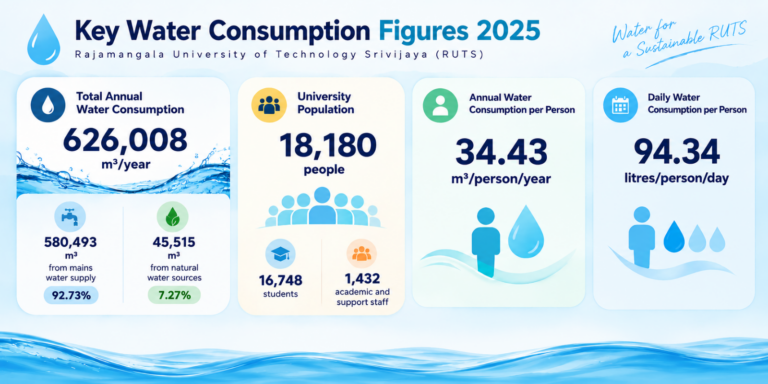
RUTS Provides Rent-Free Staff Accommodation across All Campuses

11.4.4 Rajamangala University of Technology Srivijaya (RUTS) provides rent-free staff accommodation across all its campuses as part of its employee welfare arrangements. Eligible personnel can access university-managed residential facilities without paying rent, while residents are responsible for their own water and electricity expenses. This provision helps reduce employees' housing costs and supports access to affordable accommodation near their workplaces. Staff Housing Allocation and Applications at Songkhla Campus At Songkhla Campus, RUTS provides rent-free accommodation for eligible personnel under its 2017 regulations governing the allocation and occupancy of government-owned staff housing. The regulations establish a formal housing allocation committee, eligibility requirements, application procedures and six categories of residential accommodation.

View Full Evidence Page →
SDG 11
📜 Official Evidence • Data Year 2025
[11.4.5] RUTS Supports Affordable On-Campus Student Housing at Trang Campus 11.4.5
RUTS Supports Affordable On-Campus Student Housing at Trang Campus

11.4.5 Rajamangala University of Technology Srivijaya (RUTS) provides affordable on-campus accommodation for students at its Trang Campus through university-managed dormitory facilities. The accommodation offers students access to furnished residential facilities at clearly established rates, supporting their housing needs and helping them manage living expenses while pursuing higher education. The university offers two types of student accommodation. Rooms with private bathrooms are available at THB 10,200 per room per semester and can accommodate up to four students, equivalent to THB 2,550 per student per semester when fully occupied. Rooms with shared bathrooms are available at THB 6,900 per room per semester, accommodating two students at THB 3,450 per student per semester. Both rates include water and electricity charges, as well as free Wi-Fi.

View Full Evidence Page →
SDG 11
📜 Official Evidence • Data Year 2025
[11.4.6] RUTS Promotes Inclusive and Sustainable Campus Mobility through Accessible Covered Walkways and Universal Design Infrastructure 11.4.6
RUTS Promotes Inclusive and Sustainable Campus Mobility through Accessible Covered Walkways and Universal Design Infrastructure

11.4.6 Enhancing Pedestrian Connectivity and Weather Protection Rajamangala University of Technology Srivijaya (RUTS) has established a network of covered walkways connecting academic buildings and university facilities at its Songkhla Campus. These pathways provide sheltered pedestrian routes, protecting students, staff, and visitors from direct sunlight and rainfall, which are important considerations in southern Thailand's tropical climate. By connecting buildings and faculties, the covered walkways facilitate movement between classrooms, offices, and academic facilities. The interconnected pedestrian network includes routes providing access to the Faculty of Engineering and the Faculty of Industrial Education. This infrastructure supports convenient pedestrian circulation and contributes to a more walkable campus environment. Promoting Universal Accessibility and Inclusive Mobility

View Full Evidence Page →
SDG 11
📜 Official Evidence • Data Year 2025
[11.4.7] RUTS Collaborates with Local Authorities on Housing, Urban Planning and Community Development 11.4.7
RUTS Collaborates with Local Authorities on Housing, Urban Planning and Community Development

11.4.7 Rajamangala University of Technology Srivijaya (RUTS), through its Faculty of Architecture, works with local authorities and community organizations to address housing needs, urban planning and community development in Songkhla Province. In 2025, these collaborations focused on accessible housing, public infrastructure development, climate-resilient urban planning and post-disaster recovery. Collaborative Planning for Affordable and Accessible Housing Rajamangala University of Technology Srivijaya (RUTS), through its Faculty of Architecture, works with local authorities and community organizations in Songkhla Province to address housing needs, improve residential accessibility and support community-based housing development.

View Full Evidence Page →
SDG 11
📜 Official Evidence • Data Year 2025
[11.4.8] RUTS Integrates Environmental Considerations into the Design of the Office of Academic Promotion and Registration 11.4.8
RUTS Integrates Environmental Considerations into the Design of the Office of Academic Promotion and Registration

11.4.8 Rajamangala University of Technology Srivijaya (RUTS) demonstrates its commitment to sustainable campus development through the architectural design and proposed development of the Office of Academic Promotion and Registration. The project reflects the university's efforts to integrate functional infrastructure, environmental considerations, and user-oriented spaces into campus development. The architectural design incorporates contemporary building elements, landscaped outdoor areas, and integrated spaces intended to support academic services and university administration. The proposed building features a combination of modern architectural forms, natural-looking materials, and external shading elements, reflecting an approach that considers both functionality and the surrounding environment. A notable aspect of the design is the incorporation of landscaped green spaces and outdoor communal areas.

View Full Evidence Page →
SDG 11
📜 Official Evidence • Data Year 2025
[11.4.9] Revitalizing Existing Campus Infrastructure 11.4.9
Revitalizing Existing Campus Infrastructure

11.4.9 RUTS Promotes Sustainable Campus Development through Brownfield Redevelopment and Integrated Academic Services Rajamangala University of Technology Srivijaya (RUTS) demonstrates its commitment to sustainable campus development through an initiative to redevelop the former registration building and its surrounding underutilized land into an integrated One-Stop Service Center. The initiative promotes the productive reuse of previously developed land and aims to improve the efficiency of existing campus infrastructure. In 2024, RUTS identified the former registration building and adjacent underutilized land as an opportunity for campus redevelopment. Rather than focusing exclusively on new development areas, the university proposed transforming the existing site into a modern facility that better responds to the needs of students, staff, and university administration.

View Full Evidence Page →
SDG 12
📜 Official Evidence • Data Year 2025
[12.2.5] Research and Development of Innovations for Marine Waste Management in Hua Khao Community, Singhanakhon District, Songkhla Province, Thailand 12.2.5
Research and Development of Innovations for Marine Waste Management in Hua Khao Community, Singhanakhon District, Songkhla Province, Thailand
Outreach and Engagement

The Faculty of Business Administration, the Faculty of Architecture, and the Faculty of Liberal Arts, Rajamangala University of Technology Srivijaya (RUTS), in collaboration with PTT Exploration and Production Public Company Limited (PTTEP), implemented the Research and Development of Innovations for Marine Waste Management in Hua Khao Community, Singhanakhon District, Songkhla Province project. The project aimed to investigate community practices in marine and coastal waste management; propose appropriate management approaches; develop innovations for marine and coastal waste management; create prototypes of community products or innovations using plastic waste collected from marine and coastal environments; and identify marketing strategies to commercialise these products and generate income for the community.

View Full Evidence Page →
SDG 12
📜 Official Evidence • Data Year 2025
[12.2.5-2] RUTS and the Southern Royal Initiative Technology Transfer Center Organize World Environment Day 2025 Activities 12.2.5-2
RUTS and the Southern Royal Initiative Technology Transfer Center Organize World Environment Day 2025 Activities
Teaching and Learning

On 5 June 2025, the Southern Center for Technology Transfer in Waste Disposal and Wastewater Treatment under the Royal Initiative, together with the Resource and Environmental Management Program, Faculty of Science and Technology of Fisheries, Rajamangala University of Technology Srivijaya (RMUTSV), Trang Campus, and partner organizations, organized World Environment Day activities under the local theme “Empowering Youth to Address the Global Boiling Crisis.” The event took place at the Phan Tri Phian Chan Suep Si Meeting Room at RMUTSV, Trang Campus. Mr. Manit Tha Chin, Sikao District Chief, presided over the opening ceremony. Participants included Assistant Professor Sitthichok Chan Yong, Vice President for Trang Campus, university executives, lecturers, staff, university students, and primary and secondary school students from Sikao District.

View Full Evidence Page →
SDG 12
📜 Official Evidence • Data Year 2025
[12.2.6] RUTS Integrates Environmental Communication Coursework with Waste Management and Wastewater Treatment Activities at Ban Chang Lang School 12.2.6
RUTS Integrates Environmental Communication Coursework with Waste Management and Wastewater Treatment Activities at Ban Chang Lang School
Teaching and Learning

On 18 August 2025, the Resource and Environmental Management Program at Rajamangala University of Technology Srivijaya (RMUTSV), Trang Campus, integrated teaching and learning in the Environmental Communication course with a knowledge transfer activity on waste management and wastewater treatment. The activity was organized in collaboration with the Southern Regional Center of the Laem Phak Bia Royal Initiative Project at Ban Chang Lang School, Mai Fat Subdistrict, Sikao District, Trang Province, for 55 school students. The activity aimed to foster environmental awareness and responsibility among young people and the wider public, while providing the participating school students with knowledge of appropriate waste management and wastewater treatment. It also gave university students an opportunity to apply environmental communication skills in a school setting.

View Full Evidence Page →
SDG 12
📜 Official Evidence • Data Year 2025
[12.3.2] Turning Waste into Wealth: Gold Medal Recognition: RMUTS Researcher Wins Prestigious Award for Low-Carbon Rubber Flooring Innovation 12.3.2
Turning Waste into Wealth: Gold Medal Recognition: RMUTS Researcher Wins Prestigious Award for Low-Carbon Rubber Flooring Innovation
Research and Innovation

Asst. Prof. Dr. Thanwit Naemsai from the Faculty of Engineering at Rajamangala University of Technology Srivijaya won a prestigious Gold Medal at the 8th International Invention and Innovation Show INTARG 2025. This international exhibition took place from 3 to 5 June 2025 in Katowice, Poland, showcasing cutting-edge global innovations. He received this high honor for his outstanding research project titled Low-Carbon Rubber Flooring for Elderly. This global recognition highlights the university's capability to produce world-class innovations that address critical environmental and social needs. The research was specifically developed to minimize plastic reliance by substituting synthetic materials with high-quality natural rubber and recycled components.

View Full Evidence Page →
SDG 12
📜 Official Evidence • Data Year 2025
[12.3.2-2] Turning Waste into Wealth: RUTS Researchers Pioneer Eco-Friendly Boxing Mats from Recycled Rubber and Sawdust 12.3.2-2
Turning Waste into Wealth: RUTS Researchers Pioneer Eco-Friendly Boxing Mats from Recycled Rubber and Sawdust
Research and Innovation

Asst. Prof. Dr. Suwat Rattanapan and Asst. Prof. Jutatip Makmanee Treitler recently showcased a commercial-oriented research innovation aimed at sustainable waste utilization. The presentation focused on eco-friendly boxing ring floor mats made from natural rubber blended with natural fibers and recycled waste materials. This milestone event took place on 10 April 2025 at the Siva Royal Hotel in Phatthalung Province. The showcase was part of the Intellectual Property Management Project designed to enhance professional IP standards and technology transfer at Rajamangala University of Technology Srivijaya (RUTS). Specifically, the presentation was conducted under Activity 5: Young Smart Innovation & IP Camp, supported by the Reinventing University higher education excellence and high-level manpower development program.

View Full Evidence Page →
SDG 12
📜 Official Evidence • Data Year 2025
[12.3.2-3] Research and Development of Innovations for Marine Waste Management in Hua Khao Community, Singhanakhon District, Songkhla Province, Thailand 12.3.2-3
Research and Development of Innovations for Marine Waste Management in Hua Khao Community, Singhanakhon District, Songkhla Province, Thailand
Outreach and Engagement

The Faculty of Business Administration, the Faculty of Architecture, and the Faculty of Liberal Arts, Rajamangala University of Technology Srivijaya (RUTS), in collaboration with PTT Exploration and Production Public Company Limited (PTTEP), implemented the Research and Development of Innovations for Marine Waste Management in Hua Khao Community, Singhanakhon District, Songkhla Province project. The project aimed to investigate community practices in marine and coastal waste management; propose appropriate management approaches; develop innovations for marine and coastal waste management; create prototypes of community products or innovations using plastic waste collected from marine and coastal environments; and identify marketing strategies to commercialise these products and generate income for the community.

View Full Evidence Page →
SDG 12
📜 Official Evidence • Data Year 2025
[12.3.2-4] Value Creation through the Circular Economy Model under the Project on Enhancing SME Competitiveness through the Application of the BCG Economy Model 12.3.2-4
Value Creation through the Circular Economy Model under the Project on Enhancing SME Competitiveness through the Application of the BCG Economy Model
Outreach and Engagement

The Office of Innovation Management and Technology Transfer, Rajamangala University of Technology Srivijaya (RUTS), in collaboration with Regional Industrial Promotion Center 11, Department of Industrial Promotion, implemented the Value Creation through the Circular Economy Model (Circular Design Product – Upcycled Product) activity under the SME Business Enhancement Project through the Application of the BCG Economy Model for the fiscal year 2025. The activity aimed to 1) promote the utilization of waste and residual materials generated from cocoa product processing by community enterprises through product design and value creation in accordance with circular economy principles. And 2) assess reductions in resource consumption, waste generation, and carbon footprint achieved by Ton Nga Chang Community Enterprise for Local Products and Processed Cocoa, located in Hat Yai District, Songkhla Province.

View Full Evidence Page →
SDG 12
📜 Official Evidence • Data Year 2025
[12.3.2-5] Hazardous waste management, and biosafety 12.3.2-5
Hazardous waste management, and biosafety
Policy and Operation

In accordance with Rajamangala University of Technology Srivijaya’s hazardous waste disposal policy, the Plant Pathology Laboratory (CB311), Registration No. 2-0060-0001-2, has implemented laboratory safety practices since 2024. Located at the Faculty of Agriculture, Nakhon Si Thammarat Campus, Thung Yai District, Thailand, the laboratory is led by Assoc. Prof. Dr. Pornsil Seephueak and laboratory staff. The initiative focuses on laboratory safety, hazardous waste management, and biosafety compliance in research activities. It aims to ensure the safe handling and management of potentially hazardous biological and chemical materials. These practices seek to minimize risks to human health, animals, and the environment while promoting sustainable research operations.

View Full Evidence Page →
SDG 12
📜 Official Evidence • Data Year 2025
[12.3.2-6] Transforming Plastic Waste into Innovation: RMUTS Upcycles Bottle Lids into Functional Chair Seats 12.3.2-6
Transforming Plastic Waste into Innovation: RMUTS Upcycles Bottle Lids into Functional Chair Seats
Policy and Operation

Mr. Anuchit Wichianchom, an instructor in the Faculty of Science and Technology at Rajamangala University of Technology Srivijaya (RMUTS), has successfully spearheaded an innovative upcycling initiative to transform discarded plastic bottle lids into durable chair seats. This creative project addresses the growing environmental challenge of single-use plastic pollution through practical community-focused engineering. By turning waste materials into valuable assets, the endeavor reinforces the institution's commitment to long-term environmental sustainability. The initiative showcases how academic expertise can be directly applied to solve local ecological problems effectively. Ultimately, this undertaking highlights the university's proactive role in fostering a circular economy at the grassroots level.

View Full Evidence Page →
SDG 13
📜 Official Evidence • Data Year 2025
[13.2.1] RUTS Low Carbon Energy Tracking 13.2.1
RUTS Low Carbon Energy Tracking

RUTS Low Carbon Energy Tracking 1. Overview and Policy Framework Rajamangala University of Technology Srivijaya is committed to improving energy efficiency and mitigating the impacts of climate change under its Green University framework, in accordance with the University’s 20-Year Strategic Development Plan (2018–2037). On 9 December 2022, the University announced its “Policy on Environmental and Energy Management, Health, Hygiene, and Internal Safety.” The policy sets a target of promoting renewable energy use to at least 25% by 2026 and achieving carbon neutrality at the university by 2037. It also encourages the renovation and design of energy-efficient buildings. 2. Low-carbon Energy Tracking and Measurement System 2.1 Energy Data Collection The University has established a system for collecting energy data and tracking and measuring both low-carbon energy use and total energy consumption.

View Full Evidence Page →
SDG 13
📜 Official Evidence • Data Year 2025
[13.2.2] Low-carbon Energy Use 13.2.2
Low-carbon Energy Use

Low-carbon Energy Use For the 2025 assessment year, the university reported total energy use of 44,044 gigajoules (GJ), of which 11,021 GJ was energy used from low-carbon sources. This represents 25.02% of total energy use. 2. Energy Consumption Data IndicatorAmountUnit Total energy used44,044GJ Total energy used from low-carbon sources11,021GJ Share of low-carbon energy (calculated)25.02% 3. Calculation of the Low-carbon Energy Share Low-carbon energy share (%) = (Energy used from low-carbon sources ÷ Total energy used) × 100 = (11,021 ÷ 44,044) × 100 = 25.02% 4. Low-carbon Energy Sources and Supporting Projects Solar Rooftop Project at the Sri Wiswa Building A rooftop solar photovoltaic power generation system has been installed at the Sri Wiswa Building, Faculty of Engineering, to supply electricity for the building and its teaching laboratories.

View Full Evidence Page →
SDG 13
📜 Official Evidence • Data Year 2025
[13.3.1] Community Education and Capacity Building for Climate-Related Disaster Risk Management 13.3.1
Community Education and Capacity Building for Climate-Related Disaster Risk Management

Community Education and Capacity Building for Climate-Related Disaster Risk Management Rajamangala University of Technology Srivijaya (RUTS), through its Water Management Innovation and Geoinformatics Research Unit, contributed to disaster-risk education and capacity building through two training activities conducted in November and December 2025. These initiatives focused on strengthening knowledge and practical skills in participatory mapping, Geographic Information Systems (GIS), and water-related hazard analysis. By engaging local communities and university students, RUTS promoted the use of geospatial technologies to support disaster preparedness, water-resource planning, and the development of approaches to managing climate-related risks. RUTS Provides Community Training on Disaster-Risk Mapping and GIS-Based Water Management

View Full Evidence Page →
SDG 13
📜 Official Evidence • Data Year 2025
[13.3.2] Sharing Climate Adaptation Knowledge and Water Management Approaches with Local Authorities and Communities 13.3.2
Sharing Climate Adaptation Knowledge and Water Management Approaches with Local Authorities and Communities

Sharing Climate Adaptation Knowledge and Water Management Approaches with Local Authorities and Communities Rajamangala University of Technology Srivijaya (RUTS) supports local climate adaptation through research-based water management, knowledge sharing, and collaboration with government agencies and communities. In the Songkhla Lake Basin, the university has developed practical approaches to addressing freshwater shortages, salinity fluctuations, and other climate-related water risks. These efforts include sharing research findings to inform government planning, providing public access to water-monitoring and forecasting information, and engaging with local authorities to explore coordinated water-management measures. RUTS Shares Water Management Approaches to Support Local Climate-Risk Planning

View Full Evidence Page →
SDG 13
📜 Official Evidence • Data Year 2025
[13.3.3] Collaborative Planning for Climate-Related Water Disasters 13.3.3
Collaborative Planning for Climate-Related Water Disasters

Collaborative Planning for Climate-Related Water Disasters Rajamangala University of Technology Srivijaya (RUTS) participates in collaborative water-resource and disaster-risk planning with government agencies, academic partners, and local communities in southern Thailand. Through its Water Management Innovation and Geoinformatics Research Unit, the university contributes to regional water-management committees, community-based drought-risk assessments, and government-led flood preparedness discussions. These activities support the identification of local water-related risks, the exchange of technical knowledge, and coordinated planning to strengthen preparedness for floods, droughts, and other climate-related water challenges. RUTS Supports Collaborative Water Management and Disaster Preparedness through River Basin Committees and Government Partnerships

View Full Evidence Page →
SDG 13
📜 Official Evidence • Data Year 2025
[13.3.4] Informing and Supporting Government in Climate-Risk Monitoring and Early Warning 13.3.4
Informing and Supporting Government in Climate-Risk Monitoring and Early Warning

Informing and Supporting Government in Climate-Risk Monitoring and Early Warning Rajamangala University of Technology Srivijaya (RUTS) supports climate-related risk monitoring and early-warning preparedness through research, automated monitoring systems, and collaboration with government agencies and research partners. Its initiatives include salinity forecasting in the Songkhla Lake Basin, automated rainfall monitoring in Phatthalung, and flood-level surveys in the U-Tapao River Basin. These efforts provide information to support flood and drought risk assessment, water-resource management, and disaster preparedness in southern Thailand. RUTS Supports Government Climate-Risk Monitoring through Water Monitoring and Salinity Forecasting Systems

View Full Evidence Page →
SDG 13
📜 Official Evidence • Data Year 2025
[13.3.5] Collaboration with Community Organisations for Climate Adaptation 13.3.5
Collaboration with Community Organisations for Climate Adaptation

Collaboration with Community Organisations for Climate Adaptation Rajamangala University of Technology Srivijaya (RUTS) collaborates with community organisations and research partners to support local water management and climate adaptation. Through knowledge exchange and community-based planning, the university contributes technical expertise to help communities address drought and flood risks. RUTS Shares Water Management Knowledge with Kadangnga Community Organisation On 21 October 2025, Asst. Prof. Dr. Nattapol Kaewthong from the Water Management Innovation and Geoinformatics Research Unit of Rajamangala University of Technology Srivijaya (RUTS) was invited by the Kadangnga Subdistrict Community Organisations Council to share his expertise in water management with local residents during the “Poet Yam Na” community event in Sathing Phra District, Songkhla Province.

View Full Evidence Page →
SDG 13
📜 Official Evidence • Data Year 2025
[13.4.1] RUTS: Commitment to a Carbon-Neutral University 13.4.1 📄 PDF
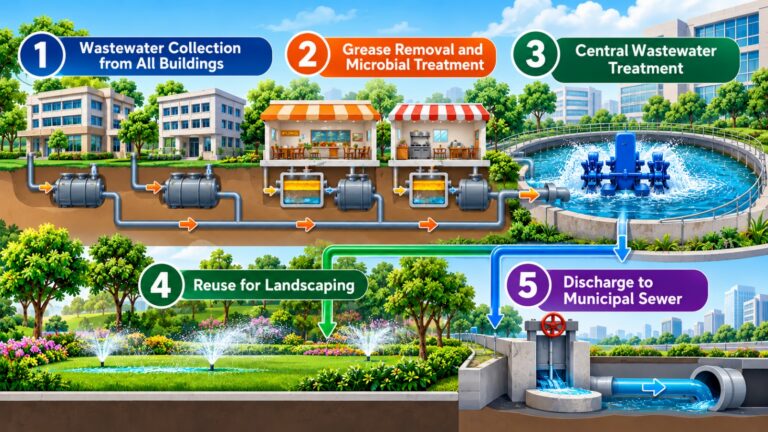
RUTS: Commitment to a Carbon-Neutral University

RUTS Sets 2037 Target for Carbon Neutrality Rajamangala University of Technology Srivijaya has established an institutional direction for environmental and energy management under its announcement entitled “Policy on Environmental and Energy Management, Health, Hygiene and Internal Safety,” dated 9 December 2022. The university states its commitment to achieving carbon neutrality by 2037, with greenhouse gas (GHG) accounting and emission-reduction measures serving as key implementation mechanisms. Carbon-Neutrality Commitment and Emissions Boundary The university describes an approach to GHG emissions assessment based on the Greenhouse Gas Protocol (GHG Protocol), covering Scope 1, Scope 2 and selected Scope 3 sources: Scope 1 — Direct emissions associated with vehicle and machinery fuel use, refrigerants, and agricultural or livestock activities, particularly at the Nakhon Si Thammarat and Trang campuses.

View Full Evidence Page →
SDG 14
📜 Official Evidence • Data Year 2025
[14.2.1] Educational Programmes on Freshwater Ecosystems 14.2.1
Educational Programmes on Freshwater Ecosystems
Outreach and Engagement

Trang Aquarium, located on the Rajamangala University of Technology Srivijaya (RUTS) campus, serves as an educational resource for freshwater ecosystem conservation and public awareness. In support of SDG 14, Indicator 14.2.1 (Outreach and Engagement), the aquarium promotes understanding of freshwater biodiversity and the sustainable use of aquatic resources. The aquarium provides educational programs for local communities, school students, and the general public. Guided visits include lectures by aquarium staff on freshwater ecosystems and biodiversity conservation. The exhibits comprise two main sections: -Indoor exhibits: Freshwater fish native to Thailand, including rare and endangered species. -Outdoor exhibits: A large-scale representation of a freshwater ecosystem that illustrates aquatic habitats and their ecological importance.

View Full Evidence Page →
SDG 14
📜 Official Evidence • Data Year 2025
[14.2.2] Oyster Farming Knowledge Transfer for Sustainable Coastal Community Development in Trang Province 14.2.2
Oyster Farming Knowledge Transfer for Sustainable Coastal Community Development in Trang Province

Declining natural oyster stocks have led to a shortage of oyster seed, driving up prices and leaving demand unmet. Hatchery-based production offers a sustainable solution by ensuring a reliable supply of high-quality oyster seed. Rajamangala University of Technology Srivijaya (RUTS) promotes sustainable aquaculture in local communities through the Oyster Research Unit at its Faculty of Science and Technology of Fisheries. The unit produces high-quality oyster seed in hatcheries and shares its production techniques with local farmers to support oyster farming and improve their technical skills. Assistant Professor Dr. Supatcha Chooseangjaew, Head of the RUTS Oyster Research Unit, organized a hands-on workshop on oyster farming in hatcheries and earthen ponds for residents of Ban Hat Sai Khao, Ban Bang Khang Khao, and Ban Thung Thong communities.

View Full Evidence Page →
SDG 14
📜 Official Evidence • Data Year 2025
[14.2.3] RUTS Promotes Awareness of Responsible Fishing and Marine Resource Conservation through Community Outreach and Academic Collaboration 14.2.3
RUTS Promotes Awareness of Responsible Fishing and Marine Resource Conservation through Community Outreach and Academic Collaboration

Addressing IUU fishing requires an integrated approach involving all sectors, including government agencies, the private sector, independent organizations, local authorities, communities, and the public. Coordinated efforts are essential to implement effective measures, achieve tangible results, and ensure long-term sustainability. Rajamangala University of Technology Srivijaya (RUTS), in collaboration with the Department of Marine and Coastal Resources (DMCR), the Marine Science Association of Thailand, and partner organizations, hosted the 8th Marine Science Conference on 25 June 2025 at Rua Rasada Hotel, Trang Province, under the theme “Science, Technology, and Innovation for a Changing Ocean.” At the Conference, RUTS organized a panel discussion to raise awareness among coastal fishing communities about overfishing, illegal, unreported and unregulated (IUU) fishing, and destructive fishing practices.

View Full Evidence Page →
SDG 14
📜 Official Evidence • Data Year 2025
[14.3.1] Conservation and Sustainable Resource Utilisation through Academic and International Activities 14.3.1
Conservation and Sustainable Resource Utilisation through Academic and International Activities

Rajamangala University of Technology Srivijaya (RUTS), in collaboration with the Department of Marine and Coastal Resources (DMCR), the Marine Science Association of Thailand, and partner organizations, hosted the 8th Marine Science Conference under the theme “Science, Technology, and Innovation for a Changing Ocean” on 25 June 2025 at Rua Rasada Hotel, Mueang District, Trang Province. The conference provided a platform for faculty members, researchers, students, government agencies, private-sector organizations, and the public to present academic research and exchange knowledge and experience in marine science, innovation, and marine technology to support sustainable development. The conference also aimed to strengthen preparedness for the Triple Planetary Crisis facing humanity: (1) climate change, (2) biodiversity loss, and (3) pollution and waste.

View Full Evidence Page →
SDG 14
📜 Official Evidence • Data Year 2025
[14.3.2] RUTS Policy on the Prohibition of Illegal, Unreported, and Unregulated (IUU) Fishery Products 14.3.2 📄 PDF
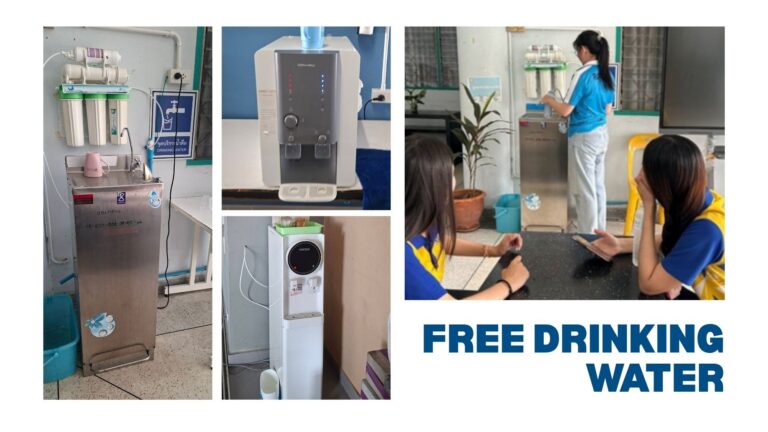
RUTS Policy on the Prohibition of Illegal, Unreported, and Unregulated (IUU) Fishery Products

Illegal, unreported, and unregulated (IUU) fishing causes significant environmental, economic, and social impacts, including overfishing and threats to the sustainability of legal fisheries. Although Southeast Asia is a major hotspot for IUU fishing, the problem occurs worldwide. Addressing IUU fishing therefore requires a multi-sectoral approach to prevent the trade and use of IUU fishery products. These products include fish and other marine products that are caught, transported, processed, or marketed in violation of applicable national or international laws and regulations, including products obtained through destructive fishing methods, from protected areas, or without the required permits. Rajamangala University of Technology Srivijaya (RUTS) is committed to advancing the United Nations Sustainable Development Goals (SDGs) through its policies and operations.

View Full Evidence Page →
SDG 14
📜 Official Evidence • Data Year 2025
[14.3.3] RUTS Strengthens Ecosystem Conservation and Biodiversity through Research and Industry Collaboration 14.3.3
RUTS Strengthens Ecosystem Conservation and Biodiversity through Research and Industry Collaboration

In Thailand, seagrass meadows provide essential feeding grounds for the dugong (Dugong dugon), which is classified as Vulnerable on the IUCN Red List. Declining seagrass cover, partly caused by sedimentation from coastal dredging and land erosion, threatens local dugong populations. Conserving these habitats is therefore essential for the long-term survival of dugongs and other associated marine fauna. Rajamangala University of Technology Srivijaya (RUTS), in collaboration with Kuang Pei San Food Products Public Company Limited (PUMPUI), launched the “PUMPUI SEA of SMILES” project to establish seagrass enclosures at Laem Sai Beach, Trang, protecting selected seagrass beds and allowing them to recover and spread naturally.

View Full Evidence Page →
SDG 14
📜 Official Evidence • Data Year 2025
[14.3.4] RUTS Advances Aquatic Ecosystem Protection through Biotechnology and Research Collaboration 14.3.4
RUTS Advances Aquatic Ecosystem Protection through Biotechnology and Research Collaboration

RUTS Advances Aquatic Ecosystem Protection through Biotechnology and Research Collaboration Rajamangala University of Technology Srivijaya (RUTS) works to minimise environmental impacts on aquatic ecosystems through biotechnology development, applied research, and collaboration with industry and environmental organisations. In 2025, the university promoted PSB-SAIYAI biotechnology to improve water and sediment quality in aquaculture, contributed research-based approaches to seagrass restoration in collaboration with the private sector, and established partnerships to support mangrove biodiversity assessment and sustainable coastal resource management. These initiatives reflect RUTS's efforts to develop and promote practices that reduce environmental risks associated with aquaculture and coastal activities while supporting the protection of aquatic ecosystems.

View Full Evidence Page →
SDG 14
📜 Official Evidence • Data Year 2025
[14.4.1] RUTS Water Quality Standards and Ecosystem Protection Guidelines 14.4.1 📄 PDF
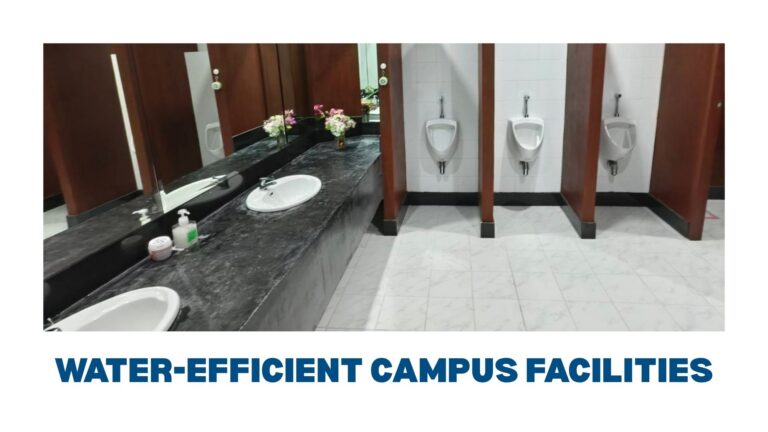
RUTS Water Quality Standards and Ecosystem Protection Guidelines

RUTS Water Quality Standards and Ecosystem Protection Guidelines Rajamangala University of Technology Srivijaya (RUTS) has established institutional guidelines and standards for wastewater management under the “Announcement of Rajamangala University of Technology Srivijaya on Wastewater Guidelines and Standards, A.D. 2022.” The announcement requires wastewater treatment from university buildings to comply with applicable legal standards and requirements. It establishes procedures for managing wastewater treatment systems, maintaining equipment, reducing wastewater generation, and monitoring system performance. Institutional Wastewater Management Guidelines The following wastewater management standards and guidelines are established to protect public health and the environment: The following wastewater management standards and guidelines are established to protect public health and the environment:

View Full Evidence Page →
SDG 14
📜 Official Evidence • Data Year 2025
[14.4.2] RUTS Implements Campus Waste Reduction Measures and a Marine Debris Action Plan 14.4.2
RUTS Implements Campus Waste Reduction Measures and a Marine Debris Action Plan

RUTS Implements Campus Waste Reduction Measures and a Marine Debris Action Plan Rajamangala University of Technology Srivijaya (RUTS) promotes waste reduction, reuse, and recycling through institutional measures and environmental initiatives. Under its 2022 Announcement on Waste Reduction and Segregation Measures within the University, RUTS has established guidelines for reducing waste generation and improving waste management across its campuses. In 2025, RUTS Trang Campus also implemented an action plan focused on marine debris awareness, environmental education, and creative waste reuse, including activities addressing the impacts of plastic pollution on marine ecosystems. RUTS established its institutional waste management framework through the Announcement of Rajamangala University of Technology Srivijaya on Waste Reduction and Segregation Measures within the University, B.E. 2565 (2022).

View Full Evidence Page →
SDG 14
📜 Official Evidence • Data Year 2025
[14.4.3] RUTS Implements Marine Pollution Reduction Policy through Coastal Conservation and Collaborative Action 14.4.3 📄 PDF
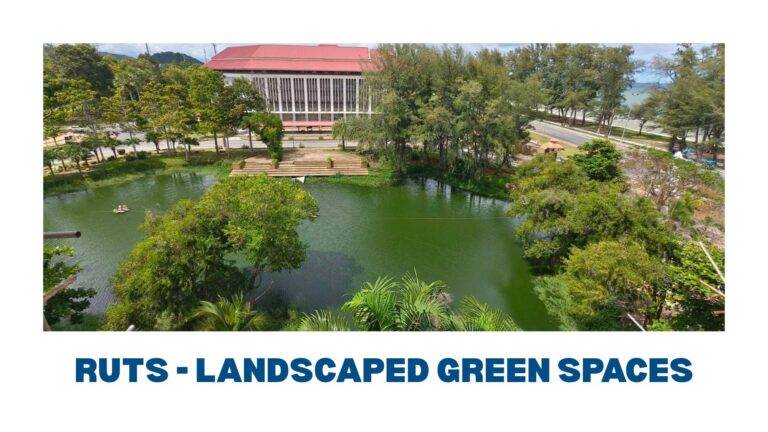
RUTS Implements Marine Pollution Reduction Policy through Coastal Conservation and Collaborative Action

RUTS Implements Marine Pollution Reduction Policy through Coastal Conservation and Collaborative Action Plastic pollution is a major threat to marine ecosystems, human health, and coastal economies. More than 14 million metric tons of plastic enter the ocean annually, accounting for approximately 80% of marine debris. Major sources include poorly managed waste, industrial activities, construction, and illegal dumping. Marine animals may ingest plastic or become entangled in debris, leading to injuries, digestive obstruction, starvation, and death. Plastics may also release hazardous chemicals that accumulate in marine food webs and potentially reach humans through seafood consumption. In addition, marine debris damages fishing gear, reduces fishery productivity, and degrades coastal landscapes, negatively affecting tourism and local livelihoods.

View Full Evidence Page →
SDG 14
📜 Official Evidence • Data Year 2025
[14.5.1] RUTS Strategy Plan for Protecting Ecosystem Changes in the Andaman Region 14.5.1 📄 PDF
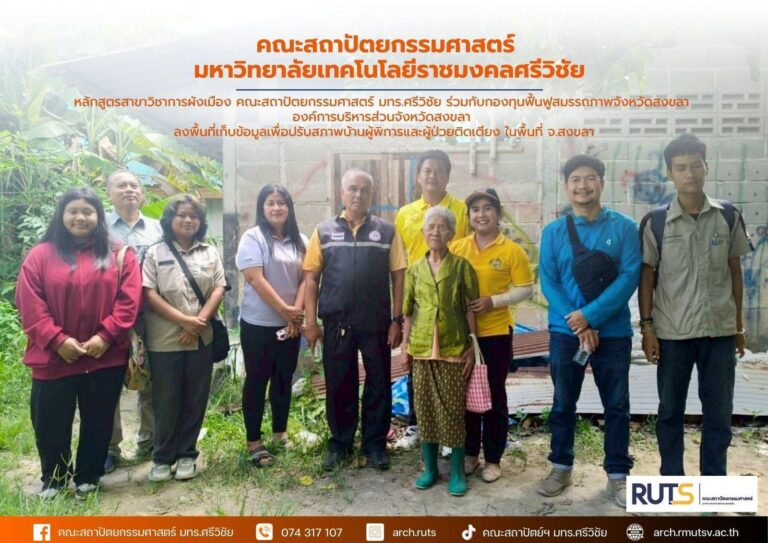
RUTS Strategy Plan for Protecting Ecosystem Changes in the Andaman Region

RUTS Strategy Plan for Protecting Ecosystem Changes in the Andaman Region Guided by the 2018–2037 RUTS Strategic Plan, RUTS prioritizes coastal protection and restoration to promote the sustainable use of marine resources. This commitment aligns with the Trang Provincial Development Plan, which emphasizes natural resource management, environmental protection, and the conservation of endangered marine species, including dugongs and sea turtles. RUTS plays a leading role in dugong and habitat conservation. In collaboration with the Trang Traditional Fishermen’s Club, the Andaman Foundation, local authorities, and academic institutions, RUTS co-developed the Dugong Conservation Plan (DCP) for Trang Province. The plan focuses on reducing threats to dugongs and their habitats, supporting conservation research, and raising public awareness and community participation in dugong conservation.

View Full Evidence Page →
SDG 14
📜 Official Evidence • Data Year 2025
[14.5.2] RUTS Monitors Aquatic Ecosystem Health through Microplastic Analysis and Research 14.5.2
RUTS Monitors Aquatic Ecosystem Health through Microplastic Analysis and Research

RUTS Monitors Aquatic Ecosystem Health through Microplastic Analysis and Research Monitoring Microplastic Contamination in Aquatic Ecosystems Plastics have increasingly replaced natural materials, with global production reaching 359 million tonnes in 2018. Thailand is among the major contributors to plastic waste entering natural water bodies, largely due to inadequate waste management. Although approximately 14% of plastic packaging is recycled, substantial amounts are improperly discarded, polluting rivers and marine environments. Microplastics can accumulate in aquatic organisms, causing physical damage and digestive blockages, and may be transferred through the food chain. Since 2021, RUTS has operated a Microplastic Monitoring Laboratory equipped with a BRUKER LUMOS II FTIR microscope to assess microplastic contamination in coastal ecosystems.

View Full Evidence Page →
SDG 14
📜 Official Evidence • Data Year 2025
[14.5.3] RUTS Promotes Aquatic Stewardship through Community-Based Conservation and Environmental Education 14.5.3
RUTS Promotes Aquatic Stewardship through Community-Based Conservation and Environmental Education

RUTS Promotes Aquatic Stewardship through Community-Based Conservation and Environmental Education Rajamangala University of Technology Srivijaya (RUTS) promotes responsible aquatic resource management through community-based conservation programmes, research collaboration, and environmental education. In collaboration with the National Research Council of Thailand (NRCT) and local communities, the university supports blue swimming crab bank initiatives, aquatic resource replenishment, and community learning centres to encourage sustainable fisheries and marine ecosystem conservation. These efforts are complemented by field-based educational activities that strengthen awareness and understanding of coastal ecosystems among students and young people. Supporting Community-Based Marine Resource Conservation

View Full Evidence Page →
SDG 14
📜 Official Evidence • Data Year 2025
[14.5.4] RUTS Crab Bank Project for Blue Crab Restoration 14.5.4
RUTS Crab Bank Project for Blue Crab Restoration

RUTS Crab Bank Project for Blue Crab Restoration The blue swimming crab (Portunus pelagicus) is an ecologically and economically important species in Thailand, supporting coastal fisheries and domestic and export markets. In response to declining crab populations, Rajamangala University of Technology Srivijaya (RUTS) launched the RUTS Crab Bank Project as part of a national effort to restore marine resources. Supported by the National Research Council of Thailand and the Ministry of Science and Technology, the project promotes community participation, collaboration among stakeholders, crab stock conservation, and sustainable fishing practices among local fishers.

View Full Evidence Page →
SDG 14
📜 Official Evidence • Data Year 2025
[14.5.5] Integrated Water Management Innovation for Songkhla Lake Basin 14.5.5
Integrated Water Management Innovation for Songkhla Lake Basin

Integrated Water Management Innovation for Songkhla Lake Basin The Songkhla Lake Basin, Thailand’s largest natural lake system, covers approximately 11,991 km² across Songkhla, Phatthalung, and Nakhon Si Thammarat provinces. Its lagoon ecosystem is sensitive to seasonal salinity changes caused by the interaction of freshwater inflows and seawater. Rising sea levels have intensified seawater intrusion, particularly during the dry season, threatening freshwater habitats, biodiversity, aquatic productivity, and local agriculture. To address these challenges, Rajamangala University of Technology Srivijaya (RUTS) has implemented the research project “Integrated Water Management Innovations to Enhance Community Economies in the Songkhla Lake Basin.” The project features an Internet of Things (IoT)-based salinity warning system to monitor and forecast seawater intrusion.

View Full Evidence Page →
SDG 15
📜 Official Evidence • Data Year 2025
[15.2.1] Consultation on Sambar Deer Conservation and Sustainable Management of Forest and Wild Land 15.2.1
Consultation on Sambar Deer Conservation and Sustainable Management of Forest and Wild Land
Outreach and Engagement

On 22 October 2025, Rajamangala University of Technology Srivijaya participated in a consultation meeting to address human-wildlife conflict involving sambar deer (Rusa unicolor) in Namtok Subdistrict, Thung Song District, Nakhon Si Thammarat Province. The meeting was held at Namtok Municipality and involved Dr. Prasert Nonthakarn and Asst. Prof. Dr. Worawitoo Meesook from the Faculty of Science and Technology, Lecturer Dr. Adisorn Sricharat and Ms. Supinya Choojai from the Faculty of Veterinary Medicine, and representatives from Kasetsart University, the Thailand Environment Institute, Namtok Municipality, Khao Pu-Khao Ya National Park, provincial administrative authorities, partner agencies, and affected local residents. The consultation aimed to reduce impacts on communities while conserving the sambar deer population and promoting sustainable management of the forest and wild-land habitats associated with Khao Pu-Khao Ya National Park.

View Full Evidence Page →
SDG 15
📜 Official Evidence • Data Year 2025
[15.2.2] Sustainable On-Campus Food Production under the University’s Sustainable Food Policy 15.2.2 📄 PDF
Sustainable On-Campus Food Production under the University’s Sustainable Food Policy
Policy and Operation

The Faculty of Agriculture at Thung Yai implements this policy through its on-campus agricultural facilities, including vegetable and poultry production managed by agricultural and animal-science personnel. On 4 December 2025, the Vegetable and Medicinal Plant Section harvested kale from its campus greenhouse for sale. Before harvesting, the crop was inspected by the section’s agricultural officer to ensure compliance with the Faculty of Agriculture’s quality standards. The production process incorporates cultivation management, crop-health monitoring, harvesting, and distribution, supporting the provision of fresh and safe food produced within the university’s agricultural facilities. The university also implements sustainable food practices through its Poultry Section.

View Full Evidence Page →
SDG 15
📜 Official Evidence • Data Year 2025
[15.2.3] Training Workshop for Trainers: Enhancing Snake Knowledge and Handling Skills to Maintain and Extend Ecosystem Biodiversity 15.2.3
Training Workshop for Trainers: Enhancing Snake Knowledge and Handling Skills to Maintain and Extend Ecosystem Biodiversity
Outreach and Engagement

Prof. Dr. Worawitoo Meesook from the Faculty of Science and Technology, Rajamangala University of Technology Srivijaya, led the project Training Workshop for Trainers: Enhancing Snake Knowledge and Handling Skills. The project was supported by Save The Snakes, USA, through the Save The Snakes Vijayan Devan Southeast Asian Snake Conservation Grant Program 2024. It was conducted on 27–28 May 2025 at Betong Industrial and Community Education College in Yala Province, southern Thailand. The project brought together partners from academic, government, wildlife, media, and community sectors, including the Department of Fisheries, Nick Wildlife, a Thai environmental influencer, Betong Lovely Animals Club, and Na Giant Snake Farm. This collaboration aimed to strengthen local knowledge, practical skills, and public engagement for snake conservation and biodiversity protection.

View Full Evidence Page →
SDG 15
📜 Official Evidence • Data Year 2025
[15.2.4] Wildlife Across Changing Ecosystems: Comparing Amphibian and Reptile Diversity in Thung Song 15.2.4
Wildlife Across Changing Ecosystems: Comparing Amphibian and Reptile Diversity in Thung Song
Research and Innovation

The Faculty of Science and Technology, Rajamangala University of Technology Srivijaya, conducted a study on the diversity of amphibians and reptiles in Thung Song Municipality from 28 May 2024 to 23 March 2025. The research was led by Asst. Prof. Dr. Worawitoo Meesook, Dr. Prasert Nonthakarn, Dr. Komsum Nuntasoontorn, and Asst. Prof. Dr. Thitikorn Prombanchong. The research team worked in collaboration with pharmacist Siriwat Dangsri, Thung Song Municipality, local community members, teachers, and students. The study compared amphibian and reptile diversity between areas with higher levels of human disturbance and areas with lower levels of disturbance. Thung Song is an important study area because limestone hills occur within and around the urban landscape. These limestone habitats provide distinctive ecological conditions and shelter for many wildlife species.

View Full Evidence Page →
SDG 15
📜 Official Evidence • Data Year 2025
[15.2.5] Farmer Training on Bacillus-Based Fermented Biofertilizer Production for Plant Disease Management and Growth Promotion 15.2.5
Farmer Training on Bacillus-Based Fermented Biofertilizer Production for Plant Disease Management and Growth Promotion
Outreach and Engagement

On December 25, 2025, the Faculty of Agriculture, Rajamangala University of Technology Srivijaya, collaborated with the Ron Phibun District Agricultural Office, Nakhon Si Thammarat Province. A hands-on workshop on Bacillus-based fermented liquid biofertilizer production was organized at the Ron Phibun District Agricultural Office. The workshop engaged 20 local farmers to enhance their knowledge and skills in biological plant disease management and plant growth promotion. The activity aimed to reduce chemical pesticide use and agricultural production costs while improving crop productivity and safety. It also sought to strengthen farmers’ livelihoods and promote environmentally sustainable agricultural practices. Three academic experts, Assoc. Prof. Dr. Pornsil Seephueak, Asst. Prof. Dr. Sakulrat Hansuek, and Dr. Pittiphat Butrakot, served as workshop trainers.

View Full Evidence Page →
SDG 15
📜 Official Evidence • Data Year 2025
[15.2.6] Camp Director Workshop on Sustainable Land and Camping-Site Management for Tourism 15.2.6
Camp Director Workshop on Sustainable Land and Camping-Site Management for Tourism

The College of Hospitality and Tourism (CHT), Rajamangala University of Technology Srivijaya, Trang Campus, held a Camp Director Workshop during 18–19 July 2024 as part of the project “From Crisis to Adaptation: Developing High-Quality Marine Tourism in the Gulf of Thailand-Andaman through Learning Ecosystem Development, Modern Management, Technology, and Innovation.” The workshop was held at the Workforce Development Centre Supporting New Normal Coastal Tourism Industry with Innovation and Technology, CHT Building, and Ban Mod Tanoi Village, Kantang District, Trang. Asst. Prof. Faphilai Thaweesinsopa, Director of the College of Hospitality and Tourism, presided over the ceremony to honor and encourage the training participants.

View Full Evidence Page →
SDG 15
📜 Official Evidence • Data Year 2025
[15.3.1] RUTS Policy on the Conservation and Sustainable Use of Terrestrial Ecosystems: 15.3.1 📄 PDF
RUTS Policy on the Conservation and Sustainable Use of Terrestrial Ecosystems:
Policy and Operation

RUTS Policy on the Conservation and Sustainable Use of Terrestrial Ecosystems Rajamangala University of Technology Srivijaya implements the RUTS Life on Land Policy (Revised Edition), A.D. 2025, which establishes the university’s commitment to the protection, restoration, and sustainable use of terrestrial ecosystems. The policy specifically promotes the conservation, restoration, and sustainable use of terrestrial ecosystems associated with the university, including forests, mountains, drylands, and other ecologically significant areas. It also supports biodiversity conservation and responsible land management through education, research, community engagement, and collaboration with relevant stakeholders. In 2025, the university demonstrated the implementation of this commitment through biodiversity monitoring of limestone-hill ecosystems in Thung Song Municipality, Nakhon Si Thammarat Province.

View Full Evidence Page →
SDG 15
📜 Official Evidence • Data Year 2025
[15.3.2] Policy-Based Identification and Monitoring of Threatened Amphibians and Reptiles in Thung Song 15.3.2 📄 PDF
Policy-Based Identification and Monitoring of Threatened Amphibians and Reptiles in Thung Song

Rajamangala University of Technology Srivijaya has established the Life on Land Policy (Revised Edition), A.D. 2025. Under Policy 3: Conservation of Terrestrial Ecosystem and Species Protection, the University seeks to identify and monitor species included in the IUCN Red List of Threatened Species and relevant national conservation lists, and to protect such species where their habitats are found in areas affected by University operations. The University implements this policy through its formal Memorandum of Understanding with Thung Song Municipality, which supports research, academic-service, and community-engagement activities in local terrestrial ecosystems. This includes limestone-hill habitats within Thung Song Municipality, which provide important habitat for amphibians, reptiles, and other wildlife.

View Full Evidence Page →
SDG 15
📜 Official Evidence • Data Year 2025
[15.3.3] Integrating Local Biodiversity into School Curriculum Planning and Sustainable Development through the BEEE Eco-Map Framework 15.3.3
Integrating Local Biodiversity into School Curriculum Planning and Sustainable Development through the BEEE Eco-Map Framework
Outreach and Engagement

Rajamangala University of Technology Srivijaya, represented by Asst. Prof. Dr. Worawitoo Meesook and Dr. Prasert Nonthakarn from the Faculty of Science and Technology, collaborated with Dr. Chamniern Vorratnchaiphan, Senior Advisor to the International Union for Conservation of Nature (IUCN), to develop the Eco-Map Curriculum for six schools under Thung Song Municipality. The curriculum applied the BEEE framework: Biodiversity, Ecosystem, Energy, and Equality. Its main objective was to integrate knowledge of local biodiversity and ecosystems into school planning, teaching, learning, and sustainable development activities. The programme encouraged schools to use their own campuses, surrounding green spaces, and local environments as living classrooms. Through the curriculum, students were expected to understand the relationship between biodiversity, ecosystem health, resource use, and community well-being.

View Full Evidence Page →
SDG 15
📜 Official Evidence • Data Year 2025
[15.3.4] Responsible Management of Alien Plant Species through Napier Grass Utilization at Rajamangala University of Technology Srivijaya 15.3.4
Responsible Management of Alien Plant Species through Napier Grass Utilization at Rajamangala University of Technology Srivijaya
Policy and Operation

Rajamangala University of Technology Srivijaya has established a policy to reduce the potential impacts of alien species associated with university operations, including measures to manage their use and prevent uncontrolled spread on campus. This policy provides a framework for the responsible management of alien species within university-managed areas. In line with this policy, the Faculty of Agriculture manages Napier grass (Cenchrus purpureus), an alien plant species cultivated within the university agricultural farm as a forage resource for livestock. On 9 January 2025, students in the Animal Science Program participated in harvesting Napier grass for use as fresh forage and fermented feed for cattle and goats. The harvesting and controlled use of Napier grass demonstrate the practical management of an alien plant species within the university’s agricultural operations.

View Full Evidence Page →
SDG 15
📜 Official Evidence • Data Year 2025
[15.3.5] Bird Conservation Learning with Thung Song Community 15.3.5
Bird Conservation Learning with Thung Song Community
Outreach and Engagement

On 26 January 2025, from 08:00 to 12:00, Rajamangala University of Technology Srivijaya collaborated with Thung Song Municipality to organise the Learning to Love and Conserve Birds: Bird Walk activity. Dr. Prasert Nonthakarn served as the activity educator and guided participants in learning about birds and their ecological importance. The activity was held at Sirindhorn Botanic Garden, Thung Song, a green space that provides habitat for both resident and migratory birds. The programme was organised during a period suitable for bird observation, when migratory birds may be found alongside local bird species. It aimed to promote environmental learning, bird conservation awareness, and shared responsibility for protecting local land ecosystems among schools, communities, and families. The activity consisted of a guided Bird Walk in the botanic garden. Dr.

View Full Evidence Page →
SDG 15
📜 Official Evidence • Data Year 2025
[15.4.1] Water Quality Standards and Guidelines for Wastewater Discharge 15.4.1 📄 PDF
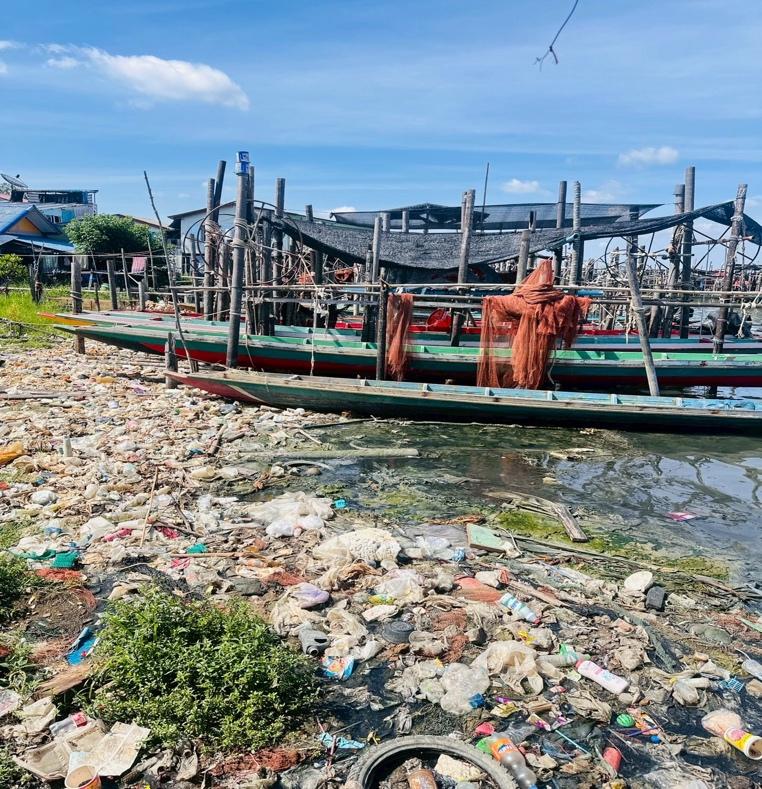
Water Quality Standards and Guidelines for Wastewater Discharge

Rajamangala University of Technology Srivijaya has had university-wide guidelines and standards for wastewater management in place since 2022. Under the RUTS Announcement on Guidelines and Standards for Wastewater Management within the University, B.E. 2565 (2022), wastewater discharged from university buildings must meet the water quality standards prescribed by law and the applicable standards established by the municipality. Responsible personnel are assigned to oversee wastewater treatment systems and ensure that discharged wastewater meets the required standards. The guidelines also require regular inspection and maintenance of wastewater-treatment equipment and provide specific measures for wastewater management in university facilities, including wastewater treatment systems for canteens and periodic grease removal.

View Full Evidence Page →
SDG 15
📜 Official Evidence • Data Year 2025
[15.4.2] Reducing Plastic Waste on Campus through Policy, Waste Separation, and Environmental Education 15.4.2
Reducing Plastic Waste on Campus through Policy, Waste Separation, and Environmental Education
Policy and Operation

Rajamangala University of Technology Srivijaya has established a policy to reduce plastic waste on its campuses. Under the RUTS Life on Land Policy (Revised Edition), A.D. 2025, the university promotes measures including reducing single-use plastics, encouraging the use of reusable products, promoting waste separation and recycling, and raising awareness of responsible consumption among students, staff, vendors, and visitors. To support the implementation of this policy, the university provides designated waste-separation points across the campus for the collection of plastic waste and other waste categories. These facilities enable campus users to separate recyclable plastics from general waste, supporting appropriate recovery and recycling rather than disposal.

View Full Evidence Page →
SDG 15
📜 Official Evidence • Data Year 2025
[15.4.3] Hazardous waste management and biosafety 15.4.3
Hazardous waste management and biosafety
Policy and Operation

In accordance with the RUTS Life on Land Policy (Revised Edition), A.D. 2025, Rajamangala University of Technology Srivijaya promotes proper waste management and disposal, including the safe management of hazardous materials and waste generated by university operations. The policy requires appropriate procedures covering waste identification, separation, labeling, safe storage, handling, transportation, and disposal in accordance with applicable laws and regulations. In implementing this policy, the Plant Pathology Laboratory (CB311), Registration No. 2-0060-0001-2, at the Faculty of Agriculture, Nakhon Si Thammarat Campus, has implemented laboratory safety practices since 2024. Led by Assoc. Prof. Dr.

View Full Evidence Page →
SDG 16
📜 Official Evidence • Data Year 2025
[16.2.1] RUTS Strengthens Institutional Governance through the University Council 16.2.1
RUTS Strengthens Institutional Governance through the University Council
Policy and Operation

The current President of the Rajamangala University of Technology Srivijaya Council is Professor Emeritus Dr. Piemsak Menasveta, who was appointed pursuant to an announcement from the Office of the Prime Minister dated March 23, 2025 (effective from March 20, 2025). Pursuant to Section 15 of the Rajamangala University of Technology Srivijaya Act, B.E. 2548 (2005), each university shall have a University Council, consisting of: (1) A President of the University Council, who shall be appointed by Royal Command. (2) Ex-officio members of the University Council, namely the President of the University and the Chairperson of the Faculty and Civil Servant Council.

View Full Evidence Page →
SDG 16
📜 Official Evidence • Data Year 2025
[16.2.1-2] RUTS Students’ union 16.2.1-2 📄 PDF
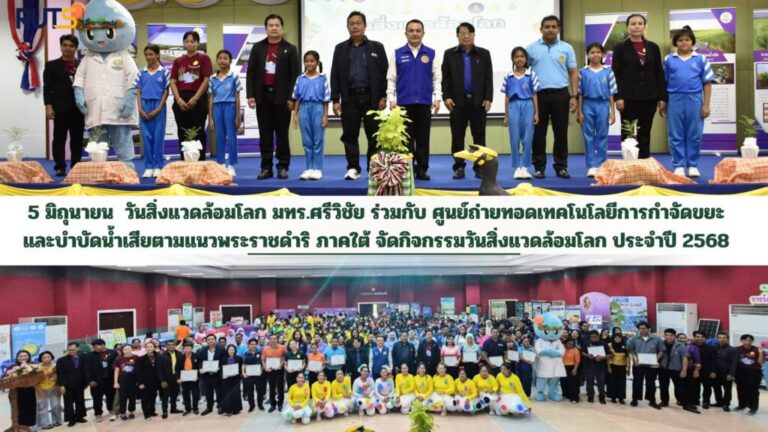
RUTS Students’ union
Policy and Operation

News 1 - RUTS Strengthens Institutional Governance through the University Council The current President of the Rajamangala University of Technology Srivijaya Council is Professor Emeritus Dr. Piemsak Menasveta, who was appointed pursuant to an announcement from the Office of the Prime Minister dated March 23, 2025 (effective from March 20, 2025). Pursuant to Section 15 of the Rajamangala University of Technology Srivijaya Act, B.E. 2548 (2005), each university shall have a University Council, consisting of: (1) A President of the University Council, who shall be appointed by Royal Command. (2) Ex-officio members of the University Council, namely the President of the University and the Chairperson of the Faculty and Civil Servant Council.

View Full Evidence Page →
SDG 16
📜 Official Evidence • Data Year 2025
[16.2.2] RUTS Strengthens Institutional Governance through Policy and Strategic Management Retreat 16.2.2
RUTS Strengthens Institutional Governance through Policy and Strategic Management Retreat
Policy and Operation

From October 30 to November 1, 2025, Rajamangala University of Technology Srivijaya (RMUTSV)—led by President Professor Dr. Suwat Thanyaros and the university’s executive team—participated in a policy seminar (retreat) held at Krabi Resort, Ao Nang, Krabi Province. The objective of this retreat was to provide a platform for the university’s leadership to exchange academic and policy-related perspectives, review and update university regulations to ensure they remain relevant and modern, and develop strategies for more efficient and agile organizational management. The program also included team-building activities and sessions to reflect on operational outcomes, aimed at fostering unity and collaboration among the leadership—ultimately contributing to the sustainable development of the university.

View Full Evidence Page →
SDG 16
📜 Official Evidence • Data Year 2025
[16.2.3] RUTS Promotes Student Representation through Student Organizations and Student Councils 16.2.3
RUTS Promotes Student Representation through Student Organizations and Student Councils
Policy and Operation

The Rajamangala University of Technology Srivijaya (RUTS) promotes student representation to manage operational benefits and student welfare at two levels: the University Student Organization Committee and the Faculty/College Student Club Committee. University Student Organization Committee This committee represents students at the university level and is responsible for efficient student management and organizing activities. Committee members are elected annually through a democratic process that includes candidate registration, voting by eligible students, and election result announcements. In the 2025 academic year, President of the Student Organization: Ms. Tasneem Jongrak as President of the Student Organization Faculty/College Student Club Committee

View Full Evidence Page →
SDG 16
📜 Official Evidence • Data Year 2025
[16.2.4] Urgent measures to assist students involved in flood relief efforts 16.2.4
Urgent measures to assist students involved in flood relief efforts
Outreach and Engagement

RUTS: Rajamangala University of Technology Srivijaya Due to the flooding situation that has occurred in the southern region. Rajamangala University of Technology Srivijaya: Recognizing the importance of and being concerned about the students affected, we have announced urgent measures to assist students who have been impacted by the floods. 1. In the event of the death of a guardian (father, mother, or guardian), tuition fees will be waived until the completion of the student's education. 2. In cases where the residence is damaged to the point of being uninhabitable, affecting livelihood, tuition fees for the second semester of the 2025/2025 academic year will be waived. 3. In cases where the residence sustains partial damage, tuition fees will be reduced by 50% for the second semester of the 2025 academic year. 4.

View Full Evidence Page →
SDG 16
📜 Official Evidence • Data Year 2025
[16.2.5] Rajamangala University of Technology Srivijaya Announces No Gift Policy for Fiscal Year 2026 to Strengthen Integrity and Transparency 16.2.5 📄 PDF
Rajamangala University of Technology Srivijaya Announces No Gift Policy for Fiscal Year 2026 to Strengthen Integrity and Transparency
Policy and Operation

Rajamangala University of Technology Srivijaya (RUTS) has published No Gift Policy announcements for Fiscal Years 2025 on its official website. The policies express the university’s commitment to preventing corruption and misconduct and promoting integrity, transparency, accountability, and fair performance of official duties. The policies state that university administrators and personnel are to refrain from accepting gifts or rewards in connection with the performance of their duties, including before, during, and after carrying out those duties, as described in the announcements. The policies also seek to reduce conflicts between personal interests and the public interest. These publicly accessible policy announcements provide documentary evidence of RUTS’s stated commitment to corruption prevention and ethical institutional governance.

View Full Evidence Page →
SDG 16
📜 Official Evidence • Data Year 2025
[16.2.6] RUTS a drives research and innovation through the “RU CONNEXT: Synergizing Thai Research for Real-World Application” initiative in Southern Thailand. 16.2.6
RUTS a drives research and innovation through the “RU CONNEXT: Synergizing Thai Research for Real-World Application” initiative in Southern Thailand.
Research and Innovation

The Ministry of Higher Education, Science, Research and Innovation (MHESI), through the Thailand Science Research and Innovation (TSRI) office, organized the second "RU CONNEXT: Bridging Thai Research to Real-World Application (Southern Region)" event from August 31 to September 1, 2025. The delegation, led by TSRI Director Prof. Sompong Klaynongsruang and Deputy Director Prof. Wissanu Mee-yu—accompanied by other TSRI executives and representatives from Program Management Units (PMUs)—visited Rajamangala University of Technology Srivijaya (RUTS) to review research outcomes developed under the national Science, Research, and Innovation (SRI) plan. The visit included discussions on strategies to bridge research and innovation efforts toward practical application, in alignment with TSRI’s policy goals.

View Full Evidence Page →
SDG 16
📜 Official Evidence • Data Year 2025
[16.2.7] Rajamangala University of Technology Srivijaya Publishes Financial Audit Report for Fiscal Year 2025 16.2.7 📄 PDF
Rajamangala University of Technology Srivijaya Publishes Financial Audit Report for Fiscal Year 2025
Policy and Operation

Rajamangala University of Technology Srivijaya has made available a financial audit report for Fiscal Year 2025 through its official finance website. The publicly accessible document is relevant to the university's financial transparency and may serve as supporting evidence for SDG 16.2.7, “Publish financial data,” under the THE Sustainability Impact Ratings Methodology 2027. The report should be reviewed to confirm the exact financial statements covered, the reporting entity, the audit period, and whether the information is sufficiently detailed to support analysis of the university's financial probity and viability. This news item records the availability of the report and does not make claims about audit opinions, financial performance, or specific financial results that have not been verified from the document.

View Full Evidence Page →
SDG 16
📜 Official Evidence • Data Year 2025
[16.3.1] Minister of Higher Education Announces Four Key Policy Directions to Advance Higher Education for Thailand’s Future 16.3.1
Minister of Higher Education Announces Four Key Policy Directions to Advance Higher Education for Thailand’s Future
Policy and Operation

On 23–24 April 2025, Rajamangala University of Technology Srivijaya (RMUTSV), represented by the University Council President, qualified members of the University Council, university executives, and personnel from the Policy and Planning Division, participated in a strategic dialogue involving the nine Rajamangala Universities of Technology in Prachuap Khiri Khan Province. On 24 April 2025, the Minister of Higher Education, Science, Research and Innovation announced policy directions for advancing Thailand’s higher education system. A white paper outlining the strategic directions of the nine Rajamangala Universities of Technology was also presented to the Minister.

View Full Evidence Page →
SDG 16
📜 Official Evidence • Data Year 2025
[16.3.2] RUTS Drives Grassroots Economic Development to Help Thailand Escape the Middle-Income Trap, with Support from PMU-A 16.3.2
RUTS Drives Grassroots Economic Development to Help Thailand Escape the Middle-Income Trap, with Support from PMU-A
Research and Innovation

On 20 February 2025, Rajamangala University of Technology Srivijaya (RMUTSV), through its Research and Development Institute, reported its collaboration with the Program Management Unit on Area-Based Development (PMU-A), Rajabhat University networks, Rajamangala University of Technology networks, government agencies, private-sector partners, and local administrative organizations to promote grassroots economic development through research, appropriate technology, and innovation. The initiative aims to facilitate the transfer and practical application of research findings, technological knowledge, and innovation to farmers, rural households, and local entrepreneurs. Key areas of focus include enhancing productivity, reducing production costs, creating livelihood opportunities, strengthening community enterprises, and promoting sustainable local economic development.

View Full Evidence Page →
SDG 16
📜 Official Evidence • Data Year 2025
[16.3.3] RUTS Collaborates with Government Research Agencies to Advance Policy-Oriented Research and Innovation under RU CONNEXT 16.3.3
RUTS Collaborates with Government Research Agencies to Advance Policy-Oriented Research and Innovation under RU CONNEXT
Research and Innovation

From 31 August to 1 September 2025, the Ministry of Higher Education, Science, Research and Innovation (MHESI), through Thailand Science Research and Innovation (TSRI), organized the “RU CONNEXT: Connecting Thai Research for Practical Use” activity in Southern Thailand. Rajamangala University of Technology Srivijaya (RMUTSV), led by its President and university executives, participated in the event and engaged in discussions with TSRI executives and research funding management units (PMUs). The activity included visits to research projects implemented under RMUTSV’s Science, Research and Innovation (SRI) plan, exchanges on high-potential research and innovation, and discussions on how research outputs could be translated into practical economic, social, regional, and policy benefits.

View Full Evidence Page →
SDG 16
📜 Official Evidence • Data Year 2025
[16.3.4] RUTS Trang Campus Promotes Democratic Citizenship in Collaboration with the Trang Provincial Election Commission 16.3.4
RUTS Trang Campus Promotes Democratic Citizenship in Collaboration with the Trang Provincial Election Commission
Outreach and Engagement

On 13 August 2025, Trang Campus of Rajamangala University of Technology Srivijaya (RUTS), in collaboration with the Trang Provincial Election Commission, organized the project “Developing Citizenship in a Democratic Regime with the King as Head of State” at RUTS Trang Campus, Trang Province. The project aimed to strengthen students’ knowledge, understanding, and awareness of participation in a democratic system and good citizenship. The project provided students with learning activities related to citizenship and democracy, with an emphasis on understanding democratic principles and the roles and responsibilities of citizens. The expected outcomes included increased knowledge, understanding, and awareness of democratic participation and good citizenship. However, the published news did not specify measured evaluation results or the number of participants.

View Full Evidence Page →
SDG 17
📜 Official Evidence • Data Year 2025
[17.2.1] RUTS Strengthens Cross-Sectoral Partnerships to Advance Sustainable Mangrove Biodiversity Conservation 17.2.1
RUTS Strengthens Cross-Sectoral Partnerships to Advance Sustainable Mangrove Biodiversity Conservation

RUTS Strengthens Cross-Sectoral Partnerships to Advance Sustainable Mangrove Biodiversity Conservation On 16 October 2025, Rajamangala University of Technology Srivijaya (RUTS) signed a Memorandum of Understanding (MOU) with the Mae Fah Luang Foundation under Royal Patronage, the Department of Marine and Coastal Resources (DMCR), and Chulalongkorn University to establish Thailand’s National Mangrove Biodiversity Database and advance climate finance mechanisms. The signing ceremony was attended by M.L. Dispanadda Diskul, Chief Executive Officer of the Mae Fah Luang Foundation; Prof. Dr. Suwat Tanyaros, President of RUTS; Dr. Pinsak Suraswadi, Director-General of DMCR; and Prof. Dr. Pornanong Aramwit, Vice President for Research at Chulalongkorn University.

View Full Evidence Page →
SDG 17
📜 Official Evidence • Data Year 2025
[17.2.2] Connecting Sectors, Inspiring Change: RUTS Advances Sustainable Development through Collaborative Dialogue and Partnerships 17.2.2
Connecting Sectors, Inspiring Change: RUTS Advances Sustainable Development through Collaborative Dialogue and Partnerships

Rajamangala University of Technology Srivijaya (RUTS) actively engages in cross-sectoral dialogue with government agencies, private-sector organisations, educational institutions, and local communities to address sustainable development challenges. In 2025, these engagements focused on three key areas: integrated water resource management, sustainable community-based tourism, and green skills development. Through discussions and knowledge exchange with diverse stakeholders, RUTS contributes academic expertise and practical approaches to addressing environmental, economic, and social challenges while strengthening partnerships for sustainable development. RUTS Collaborates with Songkhla Provincial Administrative Organization to Strengthen Sustainable Water Management On 29 December 2025, Asst. Prof. Dr.

View Full Evidence Page →
SDG 17
📜 Official Evidence • Data Year 2025
[17.2.3] International Collaboration in Aquatic Data Collection and Environmental Monitoring 17.2.3
International Collaboration in Aquatic Data Collection and Environmental Monitoring

International Collaboration in Aquatic Data Collection and Environmental Monitoring (หัวข้อใหญ่) Rajamangala University of Technology Srivijaya (RUTS) collaborates with international universities to strengthen scientific data collection, environmental monitoring, and knowledge exchange related to aquatic ecosystems and sustainable aquaculture. Through joint fieldwork, laboratory activities, and practical training, RUTS brings together international researchers, academics, and students to collect and examine biological and environmental information. In 2025, these efforts included collaboration with the University of Latvia on aquatic biodiversity data collection and the Tropical Aquaculture Camp involving universities from Malaysia and Vietnam, with activities focusing on water quality testing and aquatic animal health assessment.

View Full Evidence Page →
SDG 17
📜 Official Evidence • Data Year 2025
[17.2.4] International Collaboration in Reviewing and Developing Educational Best Practices 17.2.4
International Collaboration in Reviewing and Developing Educational Best Practices

International Collaboration in Reviewing and Developing Educational Best Practices (หัวข้อใหญ่) Rajamangala University of Technology Srivijaya (RUTS) engages in international collaboration to exchange knowledge, review and compare approaches, and explore effective practices that contribute to sustainable development. Through partnerships with international universities, RUTS brings together academic expertise and diverse perspectives to examine educational and professional practices, identify opportunities for improvement, and develop collaborative approaches to addressing sustainability challenges. These exchanges support mutual learning, curriculum development, and the sharing of practices across institutional and national contexts. RUTS Collaborates with International Experts to Enhance Curriculum Development

View Full Evidence Page →
SDG 17
📜 Official Evidence • Data Year 2025
[17.2.5] Collaboration with NGOs for Sustainable Development 17.2.5
Collaboration with NGOs for Sustainable Development

Rajamangala University of Technology Srivijaya (RUTS) collaborates with non-governmental organisations (NGOs) and civil society partners to address sustainable development challenges through student volunteering, collaborative research, and educational initiatives. These partnerships bring together academic expertise, community engagement, and organisational resources to support disaster recovery, biodiversity conservation, environmental education, and public health promotion. Through joint activities and knowledge exchange, RUTS contributes to community well-being, environmental sustainability, and the development of practical responses to local challenges. RUTS Collaborates with the Mirror Foundation and Alumni Association to Support Flood Recovery and Community Resilience

View Full Evidence Page →
SDG 17
📜 Official Evidence • Data Year 2025
[17.4.1] University-Wide Commitment to Education for Sustainable Development 17.4.1 📄 PDF
University-Wide Commitment to Education for Sustainable Development

University-Wide Commitment to Education for Sustainable Development Rajamangala University of Technology Srivijaya (RUTS) demonstrates its institutional commitment to education for sustainable development through its General Education Curriculum (Revised Edition, B.E. 2566), implemented since the first semester of the 2023 academic year. Approved by the University Council, the curriculum applies to all undergraduate degree programmes and requires students to complete at least 24 credits of general education. Sustainable development is explicitly incorporated into the curriculum's objectives and learning outcomes, reflecting the university's commitment to equipping students with the knowledge and awareness needed to address contemporary social, economic, and environmental challenges.

View Full Evidence Page →
SDG 17
📜 Official Evidence • Data Year 2025
[17.4.2] Dedicated Courses on Sustainability and the Sustainable Development Goals 17.4.2
Dedicated Courses on Sustainability and the Sustainable Development Goals

Dedicated Courses on Sustainability and the Sustainable Development Goals Rajamangala University of Technology Srivijaya (RUTS) offers dedicated courses addressing sustainability and the Sustainable Development Goals (SDGs) through its General Education Curriculum (Revised Edition, B.E. 2566), implemented since the first semester of the 2023 academic year. The curriculum includes courses that provide students with knowledge of environmental, social, and economic sustainability, global challenges, and responsible citizenship. These courses form part of the university's general education offerings and provide opportunities for undergraduate students across different academic disciplines to engage with sustainability-related issues.

View Full Evidence Page →
SDG 17
📜 Official Evidence • Data Year 2025
[17.4.3] Education and Knowledge Transfer for Wider Communities 17.4.3
Education and Knowledge Transfer for Wider Communities

Education and Knowledge Transfer for Wider Communities (หัวข้อใหญ่) Rajamangala University of Technology Srivijaya (RUTS) extends educational opportunities beyond campus through community outreach, practical training, and knowledge transfer. The university shares academic expertise and applied technologies with local communities to support lifelong learning, professional skill development, and sustainable practices. In 2025, these efforts included agricultural training, Smart Farming demonstrations, and technology transfer programmes that provided farmers and community members with practical knowledge to improve agricultural productivity and support sustainable livelihoods. RUTS Promotes Sustainable Agriculture through Smart Farming Technology and Community Knowledge Transfer

View Full Evidence Page →
SDG 17
📜 Official Evidence • Data Year 2025
[17.4.4] Assessing Students’ Sustainability Literacy through the Sustainable Development Course 17.4.4
Assessing Students’ Sustainability Literacy through the Sustainable Development Course

Assessing Students’ Sustainability Literacy through the Sustainable Development Course Rajamangala University of Technology Srivijaya (RUTS) measures students’ knowledge and understanding of sustainability through assessments incorporated into Sustainable Development (00-000-009), a course offered under the university’s General Education Curriculum (Revised Edition, B.E. 2566). The course provides undergraduate students with opportunities to develop sustainability literacy through structured learning activities and assessments covering the United Nations Sustainable Development Goals (SDGs). Sustainability Literacy and Learning Outcomes The course addresses the environmental, economic, and social dimensions of sustainable development, including all 17 SDGs.

View Full Evidence Page →