
Plastics have increasingly replaced natural materials, with global production reaching 359 million tonnes in 2018. Thailand is among the major contributors to plastic waste entering natural water bodies, largely due to inadequate waste management. Although approximately 14% of plastic packaging is recycled, substantial amounts are improperly discarded, polluting rivers and marine environments. Microplastics can accumulate in aquatic organisms, causing physical damage and digestive blockages, and may be transferred through the food chain.

Since 2021, RUTS has operated a Microplastic Monitoring Laboratory equipped with a BRUKER LUMOS II FTIR microscope to assess microplastic contamination in coastal ecosystems. The laboratory analyzes microplastics in shrimp, shellfish, crabs, fish, aquatic plants, and fishery products in Trang Province, supporting the assessment of aquatic ecosystem health.


Scientists at the lab demonstrated microplastic analysis in marine shrimp using a marine microplastic analysis kit. The session provided veterinary students undertaking internships at the center with hands-on training and practical experience in microplastic analysis.


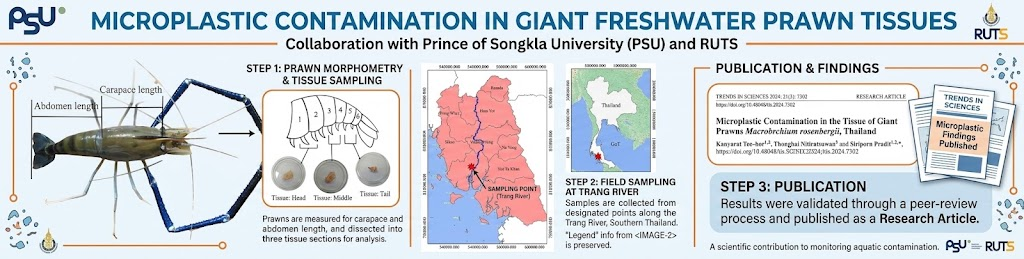
In collaboration with Prince of Songkla University (PSU), RUTS researchers investigated microplastic contamination in giant freshwater prawn tissues from the Trang River in southern Thailand. The findings were published in peer-reviewed journals.