[17.3.14 / 14_Summary] Rajamangala University of Technology Srivijaya (RUTS) Annual SDG 14 (Life Below Water) Progress Report for Data Year 2025.
RUTS SDG 14 Progress Report 2025: Life Below Water
[17.3.14 / 14_Summary] Rajamangala University of Technology Srivijaya (RUTS) Annual SDG 14 (Life Below Water) Progress Report for Data Year 2025.
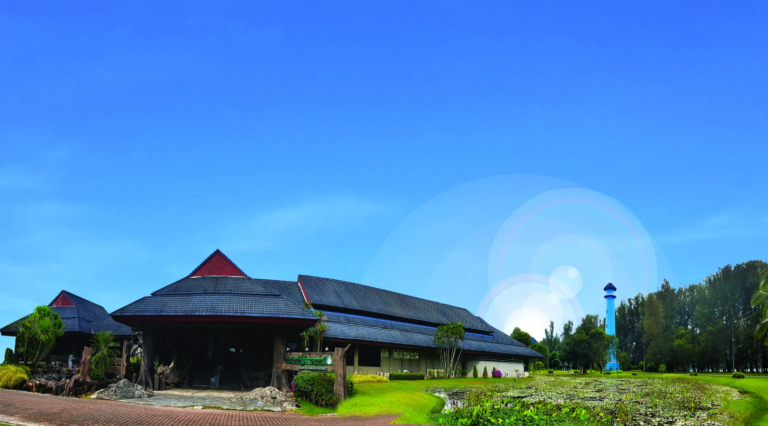
Trang Aquarium, located on the Rajamangala University of Technology Srivijaya (RUTS) campus, serves as an educational resource for freshwater ecosystem conservation and public awareness. In support of SDG 14, Indicator 14.2.1 (Outreach and Engagement), the aquarium promotes understanding of freshwater biodiversity and the sustainable use of aquatic resources. The aquarium provides educational programs for local communities, school students, and the general public. Guided visits include lectures by aquarium staff on freshwater ecosystems and biodiversity conservation. The exhibits comprise two main sections: -Indoor exhibits: Freshwater fish native to Thailand, including rare and endangered species. -Outdoor exhibits: A large-scale representation of a freshwater ecosystem that illustrates aquatic habitats and their ecological importance.
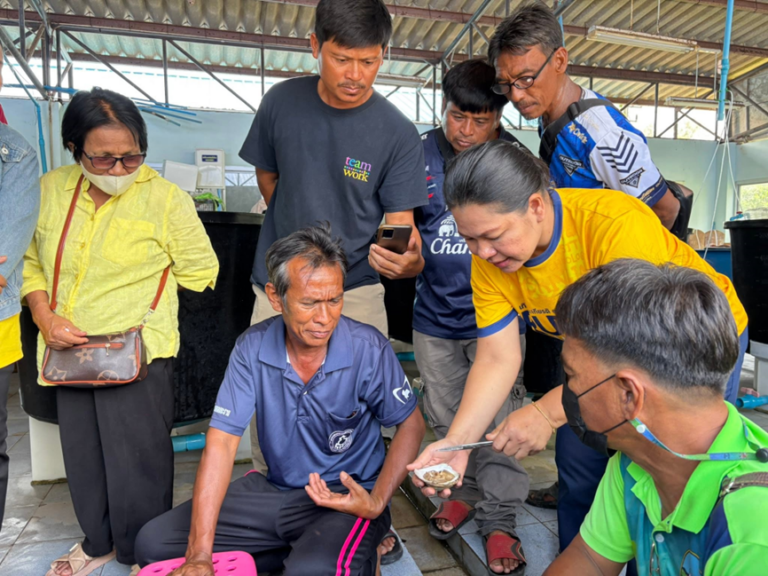
Declining natural oyster stocks have led to a shortage of oyster seed, driving up prices and leaving demand unmet. Hatchery-based production offers a sustainable solution by ensuring a reliable supply of high-quality oyster seed. Rajamangala University of Technology Srivijaya (RUTS) promotes sustainable aquaculture in local communities through the Oyster Research Unit at its Faculty of Science and Technology of Fisheries. The unit produces high-quality oyster seed in hatcheries and shares its production techniques with local farmers to support oyster farming and improve their technical skills. Assistant Professor Dr. Supatcha Chooseangjaew, Head of the RUTS Oyster Research Unit, organized a hands-on workshop on oyster farming in hatcheries and earthen ponds for residents of Ban Hat Sai Khao, Ban Bang Khang Khao, and Ban Thung Thong communities.
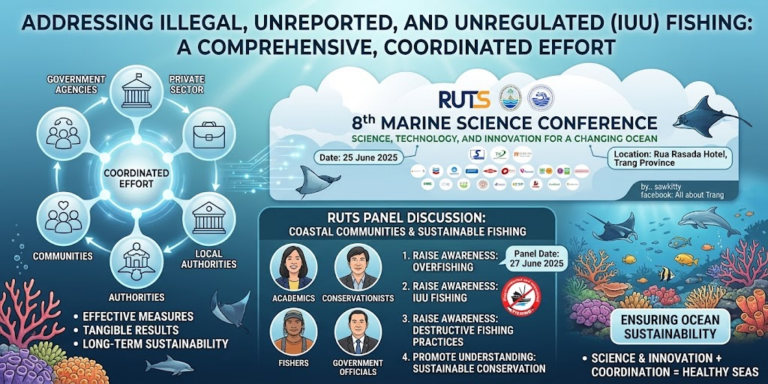
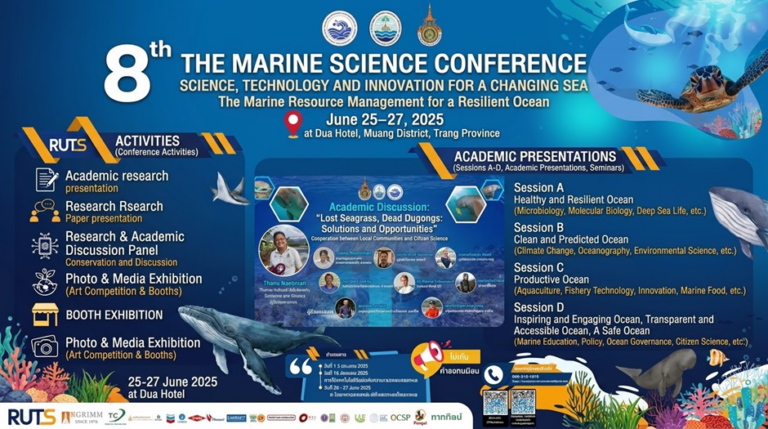
Addressing IUU fishing requires an integrated approach involving all sectors, including government agencies, the private sector, independent organizations, local authorities, communities, and the public. Coordinated efforts are essential to implement effective measures, achieve tangible results, and ensure long-term sustainability. Rajamangala University of Technology Srivijaya (RUTS), in collaboration with the Department of Marine and Coastal Resources (DMCR), the Marine Science Association of Thailand, and partner organizations, hosted the 8th Marine Science Conference on 25 June 2025 at Rua Rasada Hotel, Trang Province, under the theme “Science, Technology, and Innovation for a Changing Ocean.” At the Conference, RUTS organized a panel discussion to raise awareness among coastal fishing communities about overfishing, illegal, unreported and unregulated (IUU) fishing, and destructive fishing practices.
Rajamangala University of Technology Srivijaya (RUTS), in collaboration with the Department of Marine and Coastal Resources (DMCR), the Marine Science Association of Thailand, and partner organizations, hosted the 8th Marine Science Conference under the theme “Science, Technology, and Innovation for a Changing Ocean” on 25 June 2025 at Rua Rasada Hotel, Mueang District, Trang Province. The conference provided a platform for faculty members, researchers, students, government agencies, private-sector organizations, and the public to present academic research and exchange knowledge and experience in marine science, innovation, and marine technology to support sustainable development. The conference also aimed to strengthen preparedness for the Triple Planetary Crisis facing humanity: (1) climate change, (2) biodiversity loss, and (3) pollution and waste.
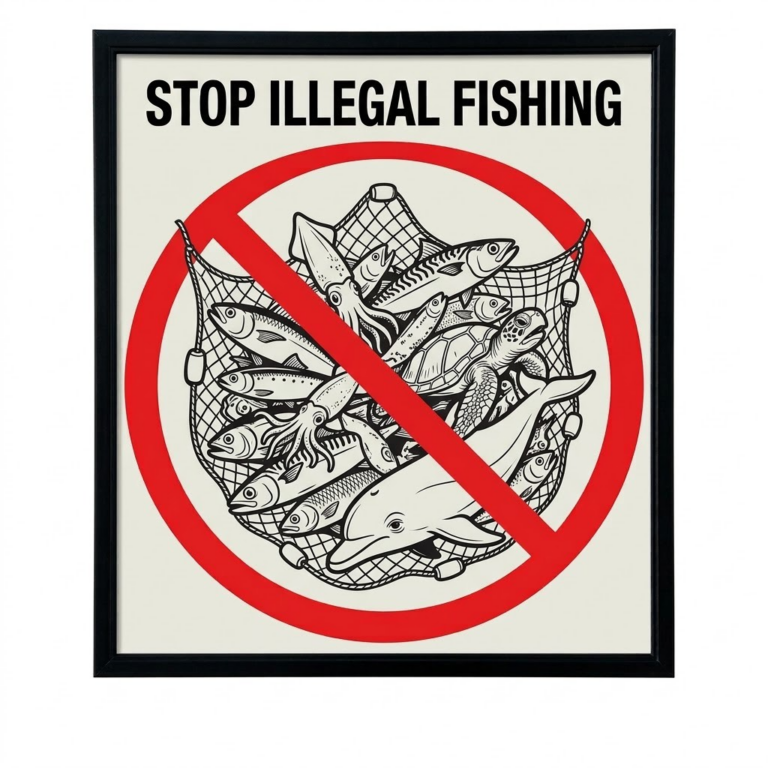
Illegal, unreported, and unregulated (IUU) fishing causes significant environmental, economic, and social impacts, including overfishing and threats to the sustainability of legal fisheries. Although Southeast Asia is a major hotspot for IUU fishing, the problem occurs worldwide. Addressing IUU fishing therefore requires a multi-sectoral approach to prevent the trade and use of IUU fishery products. These products include fish and other marine products that are caught, transported, processed, or marketed in violation of applicable national or international laws and regulations, including products obtained through destructive fishing methods, from protected areas, or without the required permits. Rajamangala University of Technology Srivijaya (RUTS) is committed to advancing the United Nations Sustainable Development Goals (SDGs) through its policies and operations.
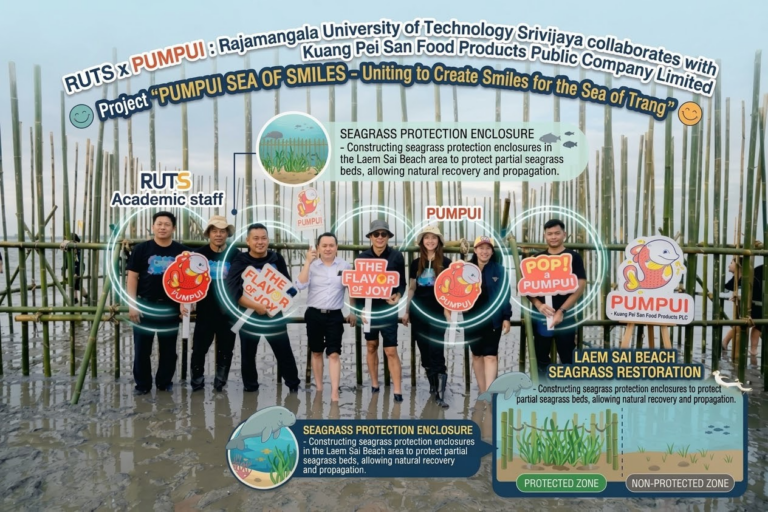
In Thailand, seagrass meadows provide essential feeding grounds for the dugong (Dugong dugon), which is classified as Vulnerable on the IUCN Red List. Declining seagrass cover, partly caused by sedimentation from coastal dredging and land erosion, threatens local dugong populations. Conserving these habitats is therefore essential for the long-term survival of dugongs and other associated marine fauna. Rajamangala University of Technology Srivijaya (RUTS), in collaboration with Kuang Pei San Food Products Public Company Limited (PUMPUI), launched the “PUMPUI SEA of SMILES” project to establish seagrass enclosures at Laem Sai Beach, Trang, protecting selected seagrass beds and allowing them to recover and spread naturally.
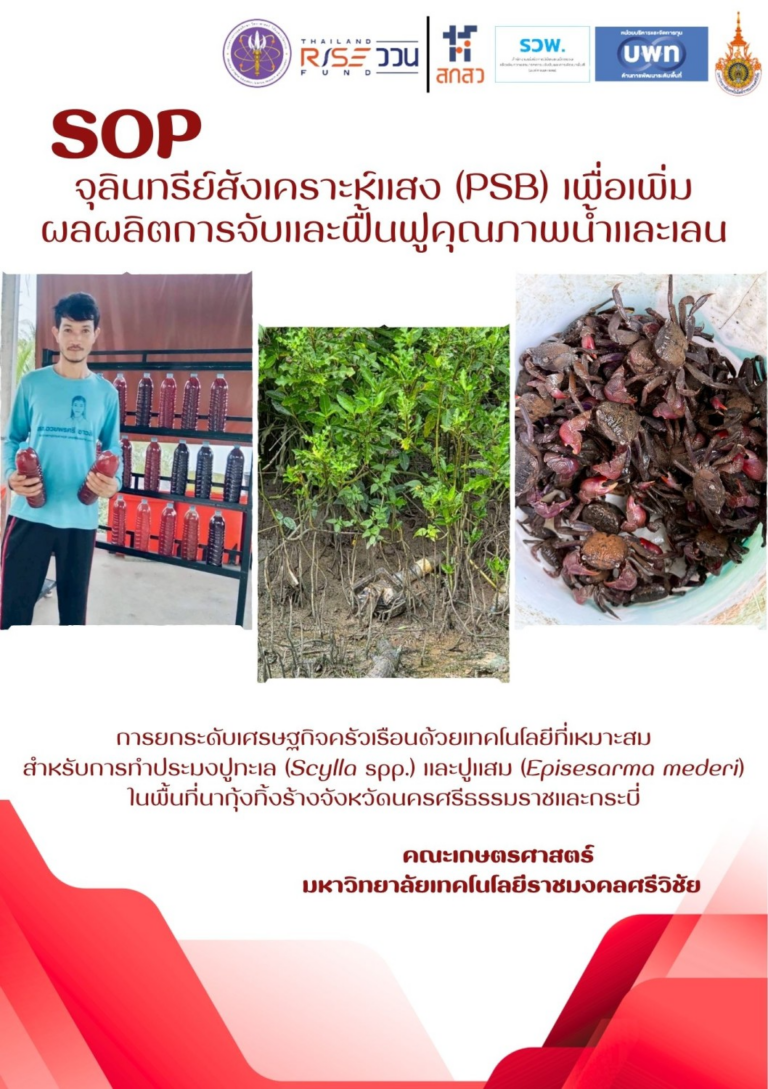
RUTS Advances Aquatic Ecosystem Protection through Biotechnology and Research Collaboration Rajamangala University of Technology Srivijaya (RUTS) works to minimise environmental impacts on aquatic ecosystems through biotechnology development, applied research, and collaboration with industry and environmental organisations. In 2025, the university promoted PSB-SAIYAI biotechnology to improve water and sediment quality in aquaculture, contributed research-based approaches to seagrass restoration in collaboration with the private sector, and established partnerships to support mangrove biodiversity assessment and sustainable coastal resource management. These initiatives reflect RUTS's efforts to develop and promote practices that reduce environmental risks associated with aquaculture and coastal activities while supporting the protection of aquatic ecosystems.
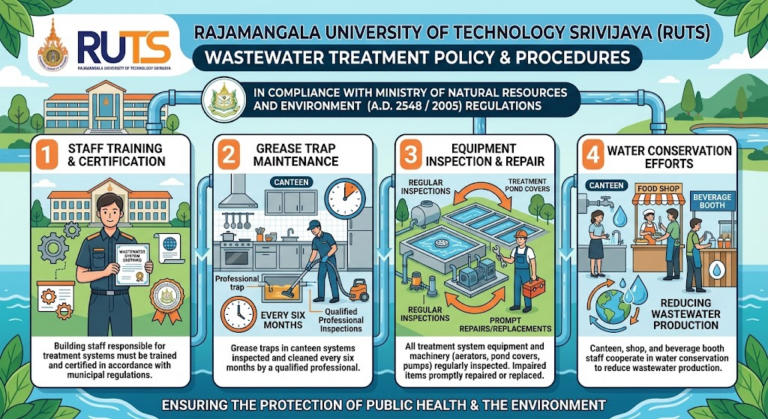
RUTS Water Quality Standards and Ecosystem Protection Guidelines Rajamangala University of Technology Srivijaya (RUTS) has established institutional guidelines and standards for wastewater management under the “Announcement of Rajamangala University of Technology Srivijaya on Wastewater Guidelines and Standards, A.D. 2022.” The announcement requires wastewater treatment from university buildings to comply with applicable legal standards and requirements. It establishes procedures for managing wastewater treatment systems, maintaining equipment, reducing wastewater generation, and monitoring system performance. Institutional Wastewater Management Guidelines The following wastewater management standards and guidelines are established to protect public health and the environment: The following wastewater management standards and guidelines are established to protect public health and the environment:
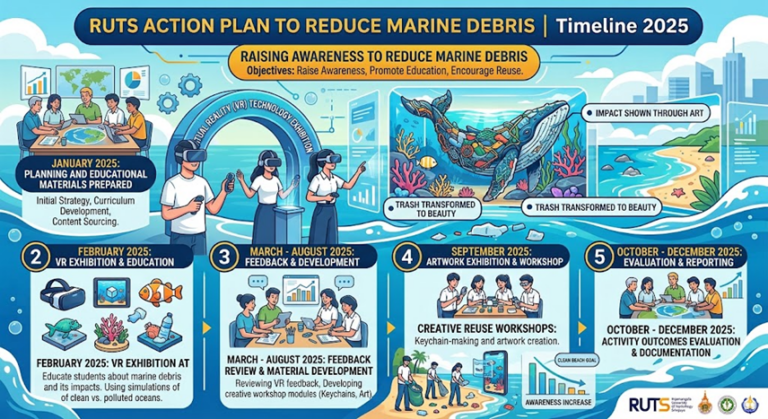
RUTS Implements Campus Waste Reduction Measures and a Marine Debris Action Plan Rajamangala University of Technology Srivijaya (RUTS) promotes waste reduction, reuse, and recycling through institutional measures and environmental initiatives. Under its 2022 Announcement on Waste Reduction and Segregation Measures within the University, RUTS has established guidelines for reducing waste generation and improving waste management across its campuses. In 2025, RUTS Trang Campus also implemented an action plan focused on marine debris awareness, environmental education, and creative waste reuse, including activities addressing the impacts of plastic pollution on marine ecosystems. RUTS established its institutional waste management framework through the Announcement of Rajamangala University of Technology Srivijaya on Waste Reduction and Segregation Measures within the University, B.E. 2565 (2022).
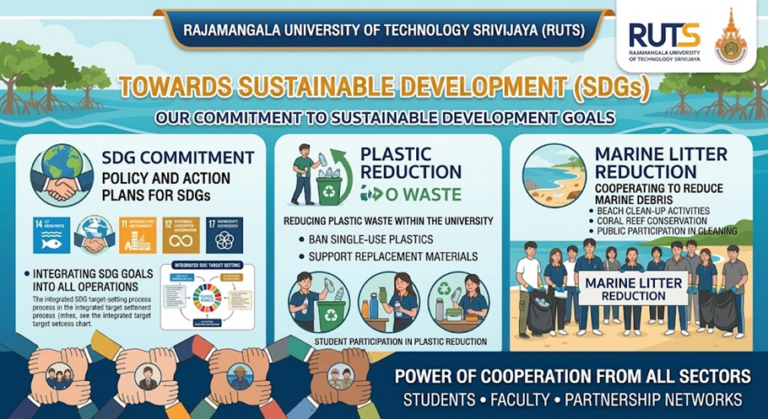
RUTS Implements Marine Pollution Reduction Policy through Coastal Conservation and Collaborative Action Plastic pollution is a major threat to marine ecosystems, human health, and coastal economies. More than 14 million metric tons of plastic enter the ocean annually, accounting for approximately 80% of marine debris. Major sources include poorly managed waste, industrial activities, construction, and illegal dumping. Marine animals may ingest plastic or become entangled in debris, leading to injuries, digestive obstruction, starvation, and death. Plastics may also release hazardous chemicals that accumulate in marine food webs and potentially reach humans through seafood consumption. In addition, marine debris damages fishing gear, reduces fishery productivity, and degrades coastal landscapes, negatively affecting tourism and local livelihoods.
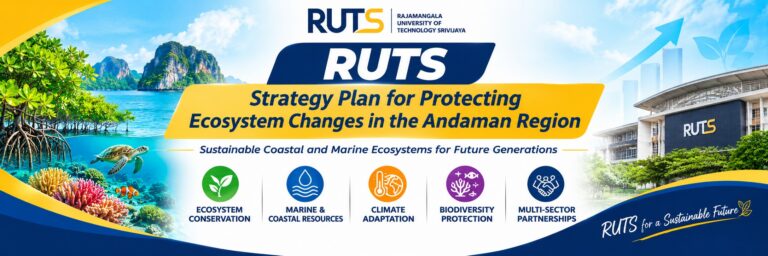
RUTS Strategy Plan for Protecting Ecosystem Changes in the Andaman Region Guided by the 2018–2037 RUTS Strategic Plan, RUTS prioritizes coastal protection and restoration to promote the sustainable use of marine resources. This commitment aligns with the Trang Provincial Development Plan, which emphasizes natural resource management, environmental protection, and the conservation of endangered marine species, including dugongs and sea turtles. RUTS plays a leading role in dugong and habitat conservation. In collaboration with the Trang Traditional Fishermen’s Club, the Andaman Foundation, local authorities, and academic institutions, RUTS co-developed the Dugong Conservation Plan (DCP) for Trang Province. The plan focuses on reducing threats to dugongs and their habitats, supporting conservation research, and raising public awareness and community participation in dugong conservation.
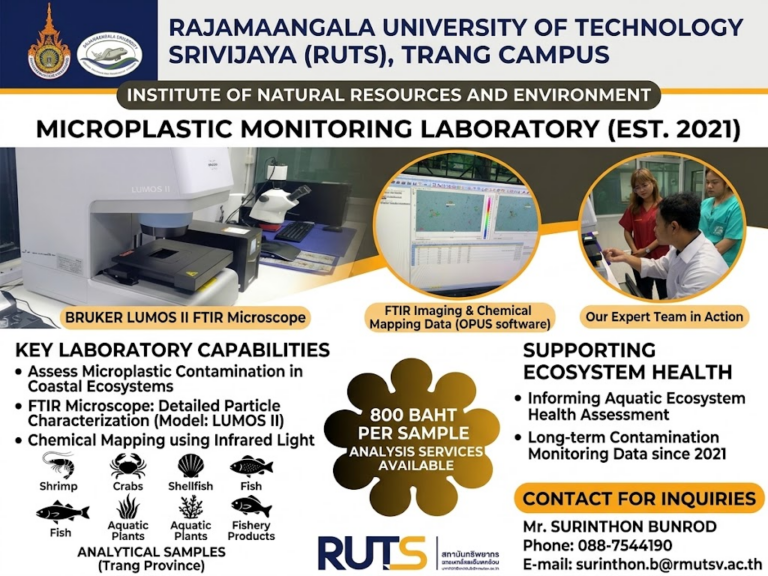
RUTS Monitors Aquatic Ecosystem Health through Microplastic Analysis and Research Monitoring Microplastic Contamination in Aquatic Ecosystems Plastics have increasingly replaced natural materials, with global production reaching 359 million tonnes in 2018. Thailand is among the major contributors to plastic waste entering natural water bodies, largely due to inadequate waste management. Although approximately 14% of plastic packaging is recycled, substantial amounts are improperly discarded, polluting rivers and marine environments. Microplastics can accumulate in aquatic organisms, causing physical damage and digestive blockages, and may be transferred through the food chain. Since 2021, RUTS has operated a Microplastic Monitoring Laboratory equipped with a BRUKER LUMOS II FTIR microscope to assess microplastic contamination in coastal ecosystems.
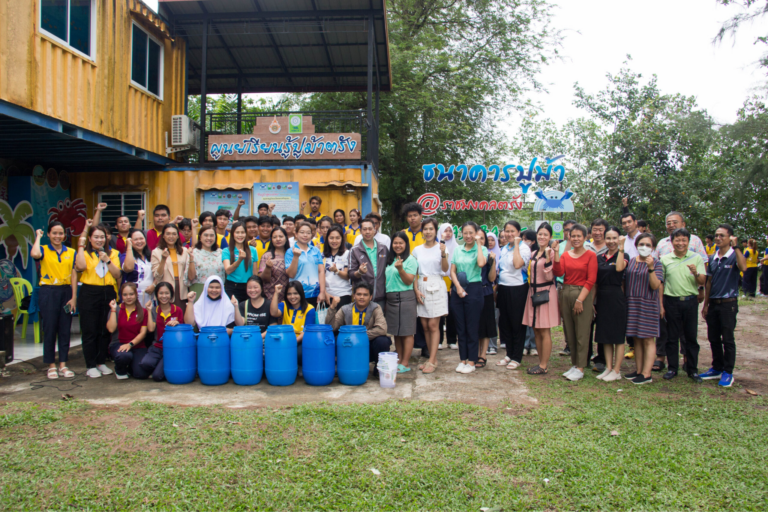
RUTS Promotes Aquatic Stewardship through Community-Based Conservation and Environmental Education Rajamangala University of Technology Srivijaya (RUTS) promotes responsible aquatic resource management through community-based conservation programmes, research collaboration, and environmental education. In collaboration with the National Research Council of Thailand (NRCT) and local communities, the university supports blue swimming crab bank initiatives, aquatic resource replenishment, and community learning centres to encourage sustainable fisheries and marine ecosystem conservation. These efforts are complemented by field-based educational activities that strengthen awareness and understanding of coastal ecosystems among students and young people. Supporting Community-Based Marine Resource Conservation
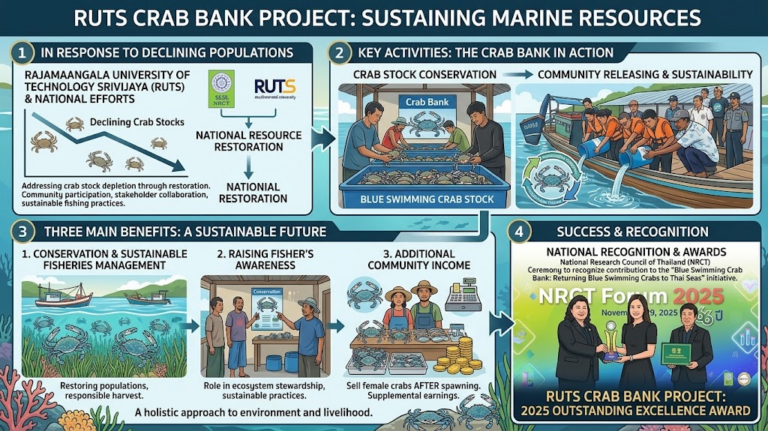
RUTS Crab Bank Project for Blue Crab Restoration The blue swimming crab (Portunus pelagicus) is an ecologically and economically important species in Thailand, supporting coastal fisheries and domestic and export markets. In response to declining crab populations, Rajamangala University of Technology Srivijaya (RUTS) launched the RUTS Crab Bank Project as part of a national effort to restore marine resources. Supported by the National Research Council of Thailand and the Ministry of Science and Technology, the project promotes community participation, collaboration among stakeholders, crab stock conservation, and sustainable fishing practices among local fishers.
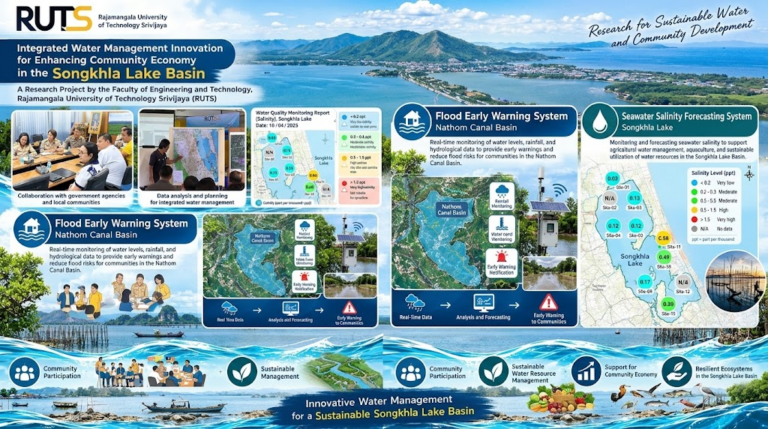
Integrated Water Management Innovation for Songkhla Lake Basin The Songkhla Lake Basin, Thailand’s largest natural lake system, covers approximately 11,991 km² across Songkhla, Phatthalung, and Nakhon Si Thammarat provinces. Its lagoon ecosystem is sensitive to seasonal salinity changes caused by the interaction of freshwater inflows and seawater. Rising sea levels have intensified seawater intrusion, particularly during the dry season, threatening freshwater habitats, biodiversity, aquatic productivity, and local agriculture. To address these challenges, Rajamangala University of Technology Srivijaya (RUTS) has implemented the research project “Integrated Water Management Innovations to Enhance Community Economies in the Songkhla Lake Basin.” The project features an Internet of Things (IoT)-based salinity warning system to monitor and forecast seawater intrusion.