[17.3.9 / 9_Summary] Rajamangala University of Technology Srivijaya (RUTS) Annual SDG 9 (Industry, Innovation and Infrastructure) Progress Report for Data Year 2025.
RUTS SDG 9 Progress Report 2025: Industry, Innovation and Infrastructure
[17.3.9 / 9_Summary] Rajamangala University of Technology Srivijaya (RUTS) Annual SDG 9 (Industry, Innovation and Infrastructure) Progress Report for Data Year 2025.
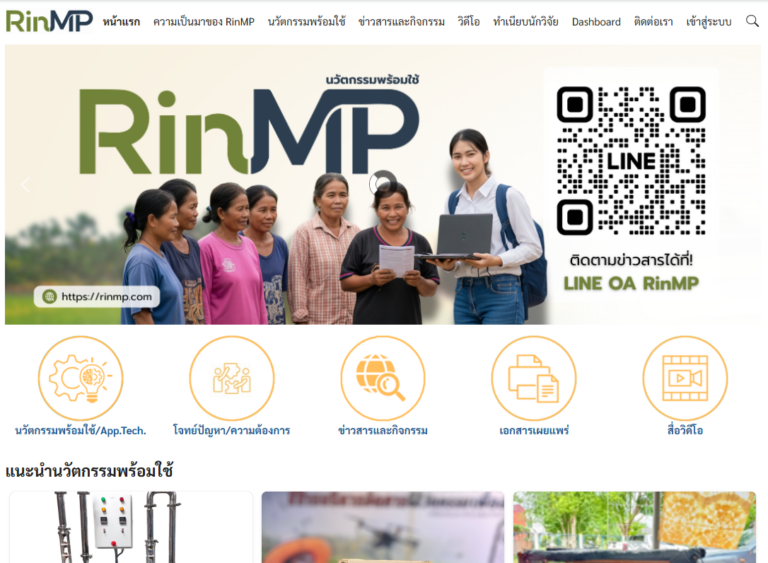
Rajamangala University of Technology Srivijaya (RUTS), serving as the lead institution of a network of nine Rajamangala Universities of Technology (RMUTs), implemented a research initiative entitled “Application and Scaling Up of Appropriate Technologies to Enhance Capabilities and Social Opportunities for Targeted Low-Income Populations in Strategic Research Areas.” The initiative was financially supported by the Program Management Unit on Area-Based Development (PMU-A) under the Ministry of Higher Education, Science, Research and Innovation (MHESI), Thailand. Its primary purpose was to alleviate poverty, reduce social inequality, and enhance economic and social mobility through the application of appropriate technologies, research, and innovation. The program targeted seven strategic research provinces: Lampang, Kalasin, Mukdahan, Roi Et, Phatthalung, Pattani, and Yala.
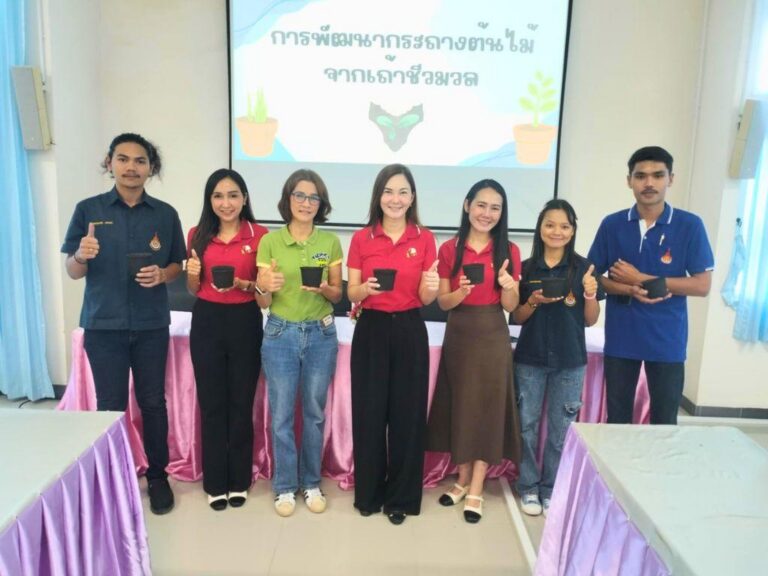
On May 23, 2025, Rajamangala University of Technology Srivijaya (RUTS), Trang Campus, through its Faculty of Engineering and Technology, collaborated with PUMPUI (Kuang Pei San Food Products PCL) to develop and deliver an environmentally friendly innovation entitled “Biodegradable Plant Pots from Biomass Ash.” The initiative was led by Khwancheewa Yongstar, Associate Dean for Student Development, together with three undergraduate students from the Construction Engineering program, with project funding provided by the industrial partner. The project aimed to promote sustainable waste management, resource efficiency, and circular economy practices by converting industrial biomass ash generated from the Pum Pui canned fish factory in Trang Province into biodegradable plant pots. The biomass ash originated from the combustion of agricultural residues, including rice husks, sugarcane bagasse, and wood waste.
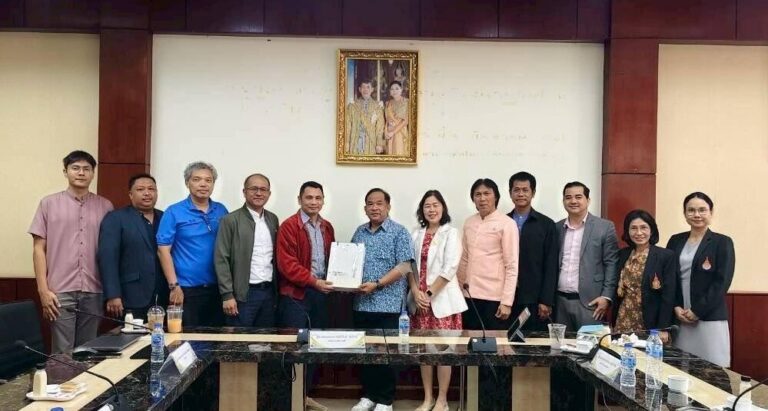
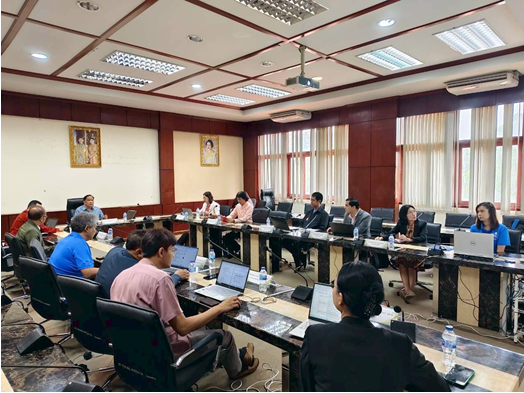
On August 26, 2025, Rajamangala University of Technology Srivijaya (RUTS), led by Assistant Professor Dr. Apirak Songrak, Vice President, together with Assistant Professor Prapasri Srichai and executives from the Institute of Research and Development and the Office of Innovation Management and Technology Transfer (IMTT), organized a monitoring and support activity for the Business Acceleration Platform (RUTS-BAP). The initiative, managed by IMTT and financially supported through the Fundamental Fund (FF) research strategy framework under the Business Acceleration Platform development program of the Institute of Research and Development, aims to strengthen the university's innovation ecosystem and establish an effective platform-based management mechanism for developing innovation-driven entrepreneurs.
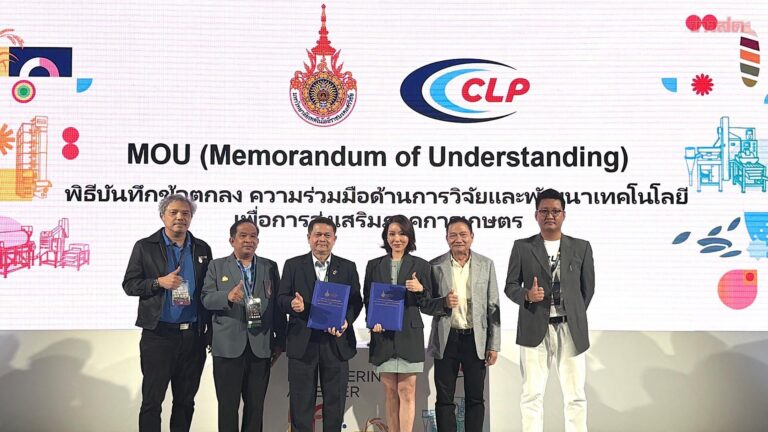
During Farm Expo 2025, held from September 25–28, 2025, at IMPACT Muang Thong Thani, Thailand, CLP Group and Rajamangala University of Technology Srivijaya (RUTS) strengthened their strategic partnership through the signing of a Memorandum of Understanding (MOU) aimed at promoting agricultural innovation, technology development, knowledge transfer, and sustainable community development. Under CLP Group’s vision of “Empowering A Better Life,” the collaboration seeks to bridge academic research and industrial expertise to facilitate the practical application of agricultural technologies, enhance farmers’ productivity, and create new opportunities for local entrepreneurs.
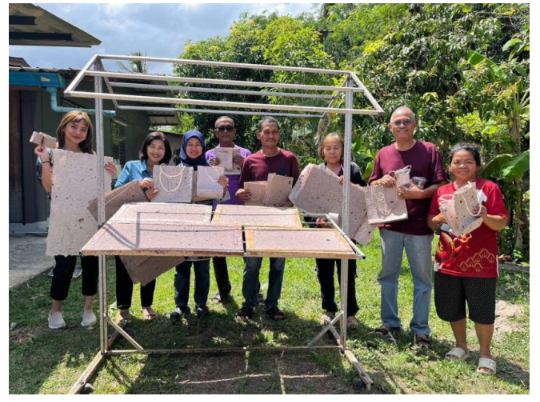
Rajamangala University of Technology Srivijaya (RUTS), through the Office of Innovation Management and Technology Transfer, implemented the Circular Design Product – Upcycle Product activity under Project 13.1-1, SME Business Enhancement through the Application of the BCG Economy Model, in collaboration with Industrial Promotion Center Region 11, Department of Industrial Promotion (DIPROM), Ministry of Industry, during fiscal year 2025. The project aimed to promote product design and create added value based on the principles of the circular economy, while assessing reductions in resource consumption, waste, and product carbon footprints. Target groups included community enterprises, OTOP producers, and small and medium-sized enterprises in the fashion and lifestyle and processed food sectors.
Rajamangala University of Technology Srivijaya (RUTS), in collaboration with the Nakhon Si Thammarat Provincial Office of Tourism and Sports, implemented the Human Capacity Development Project for Tourism in Nakhon Si Thammarat Province to strengthen the knowledge, skills, and capabilities of local tourism personnel, community members, entrepreneurs, and related stakeholders. The project aimed to improve the ability of local stakeholders to manage and develop tourism destinations systematically and effectively while preparing communities to accommodate future tourism growth. Its implementation emphasized participatory learning, practical workshops, and creative tourism development tailored to local contexts.
Rajamangala University of Technology Srivijaya (RUTS), through the Faculty of Industrial Education and Technology, organized the Industrial Sensor Application Training Program: “Instrument Sensor and Transducer – Batch 1” from 5–8 May 2025 at Room 71605, Faculty of Industrial Education and Technology, RUTS. The program was led by Asst. Prof. Dr. Kosin Teeparuksapun, in collaboration with Assoc. Prof. Dr. Thanat Nonthaput, Deputy Dean for Academic Affairs and Research, Faculty of Industrial Education and Technology. The training sessions were delivered by Mr. Thanat Thanaatsawaphon, Head of the Mechatronics Engineering Program, and Mr. Wannadia Navae, Lecturer in Petroleum Technology. The training aimed to enhance participants’ knowledge and practical skills in the application of industrial sensors, instruments, and transducers.
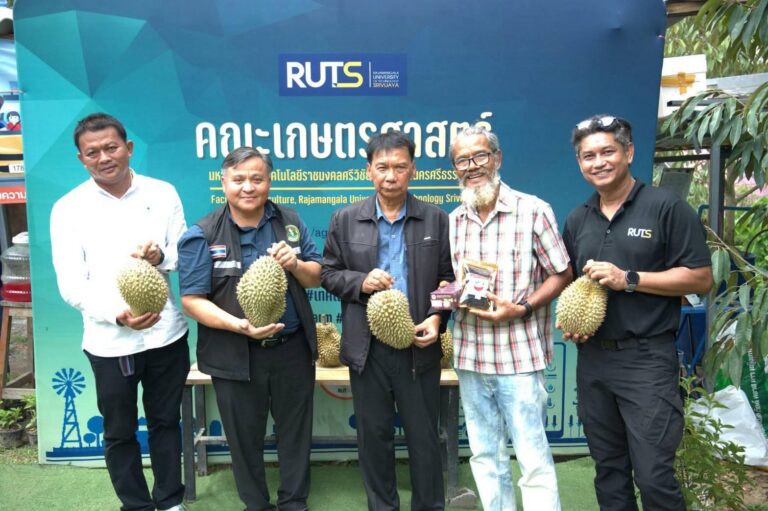
The Faculty of Agriculture, Rajamangala University of Technology Srivijaya (RUTS), Nakhon Si Thammarat Campus (Thung Yai), led by Sathit Buakhao, organized the “Durian Harvest Controller” training course in June–July 2025 in three batches (21–22 June, 28–29 June and 5–6 July 2025). The course follows the Thai Agricultural Standard TAS 9070-2566 (2023), Code of Practice for Inspection and Acceptance of Durian for Collection and Packing Houses. Durian is a key economic crop of southern Thailand, yet the harvesting of immature fruit, non-standard produce inspection and a shortage of personnel skilled in harvest control have lowered the quality and reputation of Thai durian in export markets. The course aims to raise the quality of Thai durian, build a standards-qualified workforce for the durian supply chain, and create a sustainable source of academic-service income for the university.
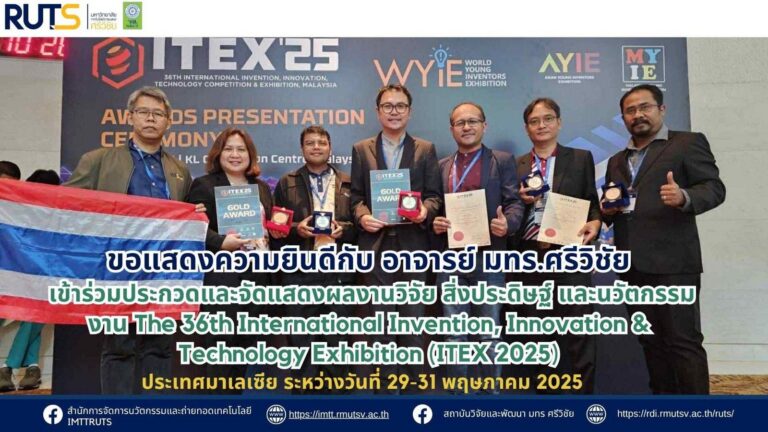
Rajamangala University of Technology Srivijaya (RUTS), through the Office of Innovation Management and Technology Transfer, supported its researchers to compete and exhibit their research, inventions and innovations at the 36th International Invention, Innovation & Technology Exhibition (ITEX 2025), held on 29–31 May 2025 at the Kuala Lumpur Convention Centre, Kuala Lumpur, Malaysia. ITEX, organized by the Malaysian Invention and Design Society (MINDS), is one of Asia’s longest-running international invention exhibitions and was held together with the World Young Inventors Exhibition (WYIE), the Asian Young Inventors Exhibition (AYIE) and the Malaysian Young Inventors Exhibition (MYIE).
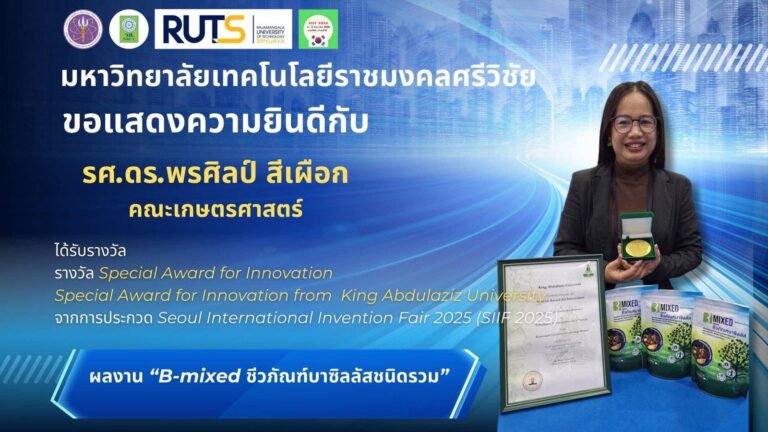
Rajamangala University of Technology Srivijaya (RUTS), through the Office of Innovation Management and Technology Transfer, supported its researchers to compete and exhibit their research, inventions and innovations at the 2025 Seoul International Invention Fair (SIIF 2025), held on 3–6 December 2025 at the COEX Convention and Exhibition Center, Seoul, Republic of Korea. SIIF is organized by the Korea Invention Promotion Association (KIPA) and is one of Asia’s leading international invention fairs. RUTS joined the Thailand pavilion led by the National Research Council of Thailand (NRCT), which presented more than 220 Thai research works, inventions and innovations from 63 organizations. The participation aimed to promote RUTS research and innovation internationally, test the inventions with international juries and businesses, and build international networks.
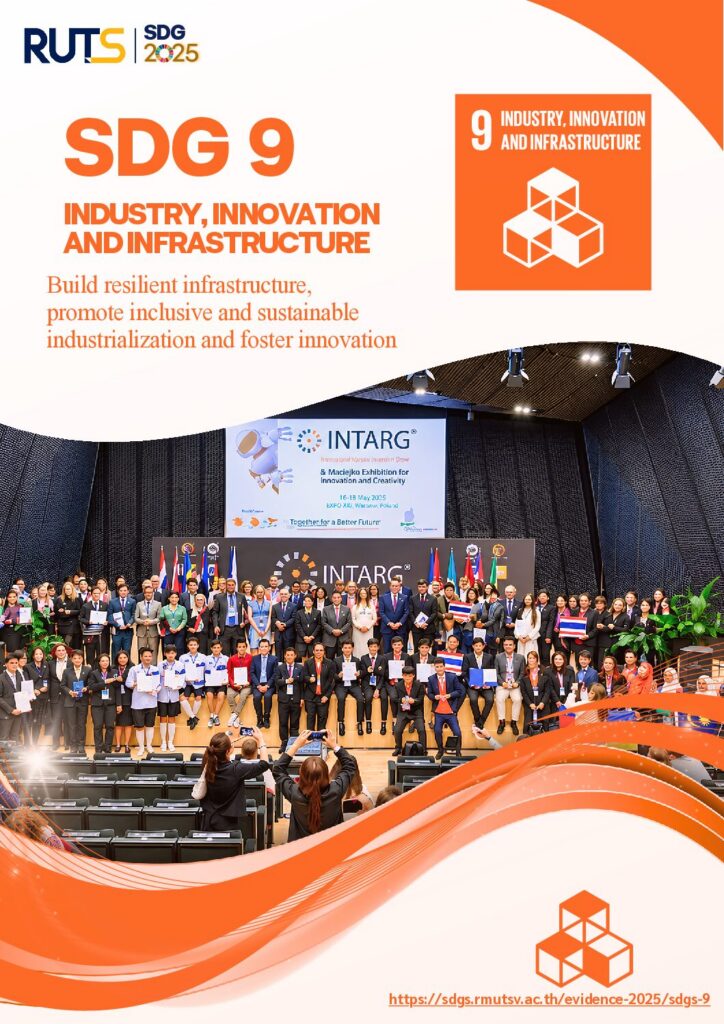
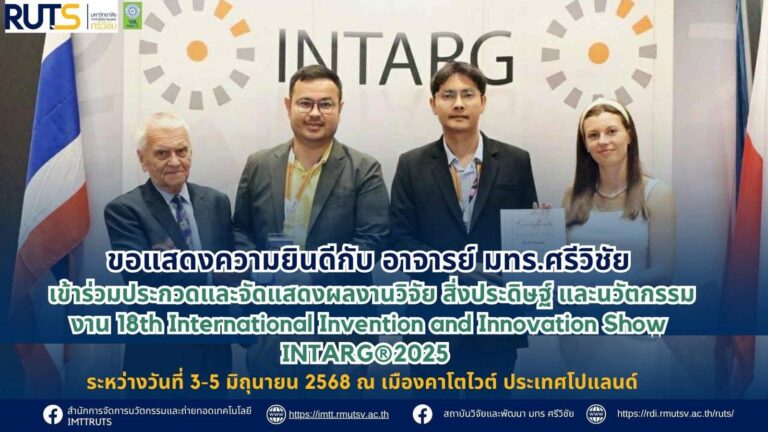
Rajamangala University of Technology Srivijaya (RUTS), through the Office of Innovation Management and Technology Transfer, supported two researchers to compete and exhibit their research, inventions and innovations at the 18th International Invention and Innovation Show (INTARG® 2025), held on 3–5 June 2025 at the International Congress Centre (MCK), Katowice, Republic of Poland, with support from the National Research Council of Thailand (NRCT). INTARG® is organized by Eurobusiness-Haller® and the Haller Pro Inventio Foundation and presented around 300 inventions and innovations from more than 20 countries. The participation aimed to promote RUTS research and innovation internationally, test the commercial potential of the inventions with international juries, investors and businesses, and strengthen international networks.
Sustainable Development Goal 9 (SDG 9) aims to foster sustainable industrialization, build resilient infrastructure, and promote innovation. This report examines the research income generated from industry and commerce, highlighting the role it plays in achieving these objectives. SDG 9 calls for the promotion of sustainable and inclusive industrialization and innovation. A significant aspect of this goal involves fostering partnerships between the private sector, academia, and research institutions to drive research and development. Research income from industry and commerce encompasses financial support provided by private sector entities to research institutions and universities for projects, collaborations, and innovations. Sources of such income include grants, partnerships, sponsored research, and consulting services.