[17.3.13 / 13_Summary] Rajamangala University of Technology Srivijaya (RUTS) Annual SDG 13 (Climate Action) Progress Report for Data Year 2025.
RUTS SDG 13 Progress Report 2025: Climate Action
[17.3.13 / 13_Summary] Rajamangala University of Technology Srivijaya (RUTS) Annual SDG 13 (Climate Action) Progress Report for Data Year 2025.
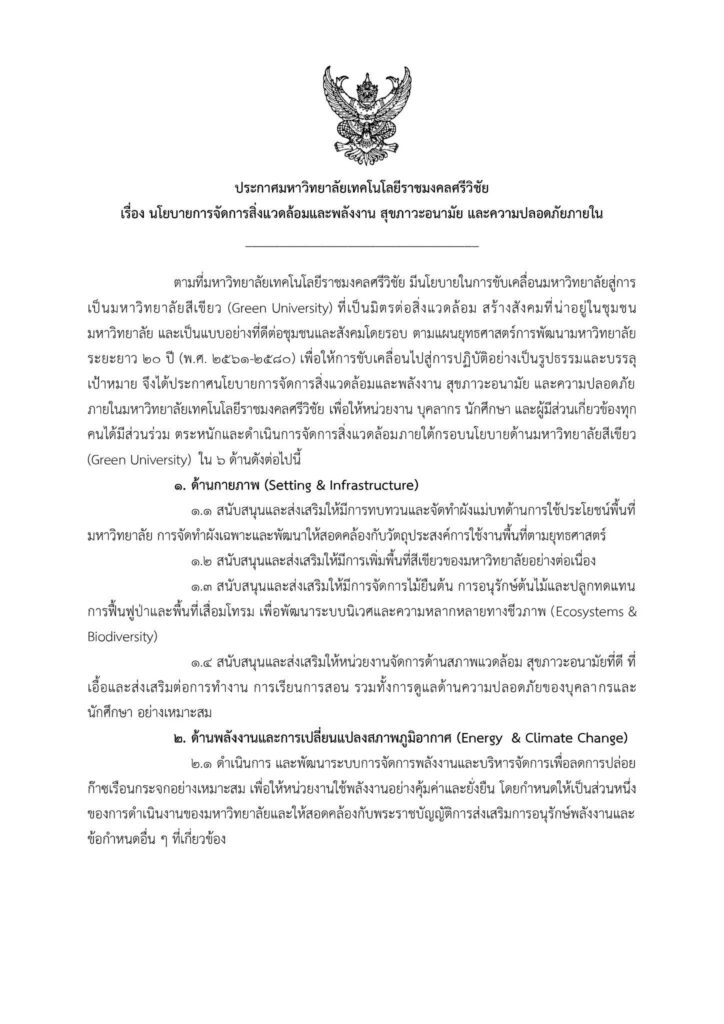
RUTS Low Carbon Energy Tracking 1. Overview and Policy Framework Rajamangala University of Technology Srivijaya is committed to improving energy efficiency and mitigating the impacts of climate change under its Green University framework, in accordance with the University’s 20-Year Strategic Development Plan (2018–2037). On 9 December 2022, the University announced its “Policy on Environmental and Energy Management, Health, Hygiene, and Internal Safety.” The policy sets a target of promoting renewable energy use to at least 25% by 2026 and achieving carbon neutrality at the university by 2037. It also encourages the renovation and design of energy-efficient buildings. 2. Low-carbon Energy Tracking and Measurement System 2.1 Energy Data Collection The University has established a system for collecting energy data and tracking and measuring both low-carbon energy use and total energy consumption.
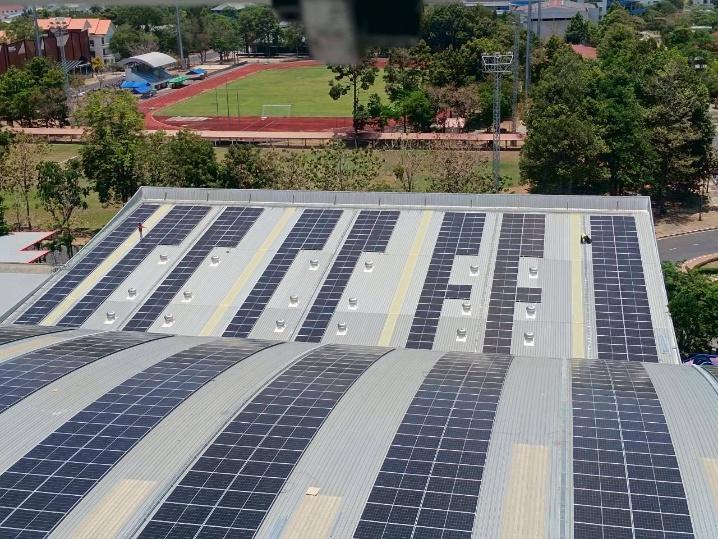
Low-carbon Energy Use For the 2025 assessment year, the university reported total energy use of 44,044 gigajoules (GJ), of which 11,021 GJ was energy used from low-carbon sources. This represents 25.02% of total energy use. 2. Energy Consumption Data IndicatorAmountUnit Total energy used44,044GJ Total energy used from low-carbon sources11,021GJ Share of low-carbon energy (calculated)25.02% 3. Calculation of the Low-carbon Energy Share Low-carbon energy share (%) = (Energy used from low-carbon sources ÷ Total energy used) × 100 = (11,021 ÷ 44,044) × 100 = 25.02% 4. Low-carbon Energy Sources and Supporting Projects Solar Rooftop Project at the Sri Wiswa Building A rooftop solar photovoltaic power generation system has been installed at the Sri Wiswa Building, Faculty of Engineering, to supply electricity for the building and its teaching laboratories.
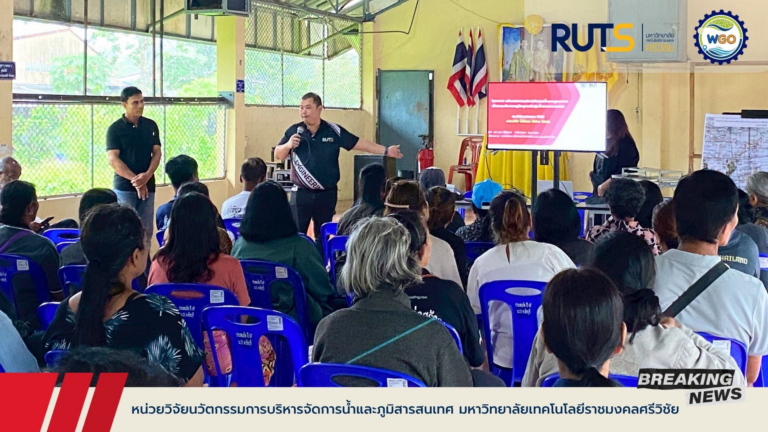
Community Education and Capacity Building for Climate-Related Disaster Risk Management Rajamangala University of Technology Srivijaya (RUTS), through its Water Management Innovation and Geoinformatics Research Unit, contributed to disaster-risk education and capacity building through two training activities conducted in November and December 2025. These initiatives focused on strengthening knowledge and practical skills in participatory mapping, Geographic Information Systems (GIS), and water-related hazard analysis. By engaging local communities and university students, RUTS promoted the use of geospatial technologies to support disaster preparedness, water-resource planning, and the development of approaches to managing climate-related risks. RUTS Provides Community Training on Disaster-Risk Mapping and GIS-Based Water Management
Sharing Climate Adaptation Knowledge and Water Management Approaches with Local Authorities and Communities Rajamangala University of Technology Srivijaya (RUTS) supports local climate adaptation through research-based water management, knowledge sharing, and collaboration with government agencies and communities. In the Songkhla Lake Basin, the university has developed practical approaches to addressing freshwater shortages, salinity fluctuations, and other climate-related water risks. These efforts include sharing research findings to inform government planning, providing public access to water-monitoring and forecasting information, and engaging with local authorities to explore coordinated water-management measures. RUTS Shares Water Management Approaches to Support Local Climate-Risk Planning
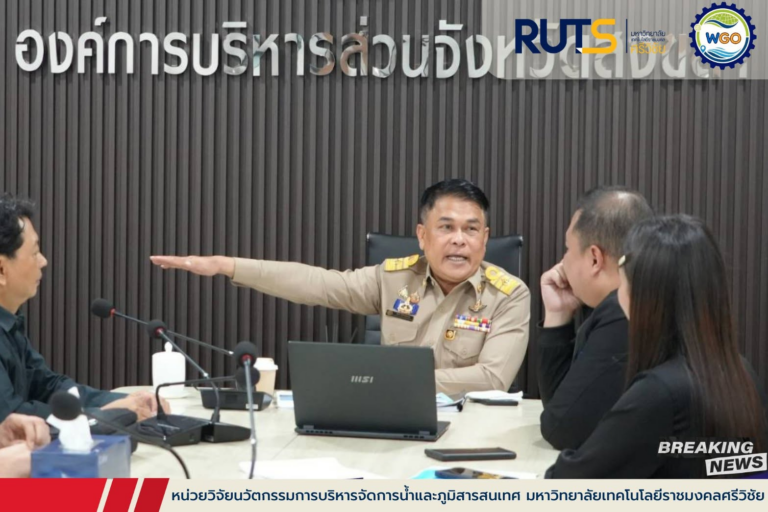
Collaborative Planning for Climate-Related Water Disasters Rajamangala University of Technology Srivijaya (RUTS) participates in collaborative water-resource and disaster-risk planning with government agencies, academic partners, and local communities in southern Thailand. Through its Water Management Innovation and Geoinformatics Research Unit, the university contributes to regional water-management committees, community-based drought-risk assessments, and government-led flood preparedness discussions. These activities support the identification of local water-related risks, the exchange of technical knowledge, and coordinated planning to strengthen preparedness for floods, droughts, and other climate-related water challenges. RUTS Supports Collaborative Water Management and Disaster Preparedness through River Basin Committees and Government Partnerships
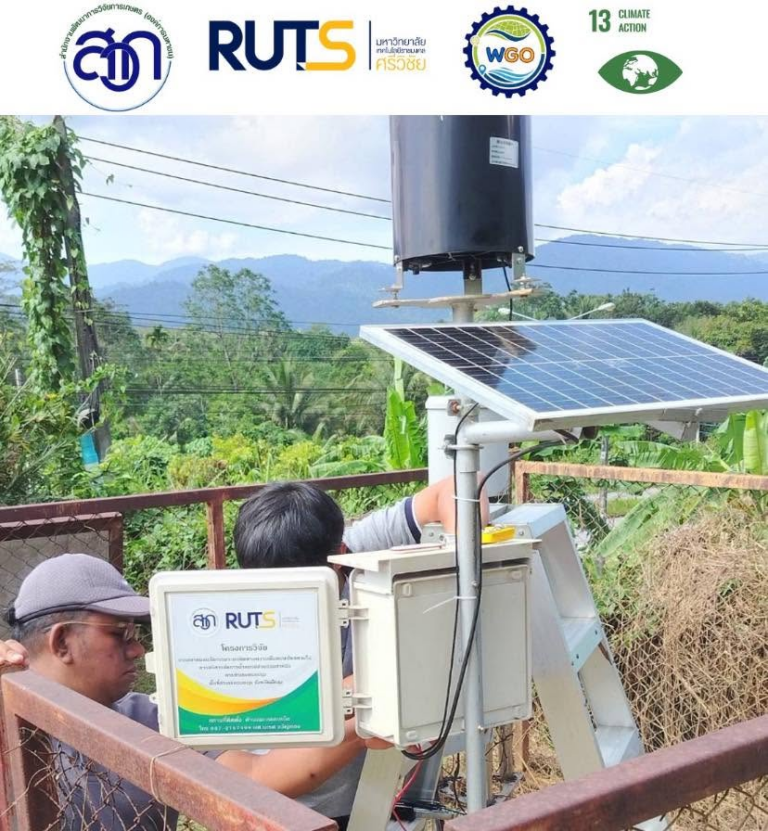
Informing and Supporting Government in Climate-Risk Monitoring and Early Warning Rajamangala University of Technology Srivijaya (RUTS) supports climate-related risk monitoring and early-warning preparedness through research, automated monitoring systems, and collaboration with government agencies and research partners. Its initiatives include salinity forecasting in the Songkhla Lake Basin, automated rainfall monitoring in Phatthalung, and flood-level surveys in the U-Tapao River Basin. These efforts provide information to support flood and drought risk assessment, water-resource management, and disaster preparedness in southern Thailand. RUTS Supports Government Climate-Risk Monitoring through Water Monitoring and Salinity Forecasting Systems
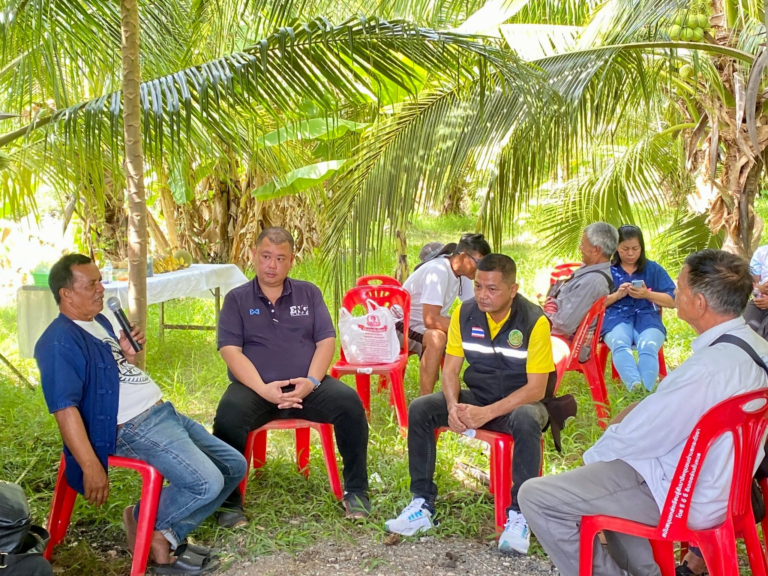
Collaboration with Community Organisations for Climate Adaptation Rajamangala University of Technology Srivijaya (RUTS) collaborates with community organisations and research partners to support local water management and climate adaptation. Through knowledge exchange and community-based planning, the university contributes technical expertise to help communities address drought and flood risks. RUTS Shares Water Management Knowledge with Kadangnga Community Organisation On 21 October 2025, Asst. Prof. Dr. Nattapol Kaewthong from the Water Management Innovation and Geoinformatics Research Unit of Rajamangala University of Technology Srivijaya (RUTS) was invited by the Kadangnga Subdistrict Community Organisations Council to share his expertise in water management with local residents during the “Poet Yam Na” community event in Sathing Phra District, Songkhla Province.
RUTS Sets 2037 Target for Carbon Neutrality Rajamangala University of Technology Srivijaya has established an institutional direction for environmental and energy management under its announcement entitled “Policy on Environmental and Energy Management, Health, Hygiene and Internal Safety,” dated 9 December 2022. The university states its commitment to achieving carbon neutrality by 2037, with greenhouse gas (GHG) accounting and emission-reduction measures serving as key implementation mechanisms. Carbon-Neutrality Commitment and Emissions Boundary The university describes an approach to GHG emissions assessment based on the Greenhouse Gas Protocol (GHG Protocol), covering Scope 1, Scope 2 and selected Scope 3 sources: Scope 1 — Direct emissions associated with vehicle and machinery fuel use, refrigerants, and agricultural or livestock activities, particularly at the Nakhon Si Thammarat and Trang campuses.