SDG 7

SDG 7: Affordable and Clean Energy

Rajamangala University of Technology Srivijaya (RUTS) — Official Evidence, Policies & Impact Activities for Data Year 2025

📅 Data Year: 2025 📄 Published Evidence in SDG 7: 10 📂 All 17 SDGs (2025) 📚 SDG Reports Bookshelf
📘 Featured Annual Report • THE 17.3.7

RUTS SDG 7 Progress Report 2025: Affordable and Clean Energy

[17.3.7 / 7_Summary] Rajamangala University of Technology Srivijaya (RUTS) Annual SDG 7 (Affordable and Clean Energy) Progress Report for Data Year 2025.

SDG 7
📜 Official Evidence • Data Year 2025
[7.2.1] Energy-efficient Renovation and Building 7.2.1
Energy-efficient Renovation and Building

SDG 7.2.1 Evidence Report Policy on Energy-efficient New Construction and Building Renovation Rajamangala University of Technology Srivijaya | Supporting Evidence for THE Impact Rankings 2027 1. Overview Rajamangala University of Technology Srivijaya (RUTS) has established an Environmental and Energy Management Policy to promote efficient energy use and sustainable infrastructure development under its 20-year long-term development strategy (2022–2041). The supporting evidence specifies that all new construction and building renovations must comply with the Ministry of Energy’s energy conservation standards and Green Office guidelines. This policy directly addresses the focus of SDG indicator 7.2.1. 2. Energy-efficient Building Policy The university requires building design and renovation to take account of energy conservation standards and environmental management practices.

View Full Evidence Page →
SDG 7
📜 Official Evidence • Data Year 2025
[7.2.2] Upgrade Buildings to Higher Energy Efficiency 7.2.2
Upgrade Buildings to Higher Energy Efficiency

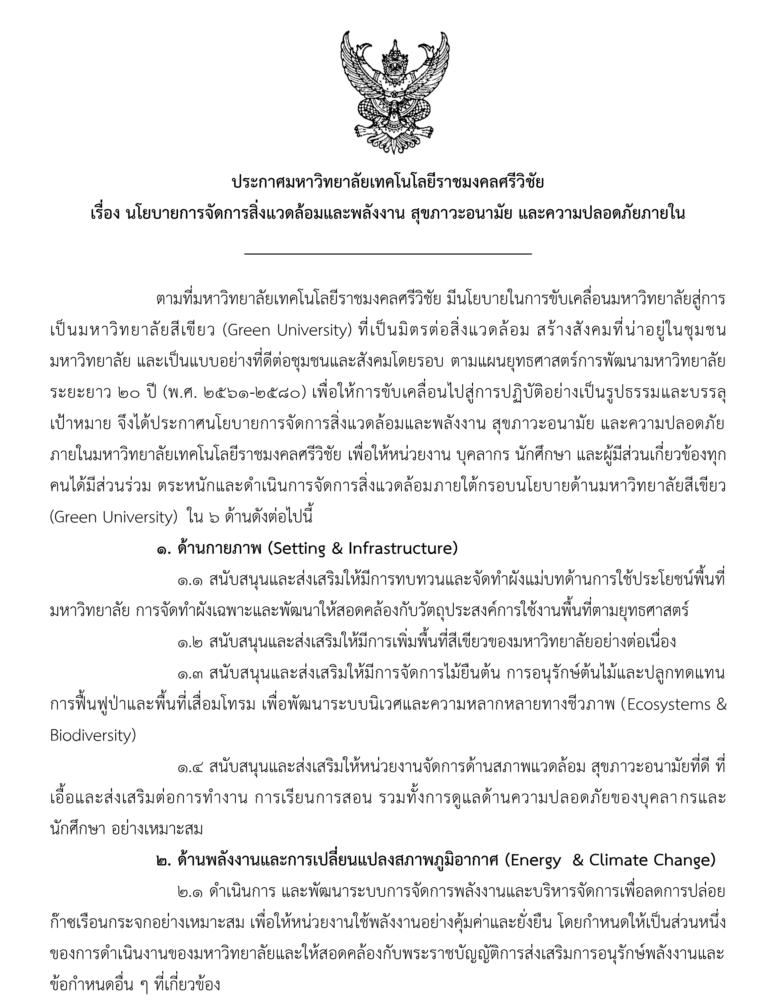
SDG 7.2.2 Evidence Report Rajamangala University of Technology Srivijaya | Supporting Evidence for THE Impact Rankings 2027 1. Overview Rajamangala University of Technology Srivijaya (RUTS) has established a policy on environmental and energy management, health, well-being, and safety to advance its Green University development and improve energy efficiency across its organizational units. The policy is aligned with the University’s long-term development plan. 2. Policy on Upgrading Existing Buildings for Higher Energy Efficiency Under its energy and climate change policy, the University is committed to developing an energy management system in accordance with applicable laws and regulations and continuously improving energy efficiency across all units. The policy promotes the adoption of energy-saving equipment, appropriate technologies and best practices, as well as renewable energy.

View Full Evidence Page →
SDG 7
📜 Official Evidence • Data Year 2025
[7.2.3] Carbon Reduction and Emission Reduction Process 7.2.3
Carbon Reduction and Emission Reduction Process

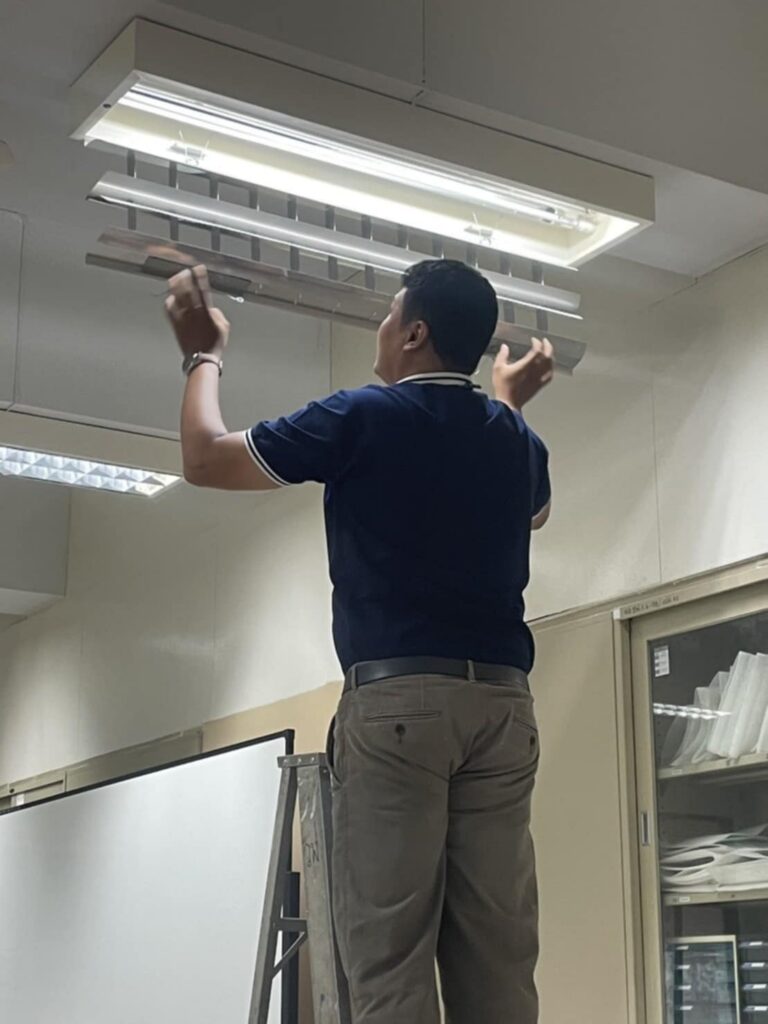
SDG 7.2.3 Evidence Report Energy Conservation and Greenhouse Gas Emission Reduction Measures Rajamangala University of Technology Srivijaya (RUTS) | THE Impact Rankings 2027 1. Overview Rajamangala University of Technology Srivijaya (RUTS) has a plan to reduce electricity consumption and greenhouse gas emissions by replacing existing 40-watt fluorescent tubes with 18-watt LED tubes in university buildings, thereby improving the energy efficiency of lighting systems. 2. Energy Conservation Approach The measure focuses on replacing existing fluorescent tubes with lower-wattage LED lighting. Photographs included in the original supporting document show personnel working on light fixtures inside a building and in a building area, providing visual evidence of lighting-system improvement activities. Comparison itemRated power per tube Existing fluorescent tube40 W Proposed replacement LED tube18 W

View Full Evidence Page →
SDG 7
📜 Official Evidence • Data Year 2025
[7.2.4] Preventive Maintenance of Building Electrical Power Supply Systems 7.2.4
Preventive Maintenance of Building Electrical Power Supply Systems

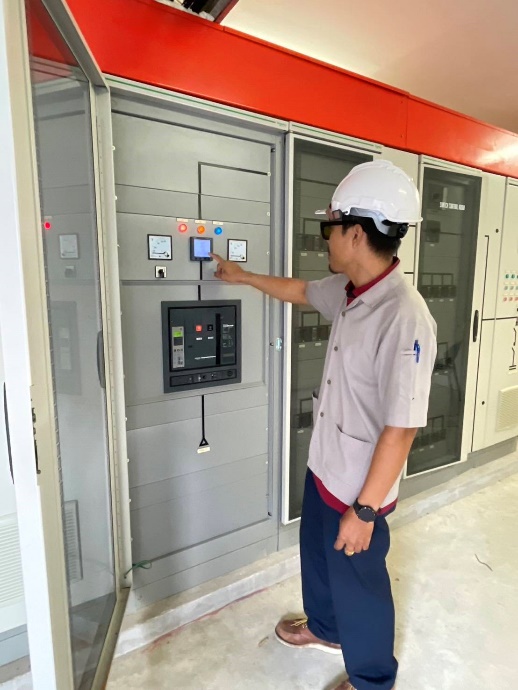
SDG 7.2.4 — Plan to Reduce Energy Consumption Rajamangala University of Technology Srivijaya (RUTS) 1. Overview Rajamangala University of Technology Srivijaya (RUTS) carries out inspections and maintenance of electrical power supply equipment serving university buildings. The purpose of these activities is to maintain efficient operation, support reliable electricity distribution, and extend the service life of electrical infrastructure. The submitted evidence describes an engineering team responsible for inspecting equipment and establishing a regular annual maintenance schedule. 2. Inspection and Preventive Maintenance Activities The University conducts annual inspection and maintenance of electrical transformers and associated power distribution equipment. Its engineering personnel also inspect main distribution boards (MDBs), as illustrated in the photographic evidence.

View Full Evidence Page →
SDG 7
📜 Official Evidence • Data Year 2025
[7.2.5] Energy wastage identification 7.2.5
Energy wastage identification

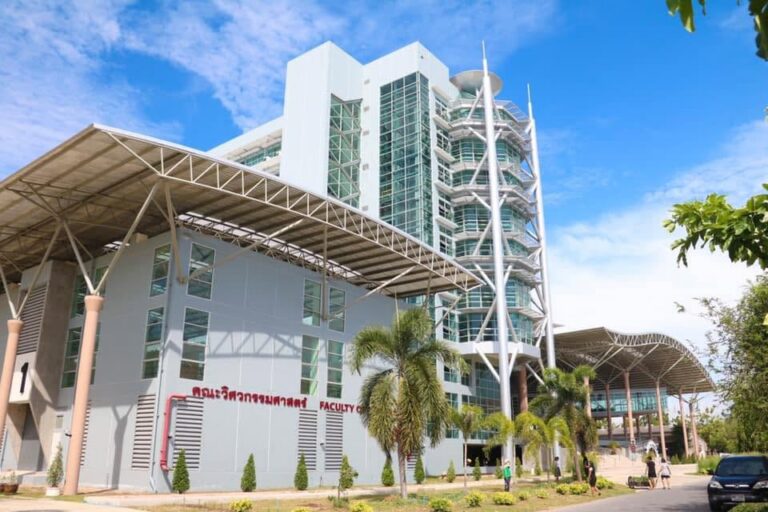
SDG 7.2.5 | Energy Wastage Identification 1. Overview Rajamangala University of Technology Srivijaya (RUTS) reports that a university-appointed committee assessed potentially wasteful electricity consumption in the Songkhla area. The assessment identified the Faculty of Engineering complex as the highest electricity-consuming facility or group of buildings within the area reviewed. This identification provides a starting point for prioritising further investigation of energy-use patterns and potential inefficiencies. 2. Identification of High Electricity Consumption According to the supplied evidence, the Faculty of Engineering complex comprises multiple structures and accommodates large machinery, electrical equipment and extensive air-conditioning systems. These operational characteristics contribute to its relatively high electricity demand.

View Full Evidence Page →
SDG 7
📜 Official Evidence • Data Year 2025
[7.2.6] Evidence Report | Rajamangala University of Technology Srivijaya (RUTS) 7.2.6
Evidence Report | Rajamangala University of Technology Srivijaya (RUTS)

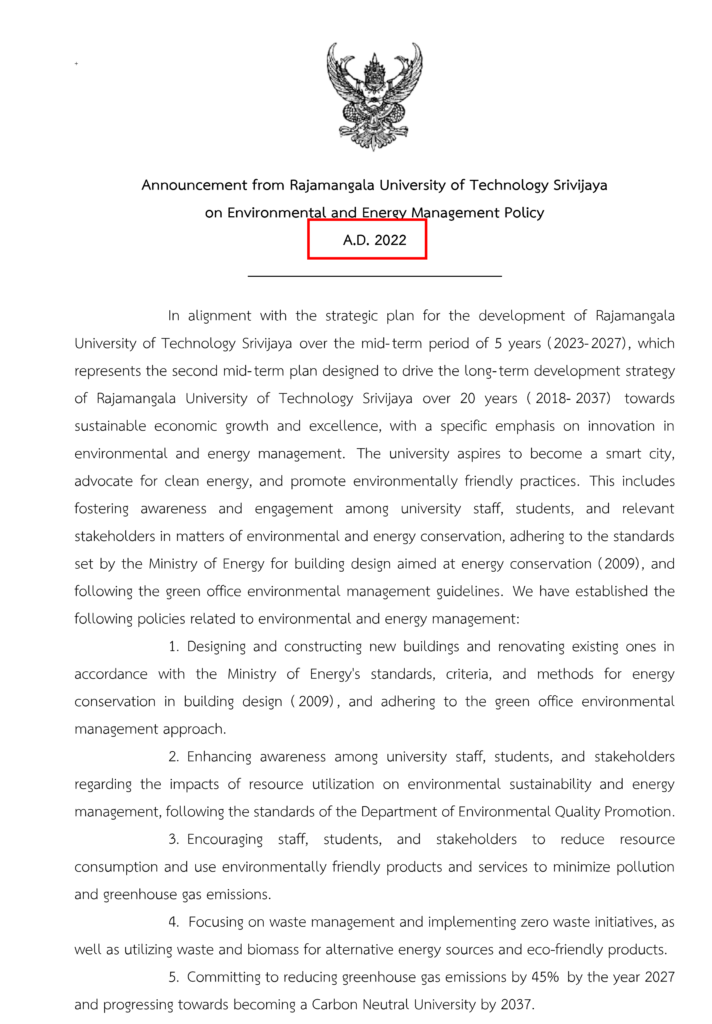
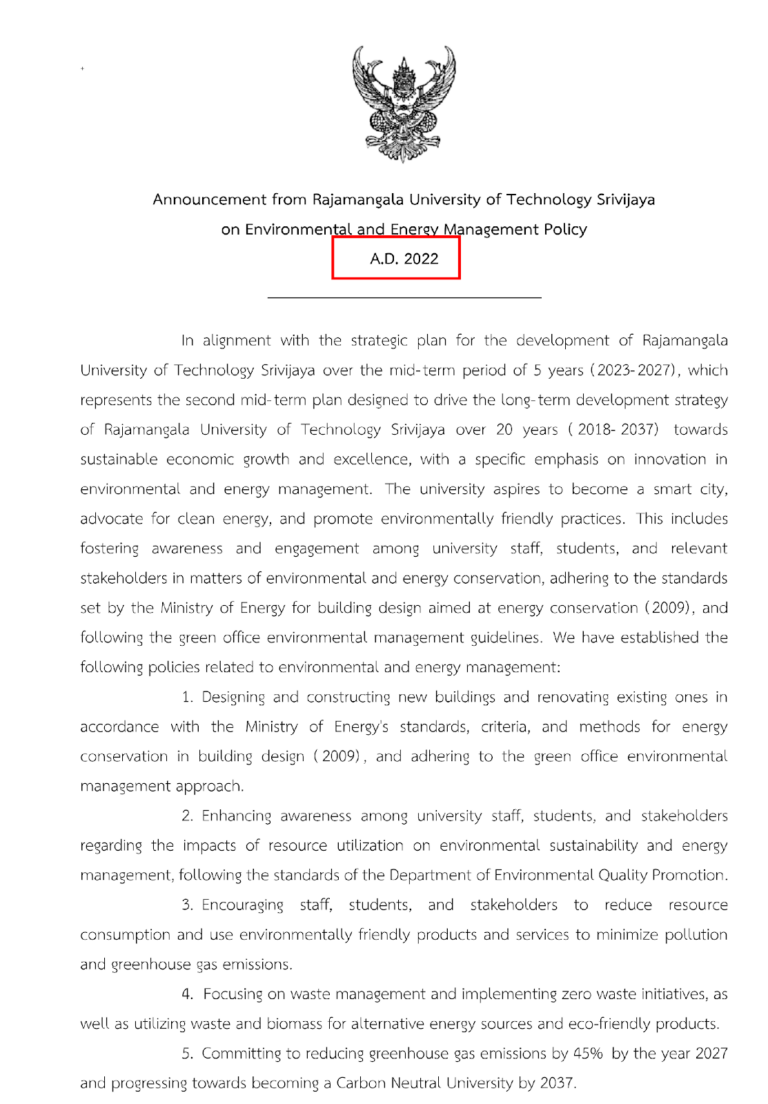
SDG 7: Affordable and Clean Energy 7.2.6 | Divestment Policy 1. Overview Rajamangala University of Technology Srivijaya (RUTS) identifies responsible institutional investment as part of its environmental and energy management approach. The submitted source describes a policy direction to divest from carbon-intensive energy industries, particularly coal and oil. This commitment links financial governance with the University’s wider objectives of environmental responsibility, sustainable development and the transition towards cleaner energy. 2. Institutional Policy on Divestment The supporting announcement on Environmental and Energy Management Policy, identified in the source as an A.D. 2022 document, includes an explicit provision under Item 8: “Divesting investments from carbon-intensive energy industries especially coal and oil.” This provision is the primary documentary evidence for SDG 7.2.6.

View Full Evidence Page →
SDG 7
📜 Official Evidence • Data Year 2025
[7.4.1] Faculty of Technical Education, RMUTSV Enhances Clean Energy Career Skills by Organizing Training on Solar PV Generation System Installation and Maintenance 7.4.1
Faculty of Technical Education, RMUTSV Enhances Clean Energy Career Skills by Organizing Training on Solar PV Generation System Installation and Maintenance

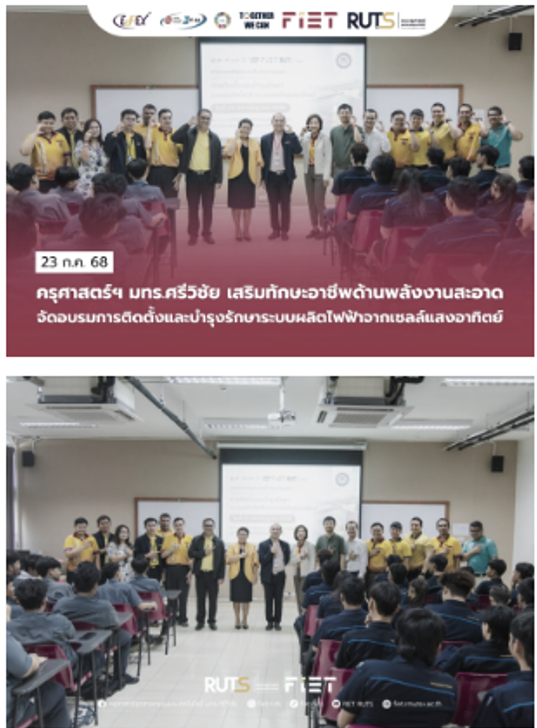
On September 11, 2025, the Faculty of Technical Education and Technology, Rajamangala University of Technology Srivijaya (RMUTSV), organized the 2nd batch of the Non-Degree Short-Course Training Program (Non-Credit Accumulation) titled “Installation and Maintenance of Solar Photovoltaic Power Generation Systems.” Associate Professor Dr. Jakrapong Jitjamnong, Vice Dean for Administration and Planning, presided over the opening ceremony at the Combined Classroom and Laboratory Building, Faculty of Technical Education and Technology. This training program aims to elevate professional skills in renewable energy and empower learners to adapt to future changes in the clean energy industry. It provides youth with opportunities to learn and gain hands-on experience with solar cell technology at the vocational level.

View Full Evidence Page →
SDG 7
📜 Official Evidence • Data Year 2025
[7.4.2] Energy-efficient Renovation and Building 7.4.2
Energy-efficient Renovation and Building

SDG 7.2.1 Evidence Report Policy on Energy-efficient New Construction and Building Renovation Rajamangala University of Technology Srivijaya | Supporting Evidence for THE Impact Rankings 2027 1. Overview Rajamangala University of Technology Srivijaya (RUTS) has established an Environmental and Energy Management Policy to promote efficient energy use and sustainable infrastructure development under its 20-year long-term development strategy (2022–2041). The supporting evidence specifies that all new construction and building renovations must comply with the Ministry of Energy’s energy conservation standards and Green Office guidelines. This policy directly addresses the focus of SDG indicator 7.2.1. 2. Energy-efficient Building Policy The university requires building design and renovation to take account of energy conservation standards and environmental management practices.

View Full Evidence Page →
SDG 7
📜 Official Evidence • Data Year 2025
[7.4.4] Environmental and Energy Management Policy of Rajamangala University of Technology Srivijaya (RUTS) about Environmental and Energy Management 7.4.4 📄 PDF
Environmental and Energy Management Policy of Rajamangala University of Technology Srivijaya (RUTS) about Environmental and Energy Management

Environmental and Energy Management Policy Rajamangala University of Technology Srivijaya (RUTS) Commitment and Vision In alignment with RUTS's 20-Year Long-Term Development Strategy (2018–2037), and driven by the current 5-Year Mid-Term Plan (2023–2027), Rajamangala University of Technology Srivijaya is committed to achieving sustainable economic growth and excellence. Our specific focus is on innovation in environmental and energy management as we transition the university towards becoming a Smart City that champions clean energy and environmentally friendly practices. We aim to foster awareness and engagement among all staff, students, and stakeholders while adhering to national standards (Ministry of Energy 2009) and Green Office guidelines. Environmental and Energy Management Policies The following policies are established to guide our operations and development:

View Full Evidence Page →