1. Primary SDG: SDG 12: Responsible Consumption and Production
2. Related SDGs (if any): SDG 8 / SDG 9 / SDG 13 / SDG 17
3. Category:
☐ Policy and Operations
☐ Teaching and Learning
🗹 Outreach and Engagement
☐ Research and Innovation
☐ Others (please specify): __________
4. Title: Value Creation through the Circular Economy Model under the Project on Enhancing SME Competitiveness through the Application of the BCG Economy Model
5. Activity/Implementation Date: January–May 2025
6. Responsible Unit: The Office of Innovation Management and Technology Transfer, Rajamangala University of Technology Srivijaya (RUTS), in collaboration with the Regional Industrial Promotion Center 11, Department of Industrial Promotion (DIPROM).
7. News Content:
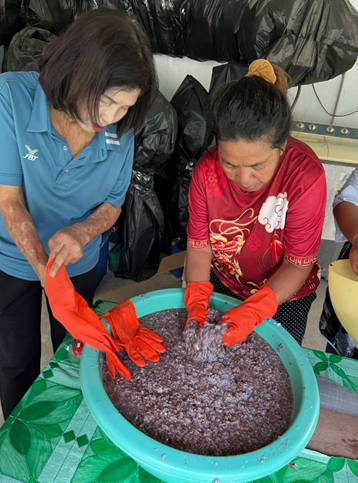
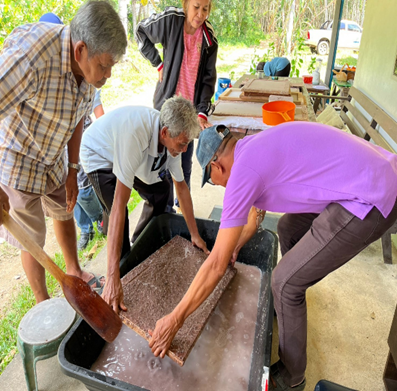
The Office of Innovation Management and Technology Transfer, Rajamangala University of Technology Srivijaya (RUTS), in collaboration with Regional Industrial Promotion Center 11, Department of Industrial Promotion, implemented the Value Creation through the Circular Economy Model (Circular Design Product – Upcycled Product) activity under the SME Business Enhancement Project through the Application of the BCG Economy Model for the fiscal year 2025. The activity aimed to 1) promote the utilization of waste and residual materials generated from cocoa product processing by community enterprises through product design and value creation in accordance with circular economy principles. And 2) assess reductions in resource consumption, waste generation, and carbon footprint achieved by Ton Nga Chang Community Enterprise for Local Products and Processed Cocoa, located in Hat Yai District, Songkhla Province.
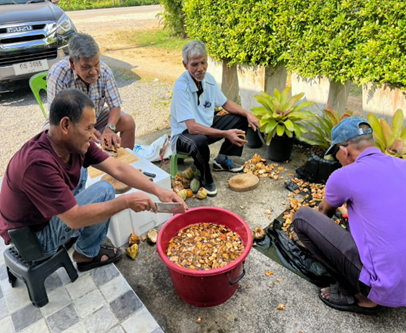
The project involved several key activities, including operational planning and team formation; diagnosing issues related to residual materials and identifying the needs of Ton Nga Chang Community Enterprise for Local Products and Processed Cocoa; developing a consultancy plan for products derived from waste and residual materials generated during product processing; presenting product design concepts; providing design consultation and developing creative products in accordance with circular economy principles; producing product prototypes with the potential to create value for the community; assessing satisfaction with the consultancy services; and evaluating the overall project outcomes.
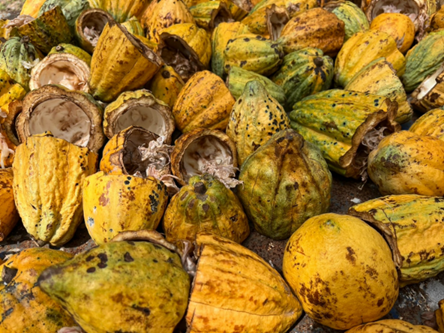
Ton Nga Chang Community Enterprise for Local Products and Processed Cocoa in Songkhla Province primarily generates fresh cocoa pod husks as residual waste. These materials were utilized to develop two new products:
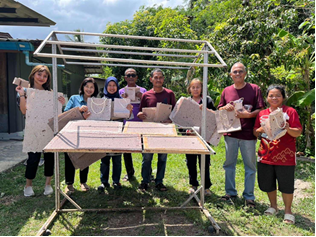
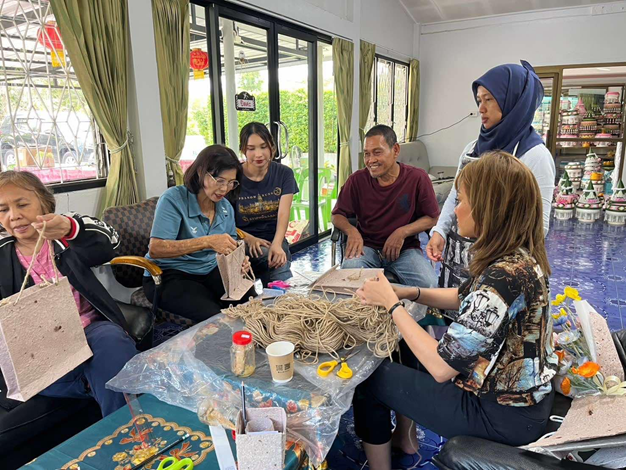
1. Paper bags made from cocoa pod husks: The production cost was THB 28.74 per unit, with a selling price of THB 35. The product achieved a reported value increase of 120.83%, while its greenhouse gas emissions were reduced by 40.64%.
2. Paper cup sleeves made from cocoa pod husks: The production cost was THB 6.13 per unit, with a selling price of THB 10. The product achieved a reported value increase of 120.83%, while its greenhouse gas emissions were reduced by 40.65%.
Both products were developed in accordance with circular economy principles by transforming cocoa pod husks into value-added products. The reported reductions in greenhouse gas emissions were calculated in comparison with the original waste management practice of disposing of cocoa pod husks through landfilling.
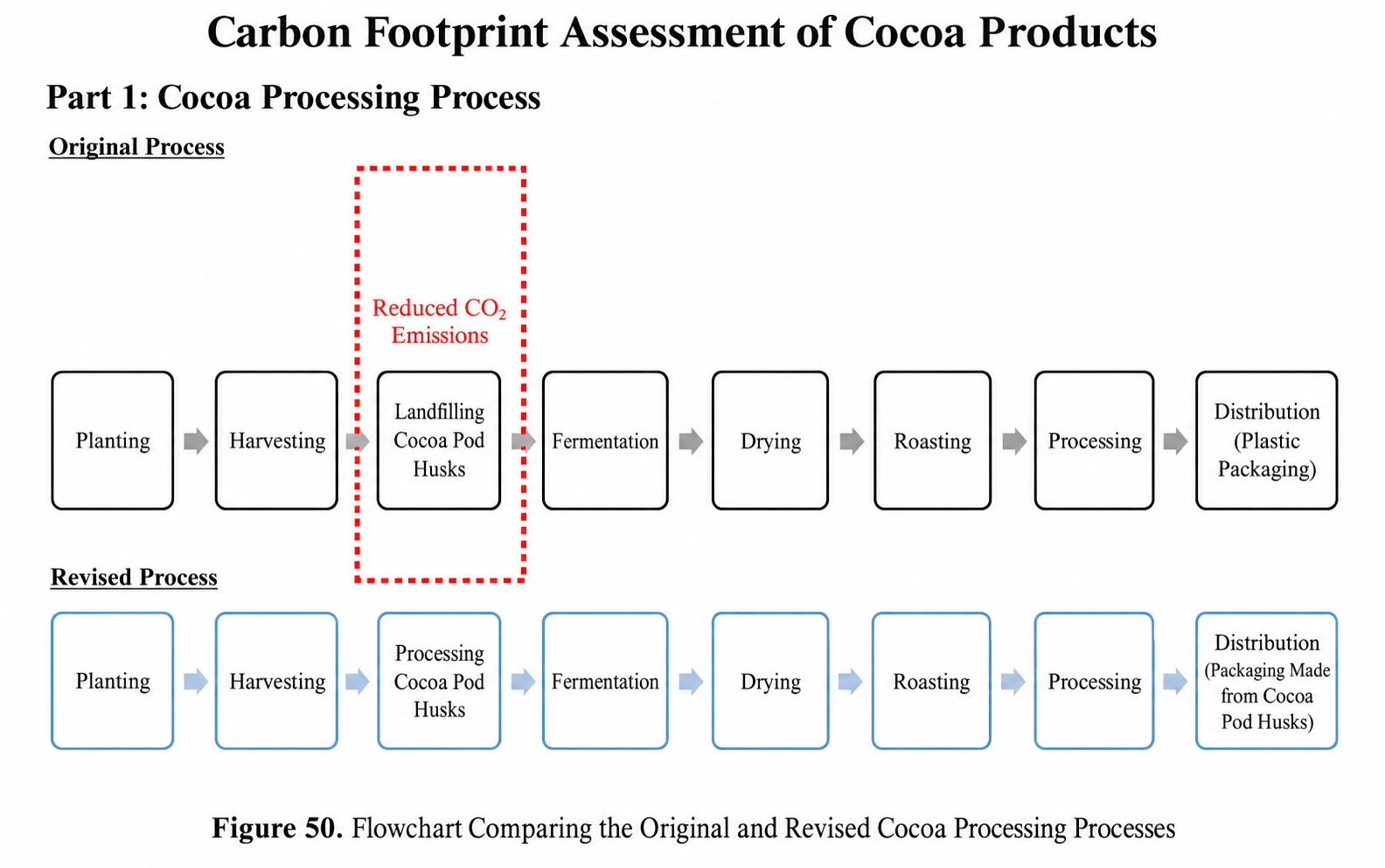
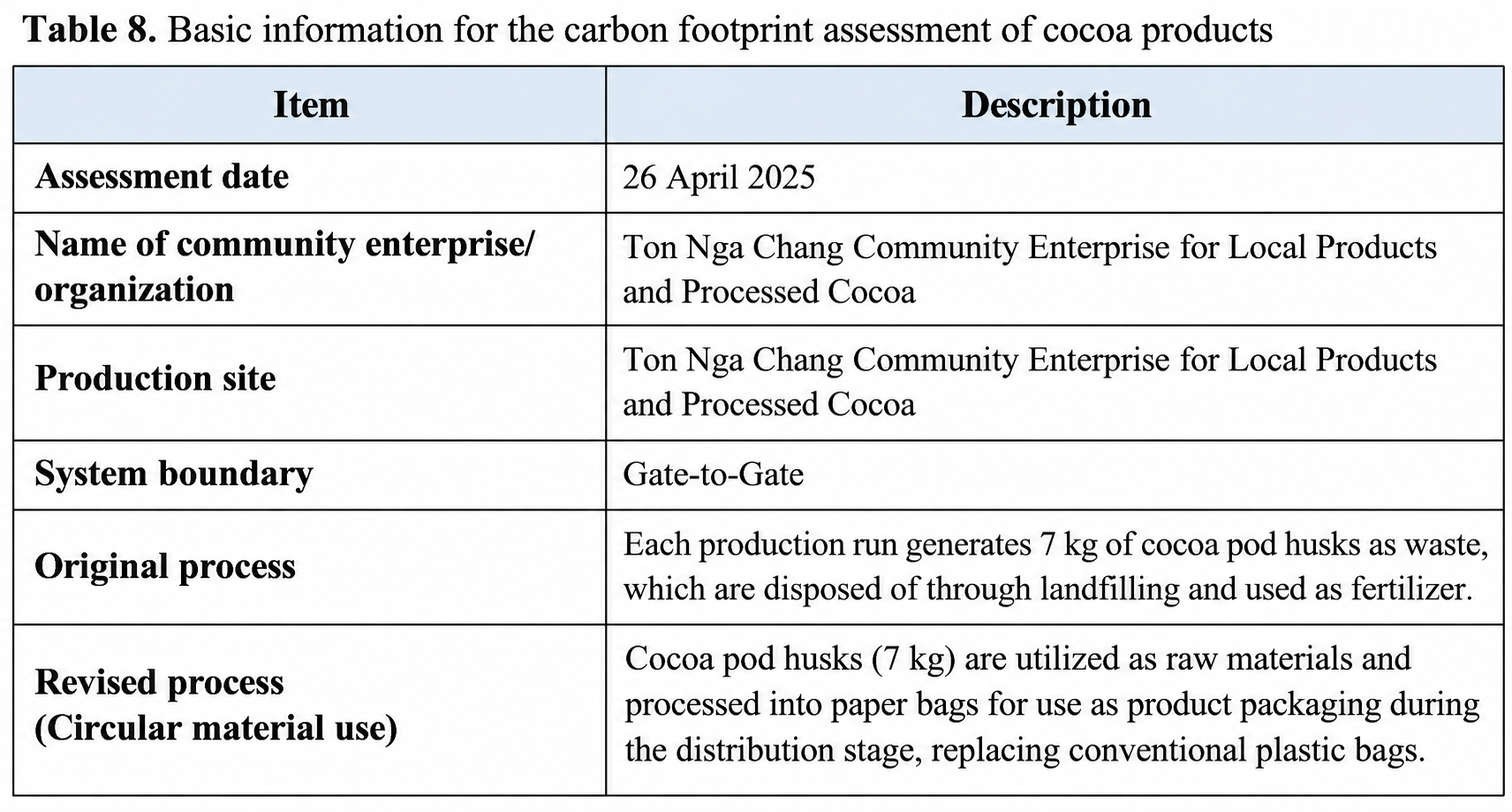
The production of cocoa products, such as cocoa beans, cocoa powder, and other processed cocoa products, generates substantial amounts of cocoa pod husks as residual waste before the fermentation stage. The community enterprise currently utilizes these husks as organic fertilizer by placing them around the base of trees in its plantation. Cocoa pod husks are organic materials rich in cellulose and lignin, accounting for approximately 70–75% of the total cocoa fruit weight. When disposed of in landfills under anaerobic conditions, these materials undergo decomposition and generate methane (CH₄), a greenhouse gas with a global warming potential 28–34 times greater than that of carbon dioxide (CO₂) over a 100-year period. Therefore, the carbon footprint of the cocoa products can be calculated as follows.
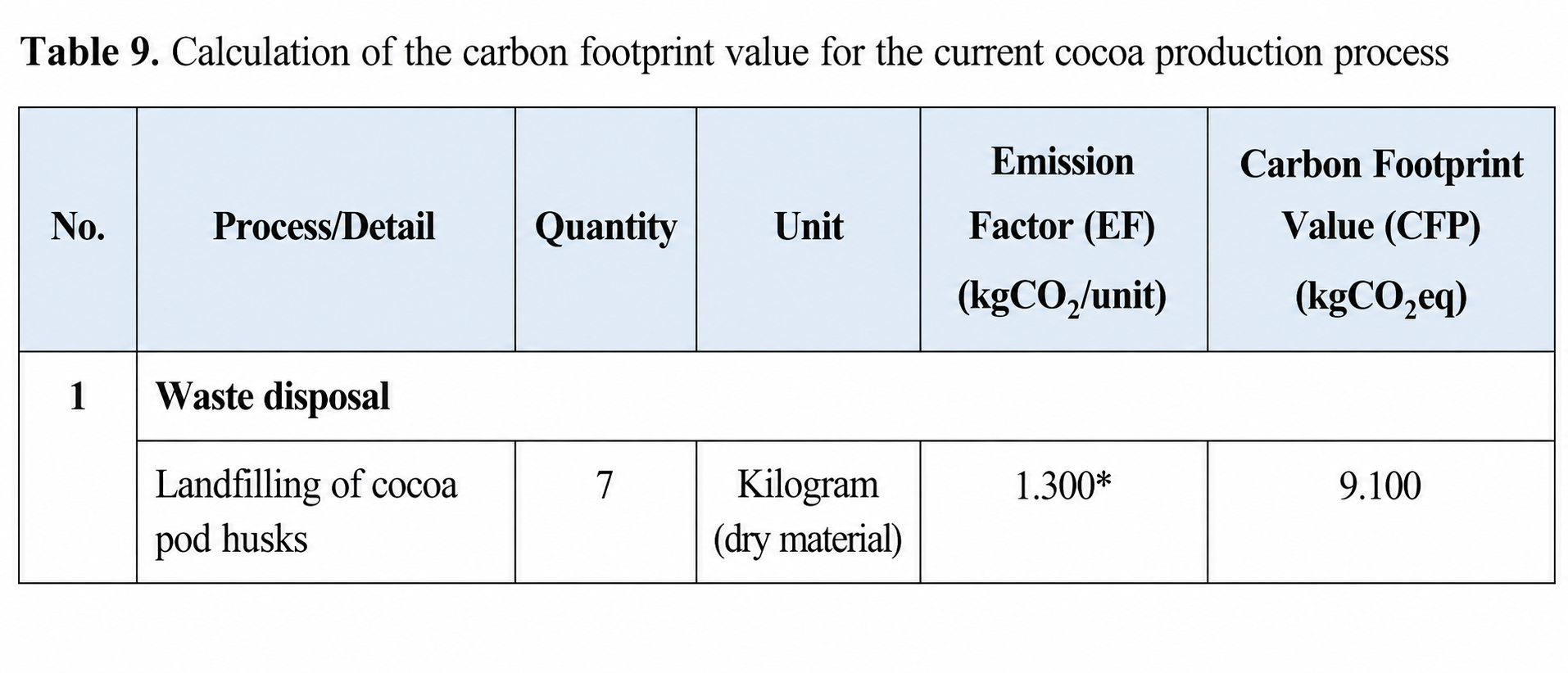
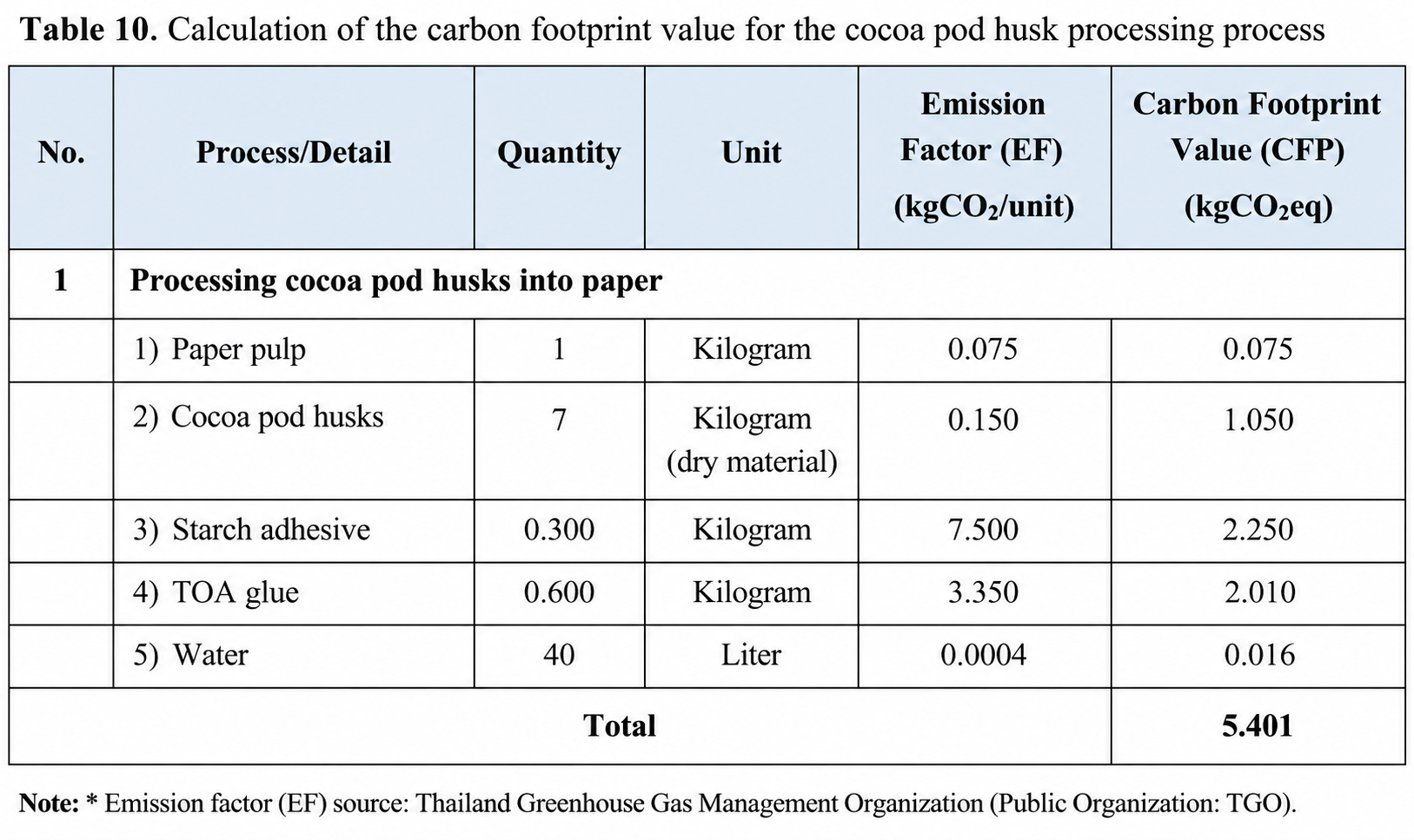
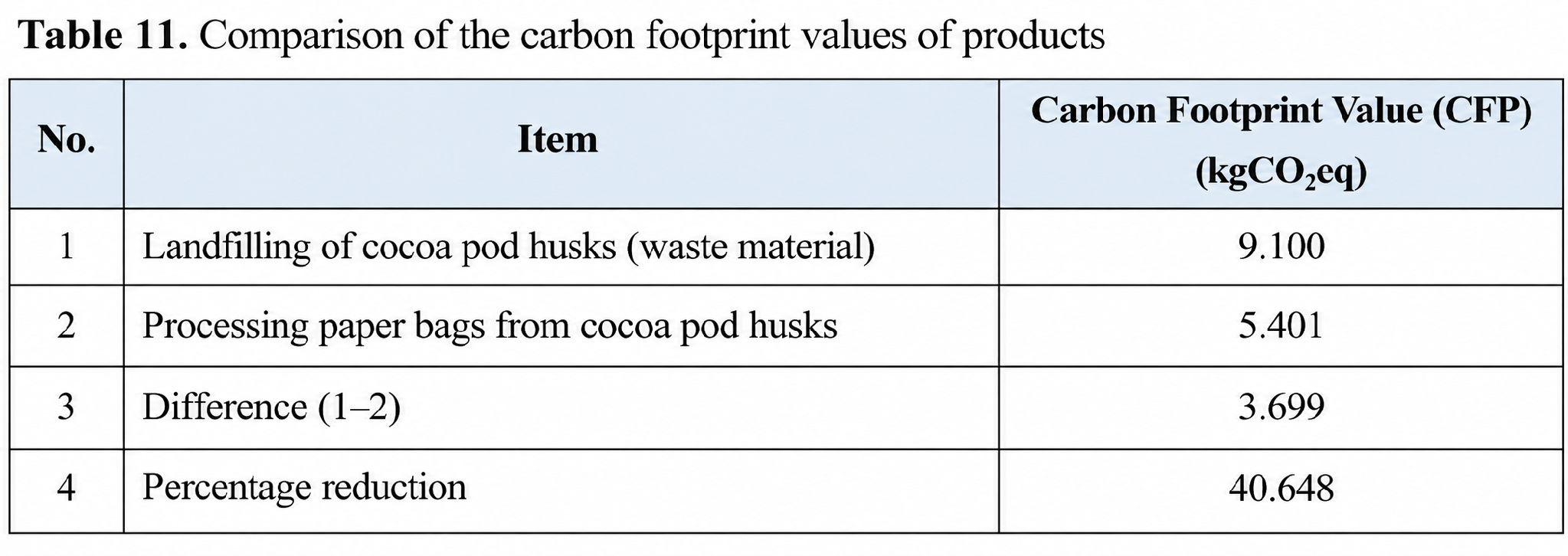
The carbon footprint assessment results indicate that converting cocoa pod husks, which would otherwise be discarded, into paper bags reduces the product carbon footprint by 3.699 kgCO₂eq, representing a 40.648% reduction compared with the original production process.
9. Related Links / Supporting Evidence:
https://www.facebook.com/share/p/1PnHn7KQRS/
https://www.facebook.com/share/p/1JxaoJeoQ4/
https://www.facebook.com/share/p/1BpyZngzpR/
https://www.facebook.com/share/p/1E3EycVfT2/
https://www.facebook.com/share/p/1EBaijEptb/
10. Information Provider:
Boonrad Boonradsamee, Faculty of Business Administration