Rajamangala University of Technology Srivijaya (RUTS) measures students’ knowledge and understanding of sustainability through assessments incorporated into Sustainable Development (00-000-009), a course offered under the university’s General Education Curriculum (Revised Edition, B.E. 2566). The course provides undergraduate students with opportunities to develop sustainability literacy through structured learning activities and assessments covering the United Nations Sustainable Development Goals (SDGs).
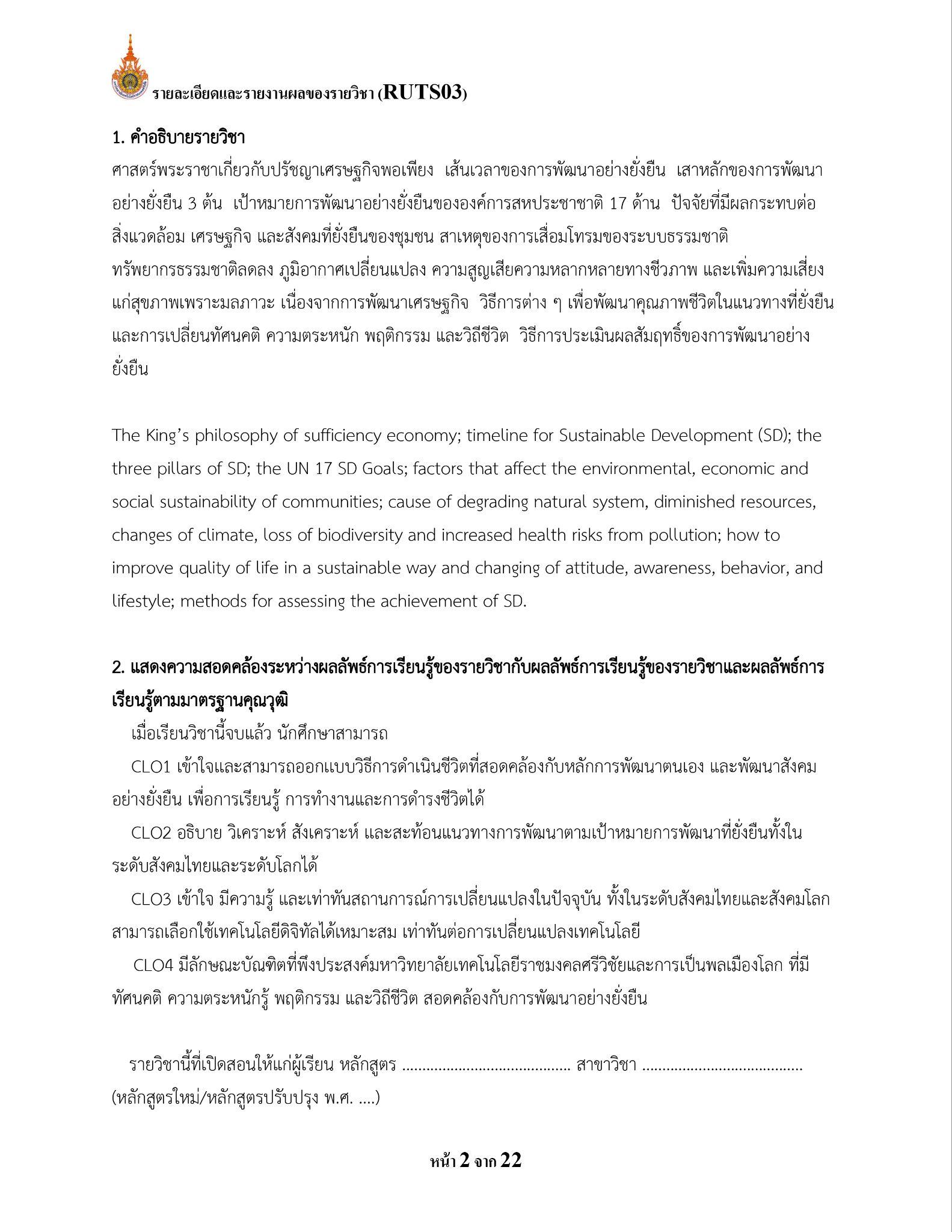
Sustainability Literacy and Learning Outcomes
The course addresses the environmental, economic, and social dimensions of sustainable development, including all 17 SDGs. Its content covers climate change, biodiversity loss, natural resource depletion, pollution, social inequalities, and approaches to improving quality of life sustainably.
The course learning outcomes require students to explain, analyse, synthesise, and reflect on sustainable development approaches in Thai and global contexts. They also emphasize awareness, responsible behaviours, and lifestyles consistent with sustainable development principles.
Measuring Students’ Sustainability Knowledge
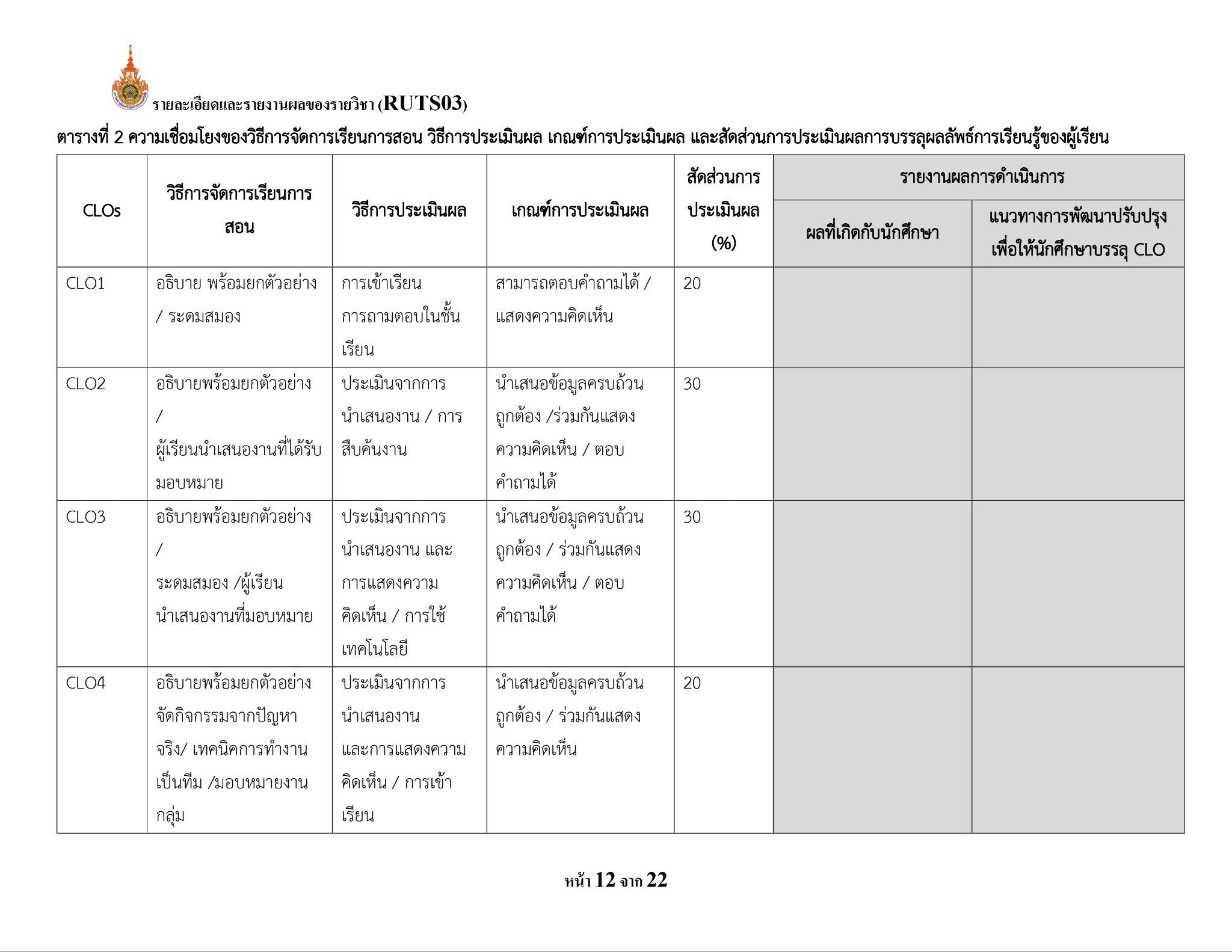
RUTS incorporates sustainability-related assessment into the course’s formal evaluation framework. Students are assessed through quizzes, a final examination, assignments, and a community-related project, with assessment activities linked to specified course learning outcomes.
The assessment framework allocates 10% of the total course grade to each of two quizzes and 20% to the final examination, representing a combined 40% for examinations. The course specifies a minimum knowledge assessment criterion of 60% for these examinations. Other assessment activities evaluate students’ ability to analyse sustainability issues, communicate their understanding, and apply sustainable development concepts.
Evidence of Student Assessment in Academic Year 2025
The course is offered in multiple class sections, with the available documentation providing an example of its implementation in the second semester of the 2025 academic year.
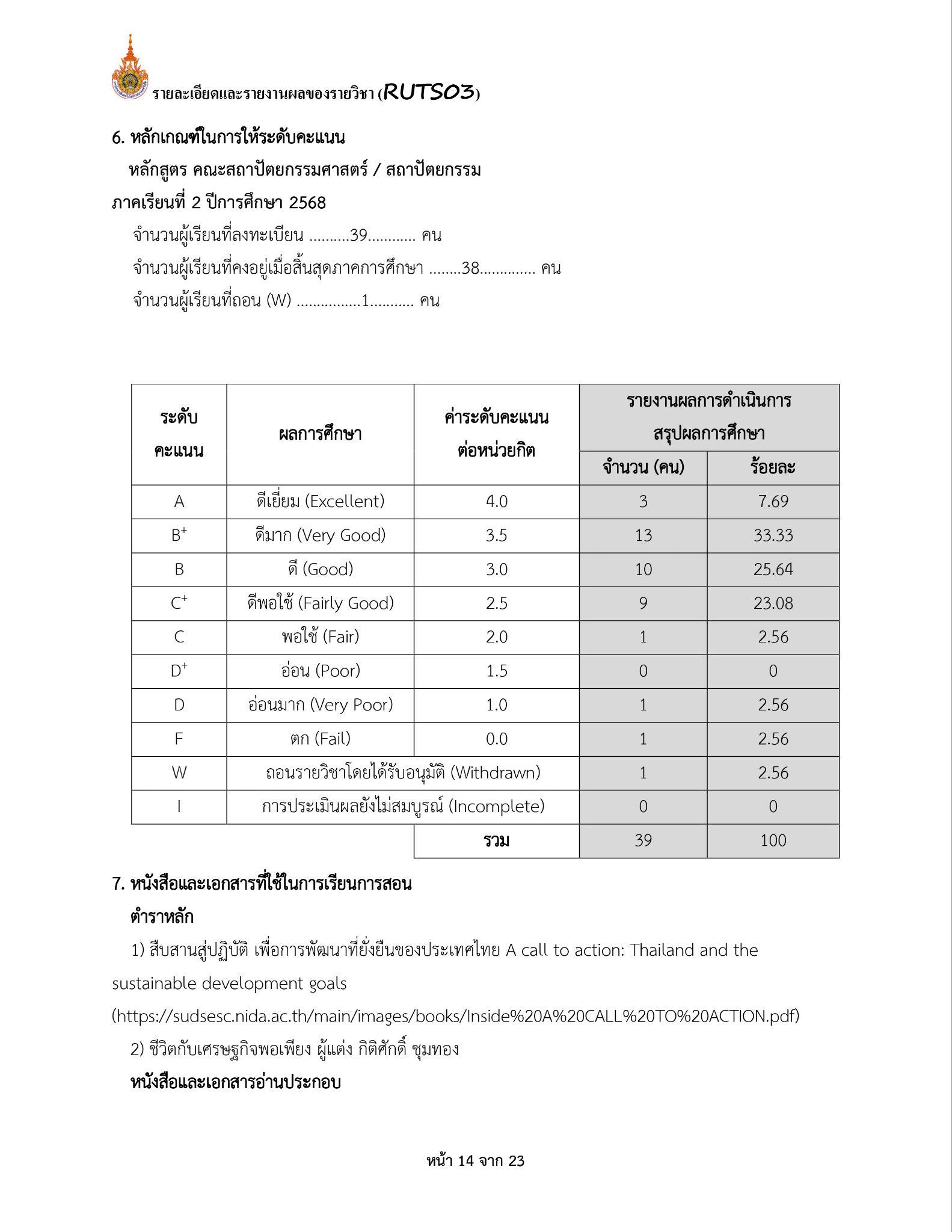
In one documented class section for students in the Architecture Programme, 39 students registered for the course, 38 remained enrolled at the end of the semester, and one withdrew. The course report records the final academic performance of these students, providing evidence that the planned assessment framework was implemented and student learning outcomes were evaluated.
These figures represent only the documented class section and do not reflect the total number of students enrolled in Sustainable Development across the university. Additional students take the course in other class sections.
The documented assessment framework and student performance records illustrate how sustainability-related learning is evaluated within the university’s formal general education curriculum.